U.S. Drugmakers Ramp Up Investment as Trump Pressures Industry With Tariff Threats
Writing Time: August 3, 2025, 17:00 EDT
Leading pharmaceutical companies have announced over $250 billion in new U.S. manufacturing investments in response to former President Donald Trump’s renewed push for reshoring drug production. However, analysts say the efforts are unlikely to fully meet the administration’s objectives of lowering drug prices or reducing foreign dependence for essential medications.
Major Pharmaceutical Firms Announce Billions in U.S. Manufacturing Expansion
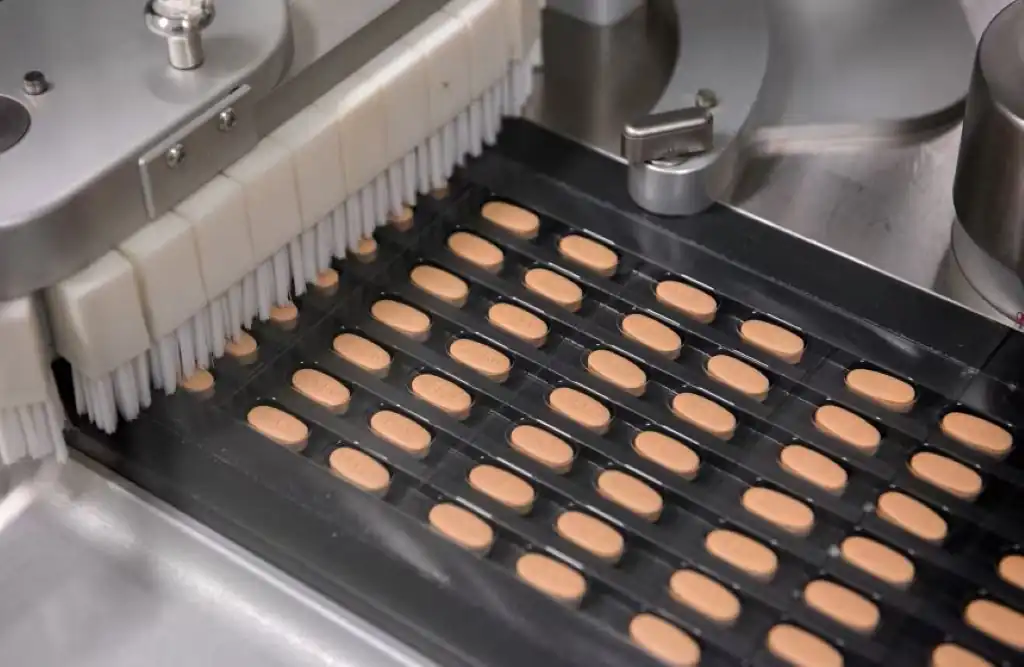
In recent months, global pharmaceutical firms have outlined massive U.S.-based manufacturing plans. AstraZeneca committed $50 billion toward expanding its U.S. operations. Johnson & Johnson unveiled a $55 billion investment focused on domestic production and research facilities. Eli Lilly also pledged $27 billion to construct four new manufacturing plants across the country.

Collectively, these announcements signal a shift under pressure from Trump-era tariff threats, aimed at reshoring pharmaceutical production and securing the national drug supply chain.
Commerce Secretary Howard Lutnick celebrated the developments, saying on social media, “Another win for American manufacturing… Reshoring pharma production is one of our top priorities.”
Still, experts caution that the investments—while significant—are unlikely to drastically alter the global structure of drug supply chains or lead to noticeable price reductions for U.S. consumers.
Complex Global Supply Chains Remain a Challenge
Despite the surge in domestic commitments, the pharmaceutical industry remains deeply globalized. Active pharmaceutical ingredients (APIs) and finished products are routinely sourced and manufactured internationally. Shifting these intricate supply chains back to the U.S. is no simple feat.
While some investments are directly linked to the administration’s tariff strategy, many were planned before Trump’s recent announcements. For example, Johnson & Johnson’s $55 billion plan includes a North Carolina facility that was already in development as early as October of last year.



“These companies are trying to align with the administration’s messaging,” said Evan Seigerman, senior biopharma analyst at BMO Capital Markets. “It’s about optics—they want the administration to know they’re on board.”
Generics Manufacturers Face Bigger Hurdles
Brand-name pharmaceutical companies are not the only ones under scrutiny. The administration’s national security concerns center heavily on generic drugs, which account for over 90% of all prescriptions in the U.S. Yet the majority of these medications—especially pills and capsules—are produced overseas, predominantly in India and China.
Unlike their brand-name counterparts, generic drugmakers operate with significantly thinner profit margins, making large-scale investment in U.S. facilities financially challenging.
Still, some are stepping up. Hikma Pharmaceuticals USA pledged a $1 billion investment through 2030 to expand domestic operations. Amphastar Pharmaceuticals also announced plans to quadruple production within the next five years. Both companies primarily produce sterile injectable medications.
However, others remain hesitant. “We’re not sure the market will support it if we build it,” said John Murphy III, CEO of the Association for Accessible Medicines. He warned that low reimbursement rates make domestic investment risky for many generic producers.
National Security Risks and Uncertain Incentives
The U.S. Senate has increasingly raised concerns over reliance on foreign suppliers for critical drugs, especially in light of geopolitical tensions. In emergencies, disrupted supply chains could jeopardize access to life-saving treatments.
Still, many industry experts argue that tariffs alone are insufficient to drive reshoring of generic drug production. Erin Fox, associate chief pharmacy officer at the University of Utah Health, noted, “It’s highly, highly unlikely we will see generic production expand in the U.S. without significant incentives.”
Building domestic facilities also takes time. Even if tariffs are delayed by a year—as Trump has indicated—experts say constructing and operationalizing new plants could take three to five years. Meanwhile, uncertainty over future tariffs and changes in political leadership make long-term planning difficult for manufacturers.
Will Domestic Manufacturing Lower Drug Prices?
One of Trump’s goals is to bring down high prescription drug costs, but experts are skeptical that reshoring alone will achieve this.
Manufacturing costs in the U.S. are significantly higher due to labor, regulation, and operational overhead. Stephen Farrelly, ING’s global health care sector lead, emphasized that drug pricing is also influenced by insurers, pharmacy benefit managers (PBMs), and overall healthcare infrastructure.
“Increasing domestic manufacturing won’t automatically translate into savings for consumers,” Farrelly said. “Prices are shaped by the entire U.S. healthcare system, not just where the drugs are made.”
While brand-name drugmakers may have the resources to absorb some increased costs, it is likely that at least a portion will be passed on to consumers—either directly at the pharmacy or through higher insurance premiums.
In the case of generics, the impact could be even more dramatic. Higher production costs could lead companies to exit the U.S. market, worsening drug shortages and reducing treatment options for patients.
Future of Tariffs Still Unclear
As of early August, the Trump administration has not finalized the scope of planned pharmaceutical tariffs. A proposed trade deal with the European Union outlines a 15% tariff on drug imports, with potential exemptions for certain generics. Trump has also floated tariffs of up to 200%, giving companies time to adapt before they are fully implemented.
However, without concrete trade terms or clear incentives for reshoring generics, experts remain cautious about the administration’s long-term success.
“Unless we see meaningful structural reform—especially in how generics are reimbursed—it’s hard to imagine a large-scale return of manufacturing to the U.S.,” Farrelly said.
Source: CNN – Drugmakers are pouring billions of dollars into new US manufacturing. It still won’t achieve all of Trump’s tariff goals