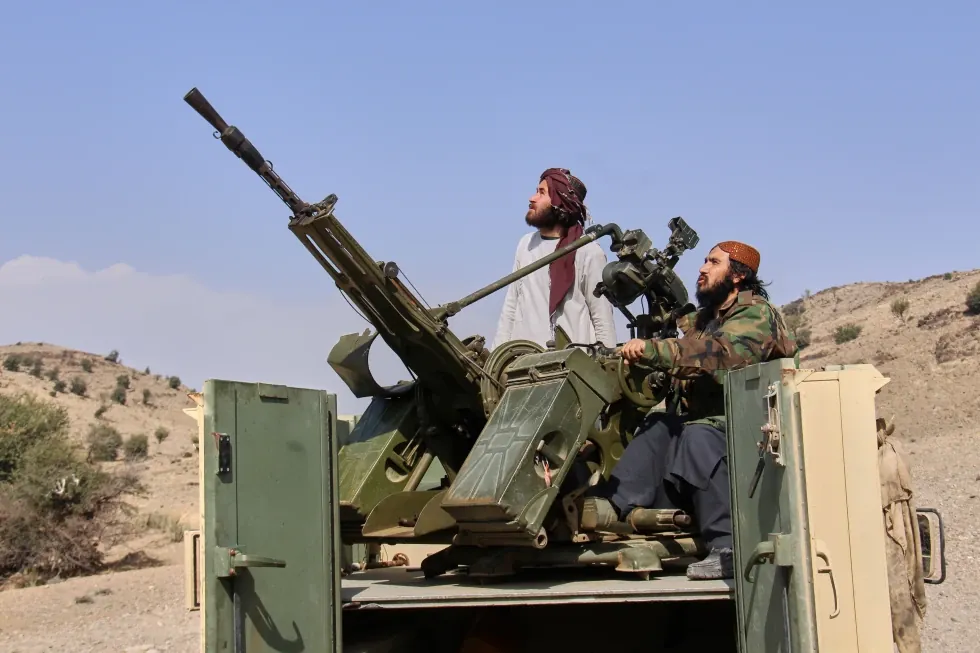
ISLAMABAD (JN) – Pakistan and Afghanistan exchanged air and ground strikes overnight, sharply escalating tensions along their shared frontier and prompting Pakistan’s defense minister to declare the situation an “open war.” The latest violence follows months of deteriorating relations between Islamabad and Kabul, marked by border clashes, competing casualty claims and failed mediation efforts.
The renewed fighting underscores the fragility of regional diplomacy in South and Central Asia, where militant activity, refugee movements and rival geopolitical alignments intersect. While both governments insist they are acting in self-defense, the scale and intensity of the latest operations have heightened concerns of broader instability.
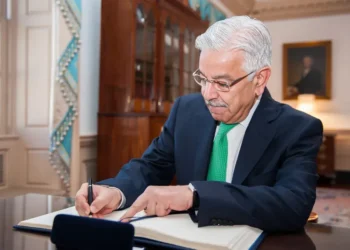
Pakistan’s Defense Minister Khawaja Mohammad Asif said on social media that Islamabad’s “patience has now run out,” framing the confrontation as a direct response to Afghan military action. Afghan officials, for their part, described their initial strikes as retaliation for earlier Pakistani air operations in border areas that they say killed civilians.

Cross-border strikes and conflicting casualty claims
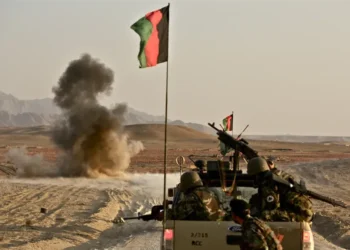
Afghanistan said it launched attacks on Pakistani military targets late Thursday in response to Pakistani airstrikes days earlier in Afghan border provinces. Pakistan then carried out further airstrikes early Friday, including in Kabul and other provinces, saying it targeted military installations.
Zabiullah Mujahid, spokesman for Afghanistan’s Taliban-led government, said the Afghan action was intended as a warning to Pakistan, accusing Islamabad of refusing dialogue. He rejected Pakistani casualty figures as inflated.
Pakistan’s military spokesperson, Lt. Gen. Ahmed Sharif Chaudhry, said air and ground operations had killed at least 274 Afghan forces and affiliated militants and wounded more than 400. He reported 12 Pakistani soldiers killed and 27 wounded, with one missing. Afghan officials disputed those numbers, saying far fewer Afghan personnel were killed and alleging higher Pakistani losses, including captured soldiers.
Later Friday, Afghan authorities said 19 civilians were killed and 26 injured in Pakistani strikes on Khost and Paktika provinces, accusing Islamabad of deliberately targeting residential areas. Pakistan has not confirmed those civilian casualty figures. The competing claims could not be independently verified.
Pakistan’s air force also struck targets in Laghman province, according to two senior Pakistani security officials who spoke on condition of anonymity. They said an arms depot and two military installations were destroyed.


Separately, Pakistan’s Information Minister Attaullah Tarar said anti-drone systems intercepted several small drones over the northwestern cities of Abbottabad, Swabi and Nowshera. He described the incident as a failed attack by the Pakistani Taliban and alleged links between militants and the Afghan Taliban government. Kabul has repeatedly denied providing sanctuary to anti-Pakistan groups.
Deepening mistrust and militant accusations
Tensions between the neighbors have been high for months. Border clashes in October left dozens of soldiers and civilians dead, prompting Qatar-mediated talks that produced a temporary ceasefire. Subsequent negotiations in Turkey failed to secure a lasting agreement.
Islamabad accuses Afghanistan’s Taliban government of harboring militant groups, including the Tehrik-e-Taliban Pakistan (TTP), which has intensified attacks inside Pakistan. The TTP, though separate from Afghanistan’s Taliban, is considered closely aligned. Both Kabul and the TTP deny operating from Afghan territory with official backing.
Asif also accused Afghanistan of aligning more closely with India, Pakistan’s longtime regional rival. Relations between Pakistan and India have been strained since independence in 1947, and Islamabad has previously accused New Delhi of supporting insurgent groups in Pakistan — claims India denies.
Afghan officials say Pakistan’s internal security challenges are longstanding and should not be attributed to Kabul. Mujahid described Pakistan’s conflict with the TTP as a domestic issue that predates the Taliban’s return to power in 2021, following the withdrawal of NATO forces.
International mediation efforts intensify
Diplomatic channels have been activated as fighting intensifies. Qatar’s Minister of State Mohammed bin Abdulaziz al-Khulaifi held separate calls with the foreign ministers of both countries in an effort to de-escalate tensions, according to Qatar’s Foreign Ministry.
Turkey’s Foreign Minister Hakan Fidan also spoke separately with counterparts in Pakistan, Afghanistan, Qatar and Saudi Arabia. In October, Turkey, Qatar and Saudi Arabia helped facilitate talks between the two sides.
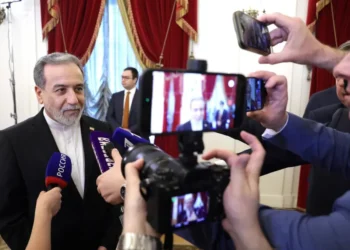
In a statement, U.N. Secretary-General António Guterres urged both governments to exercise maximum restraint and resolve differences through diplomacy while protecting civilians. Russia called for an immediate halt to hostilities, with Russian envoy Zamir Kabulov saying Moscow would consider mediating if requested. Iranian Foreign Minister Abbas Araghchi similarly encouraged dialogue during the holy month of Ramadan and offered Tehran’s assistance.
Despite the strong rhetoric, Afghan officials said they remain open to negotiations. Mujahid reiterated Kabul’s preference for a peaceful solution, though he insisted Afghanistan would respond to further attacks.
Refugees and regional fallout
The renewed fighting comes against the backdrop of large-scale population movements. Pakistani authorities said dozens of Afghan refugees near the Torkham border crossing had been relocated to safer areas.
Since October 2023, Pakistan has implemented a crackdown on undocumented migrants, leading to the return of millions of Afghans. Many had lived in Pakistan for decades, building businesses and families. According to the U.N. refugee agency, 2.9 million people returned to Afghanistan in 2025, including nearly 80,000 so far this year.
The security crisis adds to Afghanistan’s economic and humanitarian challenges, as well as Pakistan’s own domestic pressures from militant violence and political strain.
A volatile moment
The declaration of “open war” marks one of the most serious breakdowns in relations between Pakistan and Afghanistan in recent years. While past clashes have flared and subsided, the scale of the latest strikes and the sharp language from senior officials suggest a dangerous moment.
International actors appear keen to prevent further escalation. Whether mediation efforts can restore calm may depend on both sides’ willingness to separate immediate security grievances from broader political mistrust that has defined their relationship for decades.
Source: AP News – Pakistan is in ‘open war’ with Afghanistan after latest strikes, defense minister says