Global equity markets declined while oil prices extended gains on Friday, as investors reassessed geopolitical risks linked to the ongoing Iran conflict and its implications for inflation and monetary policy. Market data compiled by Bloomberg and reported by the Associated Press indicate that crude prices have risen sharply since hostilities began, amplifying pressure on equities and bond markets.
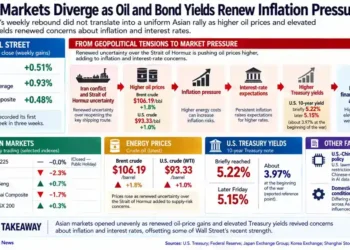
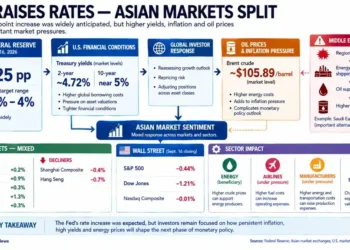
The S&P 500 fell 0.8% in early trading, marking a potential fifth consecutive weekly decline, while the Dow Jones Industrial Average dropped roughly 0.9%. The Nasdaq Composite also declined by about 1%, reflecting broad-based weakness across sectors. The downturn coincides with a sustained increase in energy prices, which investors view as a key driver of macroeconomic risk.
Oil Price Surge Drives Market Repricing
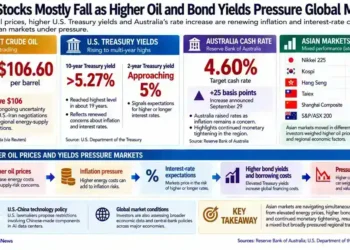
Brent crude rose 2.2% to approximately $104.15 per barrel, while U.S. benchmark West Texas Intermediate climbed 3% to around $97.28, according to market data cited by Reuters. Prices have increased significantly from roughly $70 per barrel before the conflict intensified, highlighting the scale of disruption fears.

Analysts note that the primary concern is potential interference with oil flows through the Strait of Hormuz, a critical chokepoint for global energy supplies. Any sustained disruption could constrain supply and contribute to higher global inflation.
Strategists at Macquarie, cited in financial media reports, estimate that crude prices could reach as high as $200 per barrel if the conflict persists into mid-year, underscoring the severity of supply-side risks currently being priced into markets.
Geopolitical Uncertainty Undermines Risk Appetite
Investor sentiment has weakened amid conflicting diplomatic signals. According to statements reported by Reuters, recent delays in potential U.S. military escalation have not materially improved market confidence, as uncertainty over the trajectory of the conflict remains high.
Market participants appear to be discounting short-term political developments unless accompanied by tangible de-escalation. Analysts at Wells Fargo Investment Institute noted that fluctuating expectations around negotiations have contributed to erratic trading patterns throughout the week.
Equity losses have been widespread, with roughly 80% of companies in the S&P 500 trading lower during the session, reflecting broad risk aversion.




Rising Yields Signal Inflation and Policy Concerns
Bond markets have also reacted to the surge in oil prices. The yield on the 10-year U.S. Treasury rose to approximately 4.46%, up from 3.97% prior to the escalation in conflict, according to data compiled by Bloomberg.
Higher yields reflect growing expectations that persistent energy-driven inflation could limit the ability of the Federal Reserve to ease monetary policy. Analysts cited by the Financial Times suggest that elevated crude prices may delay or reduce the likelihood of interest rate cuts in the near term.
The increase in yields has already translated into higher borrowing costs for households and businesses, particularly in mortgage and corporate lending markets, potentially slowing broader economic activity.
Sector and Regional Market Impact
Despite the broader decline, select stocks showed resilience. Streaming company Netflix rose modestly following announcements of subscription price increases, according to corporate disclosures reported by The Wall Street Journal.
Internationally, European equity indices declined, while Asian markets showed mixed performance, reflecting regional differences in exposure to energy imports and geopolitical risk.