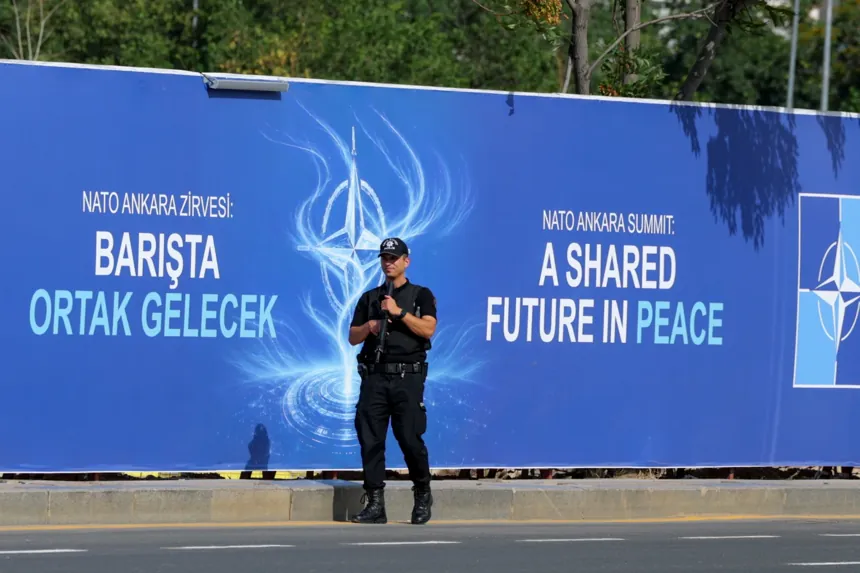
ANKARA, Turkey – Leaders of the 32-member NATO alliance gathered in Ankara on Tuesday for a two-day summit dominated by questions over the United States’ future military role in Europe, as President Donald Trump presses allies to assume greater responsibility for the continent’s defense.
The meeting comes at a pivotal moment for the alliance, with Washington signaling a reduced security role while urging European members to strengthen their military capabilities. NATO leaders are expected to focus on defense spending, continued support for Ukraine and the future direction of the alliance amid broader geopolitical tensions.
Ahead of the summit, Trump criticized several European allies after some countries declined to allow U.S. forces to use their military bases for operations against Iran. He singled out Britain, France, Germany, Italy and Spain, saying he wanted “loyalty” from NATO partners.

Although NATO summits traditionally reaffirm the alliance’s collective security commitments, this year’s gathering takes place as the trans-Atlantic relationship faces renewed strain. Organizers have framed the meeting around the goal of building “a stronger Europe in a stronger NATO,” while the Trump administration has promoted what it describes as a transition to “NATO 3.0.”
Turkey hosts leaders under tight security
Turkish President Recep Tayyip Erdogan is hosting the summit at the Bestepe Presidential Compound in Ankara. Turkish authorities also unveiled a newly converted airport, built from a former military airfield, to receive visiting delegations.
Security measures have been significantly increased, with air defense systems on alert, tens of thousands of police deployed and restrictions placed on traffic and public gatherings around the capital.
The Turkish Journalists Association said more than a dozen people, including two journalists, were detained during security operations before the summit.
Erdogan is scheduled to host a dinner Tuesday evening attended by NATO leaders and representatives from Japan, South Korea, Australia and New Zealand. Ukrainian President Volodymyr Zelenskyy is also expected to participate.
■ Related News


Alongside the leaders’ meetings, NATO foreign ministers will convene the NATO-Ukraine Council, while defense ministers will meet counterparts from Indo-Pacific partner countries. Officials from Gulf Arab states are also scheduled to hold discussions, and Trump is expected to meet Syrian President Ahmad al-Sharaa.
The alliance’s leaders will hold their only formal working session on Wednesday before issuing a joint statement outlining the summit’s conclusions.
Defense spending remains central issue
Increasing defense spending remains NATO’s top official priority as Washington continues urging allies to invest more in their armed forces.
NATO Secretary-General Mark Rutte said European allies and Canada increased defense spending by 20% in 2025, but that is unlikely to satisfy the Trump administration despite previous commitments to raise military investment relative to national economic output.
The U.S. military budget for 2026 is projected at $901 billion, representing about 3.3% of gross domestic product.
Alliance officials also intend to highlight efforts to modernize military capabilities and expand defense production. A defense industry forum on the sidelines of the summit brings together NATO officials, partner governments and defense companies to promote increased weapons manufacturing and technological innovation.
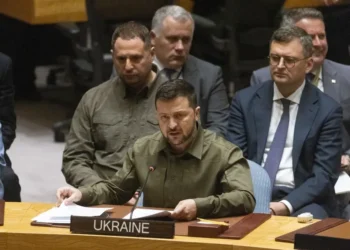
Continued military support for Ukraine also remains high on the agenda. European allies and Canada now finance most of Kyiv’s military needs, including approximately 90% of the country’s air defense systems, as Russia’s full-scale invasion enters its fifth year.
US troop presence and Iran dominate broader discussions
Although the leaders’ formal working session is expected to last only about three hours, much of the discussion is likely to focus on the future of U.S. troop deployments in Europe and the regional consequences of the U.S.-Israel conflict with Iran.
European governments are seeking greater clarity over Washington’s military plans after repeated statements by Trump about reducing the American military presence on the continent.
Ahead of the summit, the Pentagon announced a six-month review of U.S. force deployments in Europe. The assessment will examine Europe’s progress toward greater self-defense while also evaluating whether American forces retain full access to allied military bases and overflight rights.
NATO itself played no operational role in the conflict involving Iran, and the alliance has no collective agreement governing the use of member states’ bases or airspace for such military operations, although individual allies maintain separate bilateral arrangements with the United States.
During a public meeting with Rutte on June 24, Trump again criticized allies for their limited involvement in the conflict, saying, “We don’t need their money — we don’t need anything. I just want loyalty.”
Under NATO’s founding treaty, member states pledge collective defense through Article 5, committing to regard an attack on one ally as an attack on all. The extent of any additional expectations Trump may have regarding allied support remains unclear.
This report is based on reporting by The Associated Press.
Topics: NATO | United States | Turkey | Donald Trump | Defense Spending | Ukraine | European Security | Military Alliance