DUBAI, United Arab Emirates – The United States launched a new wave of military strikes against Iran early Wednesday after three merchant vessels were struck in the Strait of Hormuz, marking another sharp escalation that threatens an interim agreement intended to halt fighting between the two countries and stabilize one of the world’s most important shipping routes.
According to U.S. Central Command, American forces targeted Iranian military assets in response to attacks on commercial vessels operating in international waters. The renewed military action comes as Iran continues funeral ceremonies for Supreme Leader Ayatollah Ali Khamenei, whose death at the start of the conflict has added uncertainty to the country’s political and security landscape.
The latest exchange further complicates efforts to restore unrestricted navigation through the Strait of Hormuz, revive negotiations over Iran’s nuclear program and secure a lasting end to the war that began on Feb. 28.

US expands military campaign following shipping attacks
In a statement posted on social media, U.S. Central Command said the strikes were intended “to impose heavy costs for targeting and attacking commercial shipping crewed by innocent civilians in an international waterway.”
Two U.S. officials, speaking on condition of anonymity because the operation was ongoing, said American forces were targeting Iranian air defense systems, coastal surveillance facilities, ground-to-air missile batteries, launch sites for anti-ship cruise missiles and drones, as well as Iranian port infrastructure.
One of the officials said the operation was expected to continue for several hours and would strike roughly eight times as many targets as the retaliatory attacks conducted at the end of June. The official said Washington believed Iran had ignored previous warnings and was therefore increasing military pressure.
Iranian state media reported explosions in Qeshm, Bandar Abbas and Sirik. Iran’s Deputy Foreign Minister Kazem Gharibabadi wrote on X that the American strikes violated the interim agreement reached between the two countries.
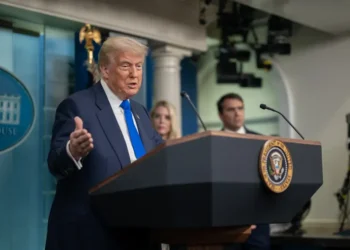
The operation also coincided with President Donald Trump’s attendance at a NATO summit in Turkey.



Washington revokes Iranian oil sales license
Hours after the attacks on commercial shipping, the United States revoked a license that had temporarily allowed the sale of Iranian oil under the interim agreement reached to reduce hostilities.
A U.S. official said the authorization was withdrawn because Iran’s actions in the Strait of Hormuz required consequences. The official also spoke anonymously because they were discussing internal government reasoning.
Iran’s Foreign Ministry condemned the decision, saying the United States had breached the interim agreement and would bear responsibility for the consequences.
U.S. sanctions targeting Iranian oil exports have remained in place since the 1979 Iranian Revolution. During the conflict, however, Washington had twice permitted limited Iranian oil sales as an incentive to support negotiations after fighting disrupted maritime traffic through the strait.
Commercial vessels come under attack
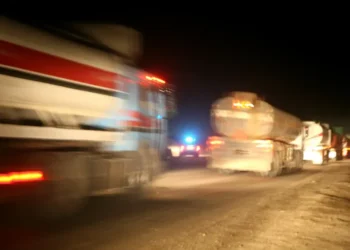
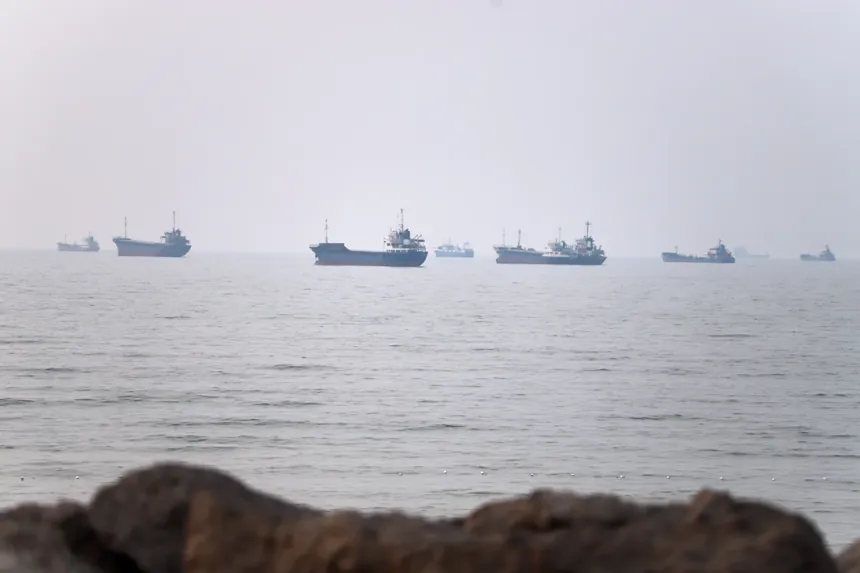
The latest attacks represented the largest number of strikes against commercial vessels in a single day since late April, according to the U.N. International Maritime Organization.
The United Kingdom Maritime Trade Operations center said one tanker caught fire after being struck while sailing off the coast of Oman. Iranian state television reported that the liquefied natural gas tanker was attacked after disregarding warnings, though it stopped short of directly claiming responsibility.
The other two ships sustained damage but remained seaworthy, and no injuries were reported, according to the British maritime agency.
Location data released by the agency indicated all three incidents occurred near Oman or the neighboring United Arab Emirates, suggesting the vessels were using the internationally recognized route close to Omani waters.
Iran has repeatedly declared that only shipping routes approved by Tehran are safe and has been suspected of previous attacks against vessels using routes closer to Oman.
Before the conflict, approximately one-fifth of globally traded oil and natural gas passed through the Strait of Hormuz, making any disruption a significant concern for global energy markets.
Regional concerns over maritime security
Qatar condemned the attack on one of its vessels after Foreign Ministry spokesperson Majed Al-Ansari said the Qatari tanker Al Rekayyat had been targeted in what he described on X as an unacceptable attack on international navigation and global energy security.
Al-Ansari said Qatar held Iran “fully legally responsible.”
The Joint Maritime Information Center, a multinational organization overseen by the U.S. Navy, advised commercial shipping earlier this week that the expanded route around Oman remained open to maritime traffic.
Under the interim arrangement, Iran and the United States had agreed to allow ships to transit the Strait of Hormuz without charges for 60 days. Tehran, however, maintained that it should regulate vessel routing and later impose transit fees, a proposal rejected by the United States and several Gulf Arab states.
Shipping data firm Kpler reported that at least 108 vessels transited the strait during the previous weekend using multiple available routes.
Funeral ceremonies for Khamenei continue
Iranian authorities transported Khamenei’s body to the religious city of Qom, where large crowds gathered Tuesday for funeral ceremonies.
State television broadcast live footage showing hundreds of thousands of mourners walking toward Jamkaran Mosque. In Shiite tradition, the site is associated with Muhammad al-Mahdi, the 12th Imam, who is believed to one day return.
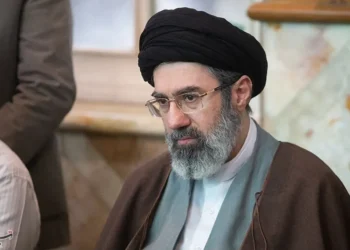
Khamenei’s son and successor, Supreme Leader Ayatollah Mojtaba Khamenei, has not appeared publicly since the ceremonies began in Tehran on Saturday. He is believed to be in hiding after reportedly being wounded in the airstrike that killed his father.
Late Tuesday, Khamenei’s body arrived in Najaf, Iraq, where officials from both countries received it ahead of planned processions in Najaf and Karbala. He is scheduled to be buried Thursday at the Imam Reza shrine in Mashhad, his birthplace.
This report is based on reporting by The Associated Press.
Topics: United States | Iran | Strait of Hormuz | Gulf Security | Commercial Shipping | NATO | Oil Exports | Regional Conflict