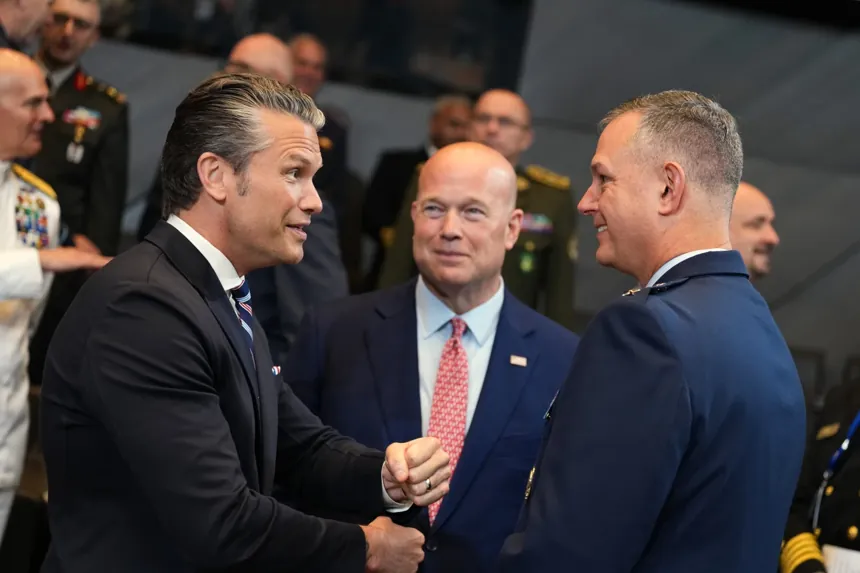
BRUSSELS, Belgium — European members of North Atlantic Treaty Organization have filled most of the military capability gaps created by recent U.S. reductions in the alliance’s force commitments, NATO’s top military commander said Friday, as leaders prepare for a summit where defense planning will be a central focus.
According to Associated Press, U.S. Gen. Alex Grynkewich said European allies acted within weeks after the United States announced on June 3 that it would reduce several military contributions available under NATO’s crisis-response framework.
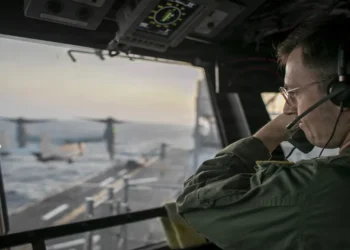
The U.S. decision included plans to scale back assets such as an aircraft carrier and accompanying support ships, aerial refueling aircraft and dozens of fighter jets assigned to the alliance’s force planning. The Pentagon also began reviewing contingency plans for supporting Europe in the event of an armed attack.

Europe Expands Military Contributions
Grynkewich said allied governments moved quickly to compensate for most of the reduced U.S. capabilities within the alliance’s force structure.
“In a matter of weeks, European Allies have largely filled the gaps left by U.S. reductions to the NATO Force Model,” he said.
He added that where European countries could not provide identical capabilities, NATO was evaluating alternative assets capable of delivering similar operational effects. Grynkewich did not identify which capabilities remain outstanding or what alternatives are under consideration.
NATO Force Model Guides Crisis Response
The NATO Force Model serves as the alliance’s framework for making military forces from its 32 member states available during peacetime, crises or armed conflict. It outlines the personnel and equipment commanders can deploy in successive phases during the first six months of a potential conflict.
The Pentagon’s decision surprised many allies because it reduced the U.S. military resources designated for that planning structure as Washington increasingly prioritizes potential security challenges in the Indo-Pacific region, particularly those involving China.



In response, European allies and Canada reviewed available military assets that could be committed should a member state come under attack. Britain, for example, has increased the readiness of a second aircraft carrier and additional F-35 fighter aircraft for potential alliance operations.
Summit to Focus on Alliance Readiness
The issue is expected to feature prominently during NATO leaders’ summit scheduled for July 7-8 in Turkey, where force planning and burden-sharing are expected to remain key agenda items.
Mark Rutte has sought to reassure allies that the changes do not signal a weakening of the alliance’s collective defense commitments. Last month, he said the location of military assets during peacetime differs from the resources that would become available if NATO’s defense plans were activated.
Rutte also expressed confidence that the United States would reinforce Europe if a major conflict emerged, pointing to previous instances in which Washington shifted military resources to respond to international crises.
Collective Defense Remains Unchanged
Under Article 5 of NATO’s founding treaty, all 32 member states agree that an armed attack against one ally is considered an attack against all. While the provision establishes the principle of collective defense, it does not legally require every member to provide military assistance, although many allies would be expected to do so.
The alliance continues to review force planning as member states adapt to evolving security priorities while maintaining readiness across Europe.
Tags: NATO, Europe, United States, Alex Grynkewich, Mark Rutte, Military, Defense, Security, NATO Summit, Article 5, Pentagon, Transatlantic Alliance