JERUSALEM (AP) – Israel on Monday recovered the remains of the last Israeli hostage held in Gaza, marking the formal close of the ceasefire’s initial phase and pushing negotiations into a far more complex stage that will test whether the truce can hold.
The return of police officer Ran Gvili’s body brings a measure of closure to his family and to a country that has closely followed the fate of those taken during the Hamas-led Oct. 7, 2023, attack. It also removes a major procedural hurdle in the ceasefire agreement, clearing the way for talks on border crossings, humanitarian access, and the longer-term political and security future of Gaza.
Israeli officials say the next phase will involve reopening Gaza’s southern border with Egypt, expanding aid deliveries, and addressing core issues that have eluded previous diplomatic efforts, including Hamas’ military status and post-war governance in the territory.
Recovery of the last hostage
The Israeli military said Gvili’s remains were recovered from a cemetery in northern Gaza and transferred back to Israel on Monday. Gvili, a 24-year-old police officer, was killed while fighting Hamas militants during the Oct. 7 assault and was among the first taken into Gaza, according to Israeli officials.
Prime Minister Benjamin Netanyahu described the recovery as “an incredible achievement,” praising Israeli forces involved in the operation. Speaking later in parliament, he said the completion of the hostage file allowed Israel to move forward with the next phase of the ceasefire.
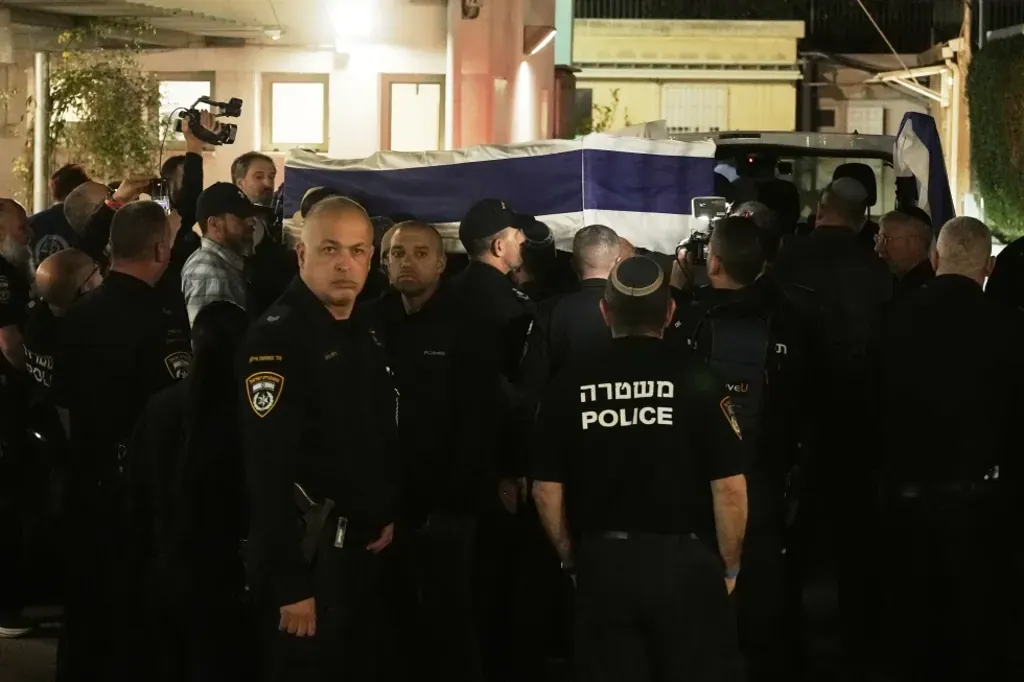
Gvili’s coffin, draped in an Israeli flag, was received at an army post near the Gaza border by relatives, police officers from his unit, and senior military officials. Crowds gathered along nearby roads as the convoy traveled toward Tel Aviv, where it arrived Monday night.
“You should see the honor you’re receiving here,” his father, Itzik Gvili, said at the handover ceremony. “The entire people are with you.”
The return of all remaining hostages, living or dead, was a central requirement of the ceasefire’s first phase. Hamas said it has now fulfilled those obligations.
Ceasefire moves to a more difficult stage
With the first phase concluded, attention has shifted to measures that are politically and operationally far more contentious.
Netanyahu’s office said that once the recovery operation was completed, Israel would move to reopen the Rafah crossing between Gaza and Egypt. The crossing has been largely closed since May 2024, with only limited, temporary openings, and is viewed by Palestinians as their primary link to the outside world.
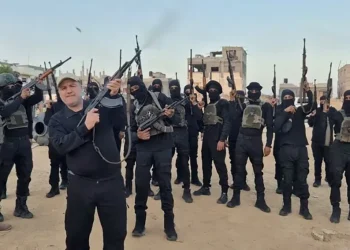
The second phase of the ceasefire envisions expanded humanitarian access, the possible deployment of an international security mechanism, the gradual pullback of Israeli forces, and discussions on Gaza’s reconstruction. It also calls for the disarmament of Hamas, which has ruled the territory for nearly two decades.
“The next phase is disarming Hamas and demilitarizing the Gaza Strip,” Netanyahu said in parliament, emphasizing that reconstruction would follow only after security arrangements are addressed.
Those conditions have long been rejected by Hamas, making the next round of talks particularly fragile.
Palestinian hopes and uncertainty
In Gaza, news of the recovery was met with cautious optimism that tangible changes could follow, particularly at the Rafah crossing.
“We hope this will close off Israel’s pretexts and open the crossing,” said Abdel-Rahman Radwan, a Gaza City resident whose mother requires cancer treatment outside the enclave.
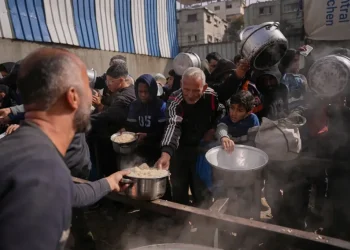
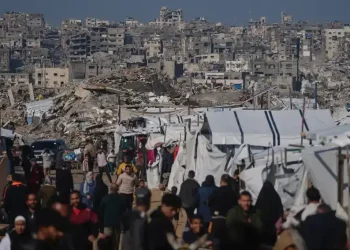
Others stressed the urgency of increased aid. Ahmed Ruqab, who lives with his family of six in a tent in the Nuseirat refugee camp, said mediators and the United States must press Israel to allow more supplies into Gaza.
“We need to turn this page and restart,” he said.
The United Nations said large quantities of aid are already positioned in Egypt. Ted Chaiban, UNICEF’s deputy executive director, said there is a significant backlog of supplies ready to enter Gaza once access is granted.
He said the next phase must go beyond food and medicine to include materials for permanent shelter and basic infrastructure repairs, warning that emergency assistance alone will not stabilize conditions.
U.S. and regional mediation
U.S. officials said Egypt, Qatar and Turkey played key roles in facilitating the recovery of Gvili’s remains. Speaking to reporters on a call organized by the White House, the officials said Hamas cooperated in the effort.
They added that Washington now expects both sides to advance into the ceasefire’s second phase, with a focus on Hamas disarming in line with the agreement. The officials spoke on condition of anonymity under the terms of the briefing.
Former U.S. President Donald Trump, whose administration helped shape the ceasefire framework, posted on social media that many had believed the recovery was impossible. Gvili’s mother, Talik, later thanked Israeli authorities and Trump for helping the family “achieve closure.”
Israel and Hamas have traded blame in recent months over delays in locating Gvili’s remains, with Israel accusing Hamas of obstruction and Hamas saying it had shared all available information.
Broader toll of the war
The Oct. 7, 2023, attack on southern Israel killed about 1,200 people and resulted in 251 hostages being taken into Gaza, according to Israeli authorities. Since the ceasefire began, Israel has recovered or received the return of 20 living hostages and the remains of 27 others, prior to Gvili.
Under the ceasefire deal, Israel has released roughly 2,000 Palestinian prisoners, many detained during the war without formal charges. It has also returned the bodies of more than 300 Palestinians to Gaza, where local officials say identification efforts remain difficult.
Despite the truce, violence has not fully subsided. Gaza hospitals reported that Israeli forces killed two Palestinians on Monday. One of the deaths occurred near the area where Israeli troops were searching for Gvili’s remains.
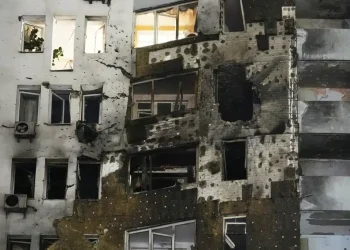
Gaza’s Health Ministry says at least 71,660 Palestinians have been killed since the war began, including more than 480 since the latest ceasefire took effect. The ministry’s casualty figures are considered broadly reliable by U.N. agencies, though Israel disputes some aspects of the data.
Press access and symbolic closure
In a symbolic gesture marking the end of the hostage chapter, Israeli President Isaac Herzog on Monday removed the yellow pin worn by many Israelis in solidarity with the captives and their families.
Meanwhile, the Foreign Press Association asked Israel’s Supreme Court to lift restrictions preventing independent international journalists from entering Gaza. Israel has barred unsupervised media access since the 2023 attacks, citing security concerns.
FPA lawyers argued that with aid workers operating inside Gaza, journalists should also be allowed independent entry. The court is expected to rule in the coming days.
As Israel and Hamas prepare for the next phase of negotiations, the recovery of Ran Gvili’s remains underscores both a moment of national closure and the scale of unresolved issues that now lie ahead.
This article was rewritten by JournosNews.com based on verified reporting from trusted sources. The content has been independently reviewed, fact-checked, and edited for accuracy, neutrality, tone, and global readability in accordance with Google News and AdSense standards.
All opinions, quotes, or statements from contributors, experts, or sourced organizations do not necessarily reflect the views of JournosNews.com. JournosNews.com maintains full editorial independence from any external funders, sponsors, or organizations.
Stay informed with JournosNews.com — your trusted source for verified global reporting and in-depth analysis. Follow us on Google News, BlueSky, and X for real-time updates.