The U.S. stock market moved little Tuesday as investors monitored developments in the conflict involving Iran and assessed the potential impact on global energy supply. Market participants remain focused on whether the geopolitical crisis could prolong volatility in oil prices and weigh on global economic conditions.
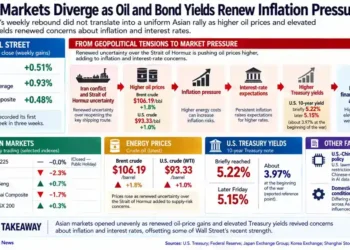
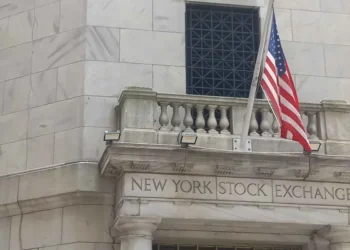
The S&P 500 slipped 0.2% to close at 6,781.48, while the Dow Jones Industrial Average declined 34.29 points, or 0.1%, finishing at 47,706.51. The Nasdaq Composite edged slightly higher, gaining 1.16 points to end the session at 22,697.10. Market data cited by financial outlets including Bloomberg and Reuters indicate investors remain cautious amid persistent uncertainty surrounding the conflict and its potential economic implications.
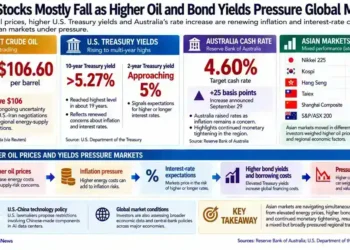
Oil prices, which have been a central driver of recent market volatility, stabilized below the peaks reached earlier in the week. Brent crude, the global benchmark, settled at $87.80 per barrel, according to commodity market data, after retreating from levels near $120 per barrel reached during intraday trading earlier in the week.

Energy Supply Risks Drive Market Sensitivity
Fluctuations in oil prices have become a key factor influencing global equity markets, as traders assess the possibility that hostilities in the Middle East could disrupt critical energy transport routes.
The Strait of Hormuz, a narrow shipping channel off Iran’s coast, typically handles about 20% of the world’s oil shipments, according to energy market estimates widely cited by international financial media. Concerns that military activity could interrupt shipments through the strait have intensified volatility across commodity and equity markets.
Statements from Donald Trump, who has addressed the conflict publicly, suggested that maintaining open access to the shipping corridor remains a strategic priority. According to comments carried by several media outlets, the U.S. administration warned that any effort to obstruct oil flows through the strait could trigger a significant military response.
Meanwhile, Iranian officials signaled that Tehran would determine when hostilities conclude, highlighting the continuing geopolitical uncertainty influencing investor sentiment.
Market Volatility Indicators Rise
Measures of market volatility have also increased as investors respond to rapidly shifting developments in the region.
■ Related News

A widely followed volatility index often described as Wall Street’s “fear gauge” climbed to its highest level since the U.S. administration previously announced sweeping tariff measures earlier this year. Analysts say the increase reflects heightened sensitivity among investors to geopolitical and commodity price risks.
According to Hakan Kaya, senior portfolio manager at Neuberger Berman, the outlook for oil markets remains highly dependent on whether shipping routes reopen or remain disrupted.
“The outlook for oil right now is about as binary as it gets,” Kaya said in comments reported by financial media. He noted that a reopening of the Strait of Hormuz could quickly remove the risk premium embedded in oil prices, while a prolonged closure could lead to one of the largest supply disruptions in modern energy markets.
Economic Risks Linked to Energy Prices
Economists warn that sustained increases in oil prices could add pressure to an already fragile global economic environment.
Higher fuel costs could raise expenses for transportation, manufacturing, and logistics, potentially pushing consumer prices higher while slowing economic growth. In such circumstances, policymakers and analysts often raise concerns about the possibility of stagflation, a scenario characterized by weak economic growth combined with elevated inflation.
Historically, global equity markets have tended to recover relatively quickly from geopolitical conflicts, provided that energy markets stabilize within a relatively short period. However, analysts note that the scale of potential supply disruption in the Middle East could extend market uncertainty if the conflict continues.
Corporate Developments Within the Market
Despite the broader market caution, several individual stocks posted notable moves during the trading session.
Shares of Vertex Pharmaceuticals rose 8.3%, marking the largest gain within the S&P 500. The increase followed encouraging developments from a clinical trial evaluating a treatment for a severe kidney disease, according to company disclosures cited in financial media reports.
By contrast, West Pharmaceutical Services declined 5.7% after the company announced that Eric Green plans to retire as chief executive and chair once the board appoints a successor.
Global Markets React to Energy Price Movements
International equity markets showed stronger gains as investors reacted to easing oil prices and geopolitical statements released after U.S. trading hours.
Major indexes in Asia and Europe advanced during Tuesday trading. South Korea’s benchmark index rose 5.3%, while Hong Kong’s Hang Seng gained 2.2%, according to market data reported by global financial outlets. In Europe, France’s CAC 40 advanced 1.8%.
Japan’s Nikkei 225 climbed 2.9% after revised government data indicated that the country’s economy expanded more rapidly in the final quarter of last year than previously estimated.
Bond Market Signals Remain Stable
In U.S. fixed-income markets, the yield on the 10-year Treasury note rose to 4.15%, up from 4.12% late Monday, reflecting modest adjustments in investor expectations for economic conditions and inflation.
For now, financial markets remain closely tied to developments in energy supply risks and geopolitical signals from the Middle East. Investors are expected to continue monitoring the situation for indications of whether oil flows through key shipping routes will normalize or face prolonged disruption.