Iran’s Revolutionary Guard is facing mounting evidence that the regional architecture it spent decades constructing is beginning to narrow under sustained military and political pressure. Once able to project influence across multiple Middle Eastern fronts with layered deterrence, the force now confronts battlefield attrition, disrupted alliances and increasing scrutiny over its command resilience.
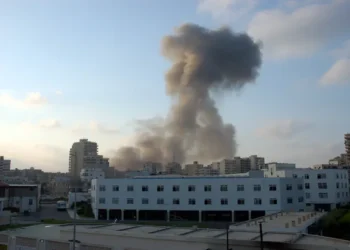
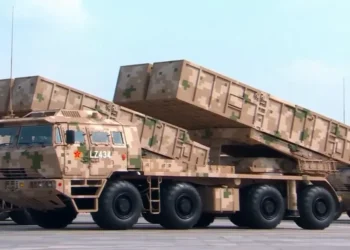
As first reported by Reuters, Israeli airstrikes in recent weeks have killed senior Iranian commanders and targeted ballistic missile infrastructure linked to the Guard. The reported losses come amid broader exchanges between Israel and Iran that have shifted from shadow confrontation to more direct military engagement.
The cumulative effect is not merely tactical. It signals potential contraction in the strategic depth that long insulated Tehran from direct vulnerability.

Strategic Depth Begins to Shrink
For years, the Islamic Revolutionary Guard Corps built what Iranian officials describe as an “Axis of Resistance” — a network of allied armed movements stretching from Lebanon to Yemen. That network allowed Tehran to project influence indirectly, reducing the need for direct confrontation.
But the architecture has come under strain. In Syria, the fall of President Bashar Assad’s government in late 2024 removed a central logistical corridor that had connected Iran to Lebanon’s Hezbollah. Israeli operations have increasingly targeted supply lines and weapons transfers, complicating coordination across theaters.
The Guard’s ability to rely on layered regional positioning — once its core deterrence principle — appears less assured.
Leadership Losses Expose Operational Gaps
Beyond territorial setbacks, the reported deaths of senior commanders have intensified focus on succession and operational continuity. According to a report by The Associated Press, several high-ranking officers were among those killed in recent strikes on missile sites and command facilities.
Iranian Foreign Minister Abbas Araghchi said in remarks broadcast by Al Jazeera that certain military units were operating under previously issued standing directives. While such contingency planning is common in wartime, the acknowledgment has fueled discussion among analysts about whether command-and-control systems are experiencing strain.




Because the Guard oversees Iran’s ballistic missile arsenal and much of its drone fleet, any ambiguity in centralized authority carries strategic implications beyond immediate battlefield conditions.
Economic Leverage Faces External Pressure
Strategic contraction is not limited to military theaters. The Guard’s economic footprint — spanning infrastructure, energy and telecommunications through affiliated entities such as Khatam al-Anbia — has long provided financial insulation against sanctions.
However, prolonged regional escalation risks compounding economic vulnerability. Continued sanctions and military disruptions have contributed to currency volatility and inflation pressures, according to assessments from the International Monetary Fund.
Should regional instability deepen, the Guard’s economic networks may face additional operational constraints, particularly if Gulf states harden their posture toward Tehran.
Deterrence Model Under Revision
The Guard’s deterrence model historically rested on dispersion — distributing risk across multiple fronts so that no single strike could significantly weaken Iran’s strategic position. Recent developments challenge that assumption.
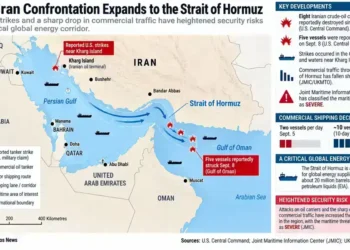
Direct missile exchanges between Israel and Iran mark a shift from proxy confrontation to overt engagement. Strikes affecting Oman and Qatar — states that have previously mediated between Tehran and Washington — underscore the widening geographic scope of risk.
If mediation channels narrow while regional partners weaken, Tehran’s room for calibrated escalation may diminish.
Resilience Tested by Compression
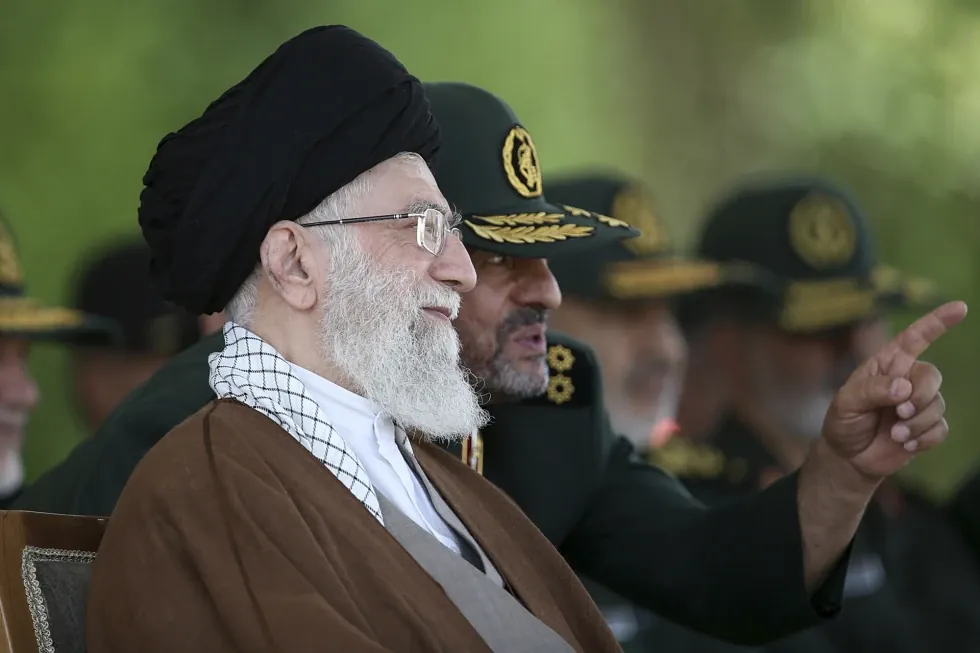
The Revolutionary Guard retains deep institutional roots. Created after the 1979 revolution to defend Iran’s clerical system, it operates parallel to the regular armed forces and answers directly to the supreme leader. Decades of integration into the political and economic structure provide durability.
Yet the current environment reflects compression rather than expansion. Leadership attrition, disrupted corridors, intensifying Israeli operations and diplomatic uncertainty collectively test the Guard’s capacity to maintain strategic breadth.
Whether Tehran adapts by consolidating its footprint or attempting renewed expansion will shape the next phase of regional dynamics. For now, the force that once extended influence across multiple conflict zones is operating within a narrower and more contested strategic perimeter.