Journos News - Breaking News, World News, Top Stories, Todays Headlines and Flash Reports
Tuesday, July 14, 2026
  • Login
  • Home
  • World
    • Africa
    • Americas
    • Asia
    • Europe
    • Middle East
    • Oceania
  • Politics
  • Business
  • Technology
  • Health
  • Science
  • Sports
  • Entertainment
  • Culture
No Result
View All Result
  • Home
  • World
    • Africa
    • Americas
    • Asia
    • Europe
    • Middle East
    • Oceania
  • Politics
  • Business
  • Technology
  • Health
  • Science
  • Sports
  • Entertainment
  • Culture
No Result
View All Result
Journos News - Breaking News, World News, Top Stories, Todays Headlines and Flash Reports
No Result
View All Result
Home In Depth

Iran After Khamenei: Navigating Leadership, Power, and Regional Stability

The killing of Iran’s Supreme Leader exposes complex succession challenges

The Daily Desk by The Daily Desk
March 1, 2026
in In Depth
0
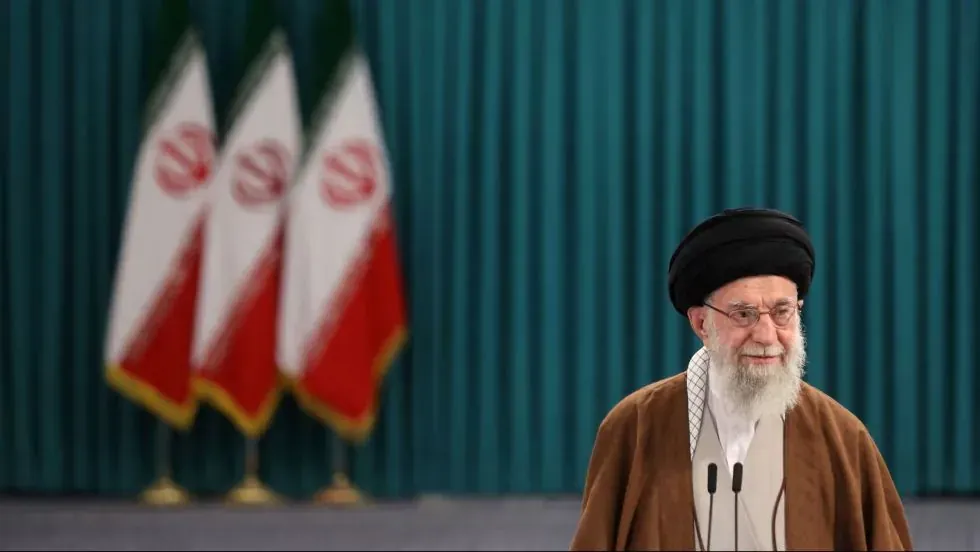
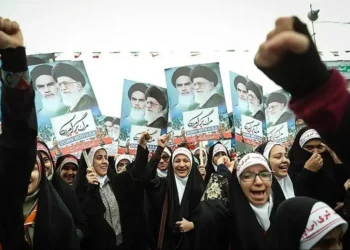
Iranian leaders’ portraits and Tehran skyline at sunset - Majid Asgaripour/Wana News Agency/Reuters

The death of Ayatollah Khamenei triggers questions about Iran’s future leadership. - Majid Asgaripour/Wana News Agency/Reuters

The death of Supreme Leader Ayatollah Ali Khamenei has opened a critical moment in Iranian politics, highlighting the intricate structures underpinning the country’s governance. While many Iranians have celebrated the event, it also triggers uncertainty over who will assume control and how the regime’s remaining institutions will respond. The international implications are significant, particularly for regional security, U.S.-Israel strategy, and the global balance of power in the Middle East.

Iran’s political system is deeply entrenched, combining theocratic authority with centralized military and security control. Khamenei’s decades-long rule was marked by rigid repression, economic mismanagement, and consolidation of power within a security elite. His removal, whether through assassination or natural succession, is not merely symbolic; it tests the resilience of Iran’s institutions and the loyalty of its key actors. As the regime confronts internal and external pressures, the choices made in Tehran will reverberate far beyond its borders.

The current moment underscores the limitations of externally imposed solutions to entrenched autocracies. Past interventions in countries such as Venezuela and Syria demonstrate that top-down leadership removal rarely produces predictable outcomes. Iran’s deeply embedded networks of political, religious, and military authority mean that even the sudden elimination of its highest-ranking officials cannot ensure a transition aligned with foreign expectations.

Political and Institutional Causes

Iran’s governance structure centers on the Supreme Leader, who wields ultimate authority over the executive, judiciary, military, and security apparatus. This centralization amplifies the consequences of leadership disruption. Khamenei’s tenure was reinforced by loyalist networks within the Islamic Revolutionary Guard Corps (IRGC) and security councils, which enabled rapid suppression of dissent, as evidenced during the January 2026 protests.

Economic grievances have also fueled instability. Despite Iran’s substantial energy resources, widespread mismanagement and corruption have left large segments of the population dependent on state employment or informal networks for survival. These systemic economic pressures exacerbate the stakes for competing factions within the regime, who often prioritize control over reform or moderation.

RELATED POSTS

What Iran and the United States Stand to Gain From the Reported Interim Deal

What Iran and the United States Stand to Gain From a Reported Deal — And Why It Matters Now

Jensen Huang’s Call for ‘New Social Norms’ Reflects a Growing Debate Over AI’s Place in Society

What We Know — and Still Don’t Know — About the Emerging Deal to End the Iran War

The Differences — and Similarities — in the Trump and Putin Visits to China

What to Know About the Bundibugyo Virus and Congo’s Latest Ebola Outbreak

Security Apparatus and Regional Implications

The IRGC and associated security agencies form a parallel power structure that sustains the regime independently of formal political offices. Recent targeted killings, including top military and security figures, have disrupted this elite layer but have not eliminated the broader institutional capabilities. In contrast to Syria in 2024, where prolonged conflict weakened security forces, Iran’s agencies retain both operational capacity and experience in suppressing uprisings.

Regionally, the sudden decapitation of leadership raises the risk of cross-border escalation. Retaliatory strikes against neighboring countries, launched under the remaining leadership, demonstrate both operational reach and strategic signaling. For nations such as Israel and the U.S., tactical victories against Iran’s top officials do not resolve the underlying challenge: a state with robust internal control mechanisms and a population accustomed to authoritarian governance.

Historical Context and Precedent

Iran’s modern political trajectory has shifted from a constitutional monarchy under the Pahlavi dynasty to a theocratic republic. Khamenei’s rule reinforced an autocratic model, blending ideological control with pragmatic governance to maintain elite loyalty. Historical comparisons show that air campaigns or targeted eliminations seldom produce smooth regime transitions. In Venezuela, the U.S. attempted to shape leadership succession following Nicolás Maduro’s contested authority but faced resistance from entrenched political networks. Similarly, Iran’s internal dynamics limit the influence of external actors in determining its leadership path.

Succession Complexity

The absence of a transparent succession plan creates multiple scenarios. Hardline factions within the IRGC and security councils may consolidate power to ensure continuity, but this risks factional competition and internal fracture. Potential successors from within the regime face the dual challenge of preserving authority while avoiding provocation of external adversaries. Unlike Venezuela, there is no internal opposition fully prepared to step in; any leadership vacuum must be filled from existing power structures.

The social dimension is equally complex. While segments of the population hope for liberalization and economic improvement, the regime relies on coercive enforcement mechanisms and patronage networks. These dual pressures—popular aspiration versus institutional survival—shape the range of plausible outcomes in the coming months.

Strategic Calculus of External Actors

U.S. and Israeli officials perceive Khamenei’s removal as an opportunity to weaken Iran’s capacity to project power, particularly regarding its nuclear program and missile capabilities. Tactical strikes achieved immediate disruption of the regime’s top layer, yet they leave unresolved the systemic resilience of Iranian governance. External actors face a familiar challenge: achieving strategic goals in an environment where local structures and loyalties resist externally imposed solutions.

Leadership removal also interacts with broader regional dynamics. Neighboring states, initially encouraging restraint, now confront the consequences of retaliatory attacks, heightening regional tensions. The timing and execution of strikes, while technologically precise, cannot compensate for the entrenched sociopolitical and military frameworks that define Iranian statehood.

Potential Scenarios and Risks

Iran’s trajectory post-Khamenei is likely to be defined by internal negotiation, factional maneuvering, and continued suppression of dissent. Scenarios include the consolidation of a hardline successor, a patchwork of regional authority centers, or a protracted period of institutional uncertainty. Each path carries risks for domestic stability and regional security, particularly if competing factions perceive weakness or opportunity.

The absence of a straightforward “replacement” model underscores the limitations of conventional military or intelligence operations in producing predictable political outcomes. Even with superior firepower, the United States and Israel cannot fully shape Iran’s succession. Any transition will be contingent on internal legitimacy, elite consensus, and the regime’s ability to manage popular expectations.

Conclusion

The elimination of Ayatollah Ali Khamenei constitutes a pivotal moment in Iran’s history, but it does not simplify the country’s complex political reality. Iran’s autocratic-theocratic system, reinforced by loyalist security networks and patronage structures, ensures that succession will be contested and contingent. Regional neighbors and global powers face uncertainty as Tehran navigates internal power shifts, while domestic populations weigh aspirations against institutional resilience. Ultimately, the event demonstrates that removing a single leader, even at the apex of authority, rarely resolves the systemic challenges that have defined Iranian governance for nearly five decades. The international community will continue monitoring the situation closely, yet the path forward remains highly contingent on internal dynamics and factional calculations.

Tags: #GlobalNews#IranCrisis#IranLeadership#IranPolitics#IranSuccession#IRGC#Khamenei#MiddleEastPolitics#PoliticalTransition#RegionalSecurity#Tehran#USIsraelPolicy
The Daily Desk

The Daily Desk

The Daily Desk is a contributor at JournosNews.com covering politics, media, governance, and the evolving dynamics of public discourse. Stories published under this byline are produced in accordance with JournosNews' editorial standards, with an emphasis on verified reporting, accuracy, context, and impartiality.

Related Posts

What Iran and the United States Stand to Gain From the Reported Interim Deal

by The Daily Desk
June 22, 2026
0
Iranian and American diplomacy linked to oil and nuclear talks - Amirhosein Khorgooi/ISNA via AP

According to an Associated Press report, the United States and Iran have reached an interim agreement intended to end hostilities...

Read moreDetails

What Iran and the United States Stand to Gain From a Reported Deal — And Why It Matters Now

by The Daily Desk
June 18, 2026
0
Diplomacy talks between Iran and United States officials - Pakistan Prime Minister Office via AP

A reported understanding between the United States and Iran has renewed global attention on one of the world’s most sensitive...

Read moreDetails

Jensen Huang’s Call for ‘New Social Norms’ Reflects a Growing Debate Over AI’s Place in Society

by The Daily Desk
June 17, 2026
0
Jensen Huang discussing artificial intelligence and society's future - AP Photo/Jeffrey McWhorter

The Nvidia chief argues that artificial intelligence should be embraced rather than feared. His comments arrive as governments, businesses and...

Read moreDetails

What We Know — and Still Don’t Know — About the Emerging Deal to End the Iran War

by The Daily Desk
May 25, 2026
0
Diplomatic negotiations over an emerging Iran war agreement continue internationally - AP Photo/Vahid Salemi

The emerging diplomatic effort aimed at ending the current Iran war has triggered cautious international attention, but many aspects of...

Read moreDetails

The Differences — and Similarities — in the Trump and Putin Visits to China

by The Daily Desk
May 22, 2026
0
Donald Trump and Vladimir Putin during separate diplomatic visits to China - Alexander Kazakov, Sputnik, Kremlin/(Evan Vucci/Pool Photo via AP, File

The visits by former U.S. President Donald Trump and Russian President Vladimir Putin to China took place under very different...

Read moreDetails

What to Know About the Bundibugyo Virus and Congo’s Latest Ebola Outbreak

by The Daily Desk
May 19, 2026
0
Health workers responding to Ebola outbreak in eastern Congo - AP Photo/ Hajarah Nalwadda

The Bundibugyo virus, one of several species of Ebola, has resurfaced in the Democratic Republic of Congo during a new...

Read moreDetails

Understanding a rare but serious zoonotic disease and its transmission pathways

by The Daily Desk
May 9, 2026
0
Rodent carrier spreading hantavirus in enclosed contaminated environment- AP Photo/Misper Apawu

Hantavirus refers to a group of viruses primarily carried by rodents and transmitted to humans through environmental exposure. While infections...

Read moreDetails

Pope Leo XIV and Donald Trump: Religion, Power and the Politics of Modern Conservatism

by The Daily Desk
May 6, 2026
0
Pope Leo XIV and Donald Trump during political and religious discussions - AP Photo/Gregoria Borgia/Jacquelyn Martin

The emergence of Pope Leo XIV alongside the political influence of President Donald Trump represents two powerful institutions navigating a...

Read moreDetails

White House Dinner Shooting: Security, Risk, and the Limits of Protection at High-Level Events

by The Daily Desk
April 27, 2026
0
White House exterior with security presence during official evening event - Andrew Harnik/Getty Images

The phrase “White House dinner shooting” evokes a scenario that is both highly unusual and deeply consequential. While incidents involving...

Read moreDetails
Load More
Next Post
Aerial view of Tehran showing damaged buildings after strikes - The White House/X

Why the U.S. and Israel Attacked Iran and How Tehran Responded

Ali Khamenei, Iran’s Supreme Leader, consolidating political and religious authority - AP Photo/Hasan Sarbakhshian, File

Iran’s Supreme Leader: How Ali Khamenei Rose to Power and Centralized Authority

Emergency responders at Austin bar shooting scene early morning - Ricardo B. Brazziell/Austin American-Statesman via AP

Three Dead, 14 Injured in Austin Bar Shooting

JournosNews logo

Journos News delivers globally neutral, fact-based journalism that meets international media standards — clear, credible, and made for a connected world.

  • Categories
  • World News
  • Politics
  • Business & Markets
  • Technology
  • Health
  • Science
  • Sports
  • Arts & Culture
  • Resources
  • Editorial Standards
  • Submit a Story
  • Advertise with Us
  • Syndication & Partnerships
  • Site Map
  • Press & Media Kit
  • Editorial Team
  • Careers

Join thousands of readers receiving the latest updates, tips, and exclusive insights straight to their inbox. Never miss an important story again.

  • About Us
  • Editorial & Trust Center
  • Contact Us
  • Privacy Policy
  • Terms of Use & Copyright Notice

© JournosNews.com All rights reserved.

Welcome Back!

Login to your account below

Forgotten Password?

Retrieve your password

Please enter your username or email address to reset your password.

Log In
JournosNews

Independent Journalism.
Verified Facts.

You're about to read a professionally edited article from JournosNews.com.

Every article is produced in accordance with our editorial standards, emphasizing factual accuracy, transparent attribution, fairness, editorial independence, and meaningful context.

Editorial Standards
No Result
View All Result
  • Home
  • World
    • Africa
    • Americas
    • Asia
    • Europe
    • Middle East
    • Oceania
  • Politics
  • Business
  • Technology
  • Health
  • Science
  • Sports
  • Entertainment
  • Culture

© JournosNews.com All rights reserved.

This website uses cookies. By continuing to use this website you are giving consent to cookies being used. Visit our Privacy and Cookie Policy.