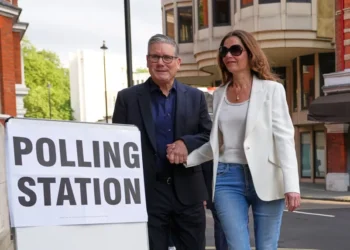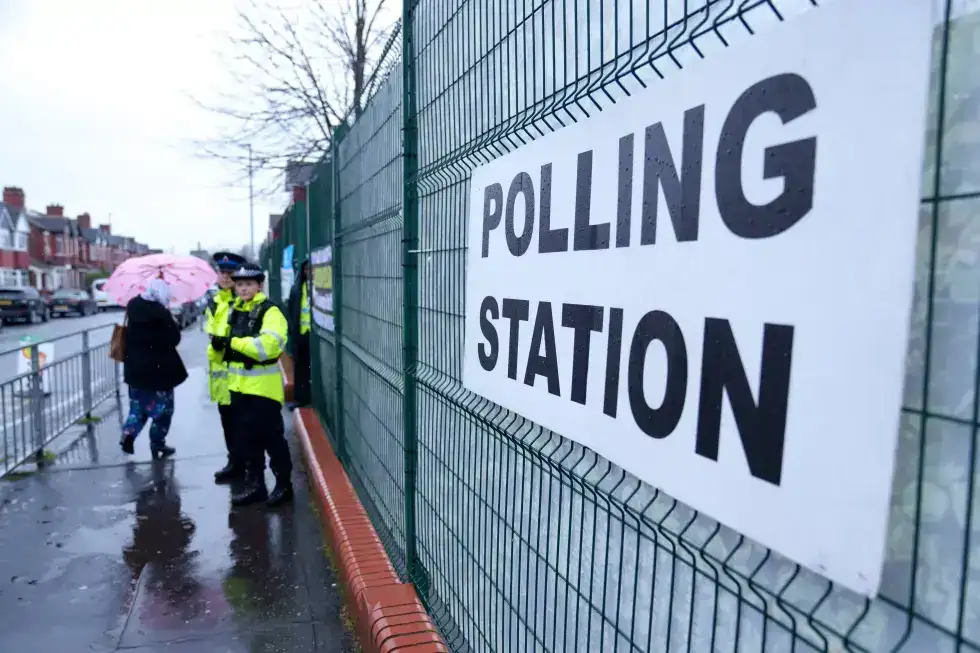
The Gorton and Denton by-election has become an early barometer of political sentiment in Britain, testing Prime Minister Keir Starmer’s authority less than two years after his Labour Party returned to power. Voters in the northwest England constituency cast ballots on Thursday in a race that pits Labour against challengers on both its left and right.
Polls closed at 10 p.m. local time, with results expected early Friday. While by-elections rarely determine the fate of a government outright, they can sharpen internal party tensions and signal shifts in the national mood.
The contest was triggered by the resignation of the previous Labour lawmaker and has drawn outsized attention because of tightening opinion polls and visible strains within the governing party.

A three-way race in Labour heartland
The Greater Manchester seat has elected Labour representatives for most of the past century. Yet the Gorton and Denton by-election has evolved into a competitive three-way fight between Labour candidate Angeliki Stogia, Reform UK’s Matthew Goodwin and Green Party contender Hannah Spencer.
Reform UK, led by Nigel Farage, holds only eight of the 650 seats in the House of Commons, compared with Labour’s commanding majority of 404. However, Reform has led several national opinion surveys in recent months, capitalizing on voter frustration over immigration and the cost of living. Its campaign message in Gorton and Denton has focused squarely on what it calls Labour’s economic drift and leadership missteps.
The Green Party, which has four seats in Parliament, is seeking to broaden its appeal beyond environmental issues. Under co-leader Zack Polanski, it has emphasized social justice, support for the Palestinian cause and drug policy reform — themes that resonate in a constituency with a sizable student population and many Muslim residents.
Local polling and betting markets have suggested the race is too close to call, underscoring the volatility of a seat once considered reliably Labour.
Pressure mounts on Starmer
For Starmer, the Gorton and Denton by-election is more than a local contest. It is a measure of whether Labour’s centrist governing strategy can withstand criticism from both flanks.
■ Related News




Since winning a landslide in July 2024, Starmer has struggled to deliver the economic revival he promised. Growth has lagged expectations, public services remain under strain, and many households continue to feel squeezed by living costs. While Labour pledged a return to stability after 14 years of Conservative rule marked by scandal and internal turmoil, the government has faced its own controversies.
Among the most damaging has been the fallout surrounding Peter Mandelson, the veteran Labour figure appointed as U.K. ambassador to Washington in 2024. Mandelson was dismissed in September 2025 after revelations that he had maintained a friendship with Jeffrey Epstein following Epstein’s 2008 conviction for sex offenses involving a minor. More recently, police confirmed they are investigating emails suggesting Mandelson may have shared sensitive government information with Epstein years ago. Mandelson was arrested and questioned before being released on bail; he faces no allegations of sexual misconduct.
The episode has unsettled Labour lawmakers and revived questions about Starmer’s judgment in making the appointment. In Westminster, party critics have quietly debated whether a poor showing in Gorton and Denton could embolden calls for leadership change, even though the next general election is not required until 2029.
Competing claims to block Reform
Both Labour and the Greens have framed the race as a referendum on whether Reform UK can break through in an urban English constituency.
Green candidate Spencer argued during the campaign that only her party could prevent a Reform victory, appealing to voters disillusioned with Labour’s centrist turn. Reform’s Goodwin, meanwhile, urged residents to “ditch Starmer” and send a message about immigration and economic policy.
Starmer presented the choice in broader terms, contrasting what he described as unity with division. His allies have acknowledged that by-elections are traditionally difficult for governing parties, particularly mid-term, when voters often use them to register dissatisfaction.
Andrew Western, a Labour lawmaker, said as polls closed that such contests are “always difficult for incumbent governments,” reflecting a long-standing pattern in British politics.
A shifting political landscape
The dynamics in Gorton and Denton mirror wider changes across the country. Traditional working-class neighborhoods that once formed Labour’s backbone have shown growing openness to Reform’s anti-immigration platform. At the same time, younger and more progressive voters have signaled frustration over Labour’s cautious stance on international issues, including Israel’s war against Hamas in Gaza.
This combination has created space for challengers from both ideological directions, a development that complicates Labour’s governing calculus. While the party still commands a large Commons majority, opinion surveys indicate its support has softened since 2024.
A Labour victory would offer Starmer breathing room, allowing him to argue that mid-term turbulence has not fundamentally eroded the party’s base. A defeat, by contrast, would underscore vulnerabilities and likely intensify internal debate about strategy and leadership.
Whatever the result, the Gorton and Denton by-election has exposed the competing pressures shaping British politics: economic unease, cultural divides and the search for political alternatives beyond the two traditional governing parties.
As ballots are counted, attention will turn not only to who wins the seat, but to what the outcome signals about the durability of Labour’s majority and the direction of the country’s political realignment.
Source: AP News – A special election in England pits Starmer’s Labour against rivals to left and right