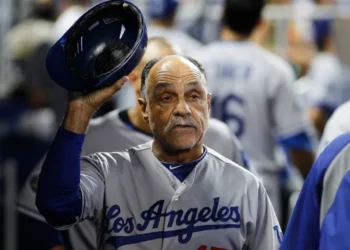
The death of Garret Anderson, the Garret Anderson and all-time hits leader for the Los Angeles Angels, was confirmed at age 53, marking the loss of one of the most productive hitters in the club’s history. His passing represents a significant moment for the franchise, where his career achievements continue to shape its record books and historical standing.
According to reporting from Associated Press, Anderson’s death was announced without immediate details regarding the cause. The Angels organization later acknowledged his contributions in a statement, recognizing his role in the team’s most successful era.
Franchise Records Define Long-Term Impact
Anderson’s career with the Angels spanned 15 Major League Baseball seasons, during which he established himself as the franchise’s all-time leader in hits. He accumulated 2,368 hits, a record that remains unmatched in club history, alongside 272 home runs and 1,292 runs batted in.

His offensive consistency placed him among the most reliable hitters of his era, particularly during the late 1990s and early 2000s. While not often in the national spotlight, Anderson’s production contributed directly to the Angels’ competitiveness within the American League.
World Series Contribution Anchors Career Legacy
A defining moment in Anderson’s career came during the 2002 World Series, where the Angels secured their first championship. Anderson played a key role throughout the postseason, delivering crucial hits that supported the team’s title run.
That championship remains the cornerstone of the franchise’s history, and Anderson’s involvement continues to be recognized as central to that achievement. League records and postseason statistics confirm his impact during that campaign.
Consistency Over Recognition Shapes Career Narrative
Despite his statistical output, Anderson was selected to the All-Star Game only three times, reflecting a career often defined more by steady performance than headline recognition. His ability to maintain production over multiple seasons, however, ensured his place among the Angels’ most valuable players.
The Associated Press noted that Anderson spent the majority of his career with one team, a rarity in modern baseball, reinforcing his identity as a franchise cornerstone rather than a transient star.
■ Related News




Organizational Recognition Highlights Lasting Influence
Following confirmation of his death, the Angels organization issued a statement honoring Anderson’s role in shaping the team’s identity during a competitive period in the American League. Team officials emphasized his professionalism and long-term contribution to the club’s success.
His records remain active benchmarks for current players, particularly in categories tied to longevity and offensive consistency.
Legacy Continues in Franchise History
Anderson’s career achievements place him firmly within the Angels’ historical framework, with his records continuing to influence how player performance is measured within the organization. His role in the 2002 championship and sustained offensive output ensure continued recognition in league archives.
Looking ahead, the Angels’ current roster operates in the shadow of a legacy built in part by Anderson’s contributions, with future players tasked with matching the standard he established over more than a decade in Major League Baseball.