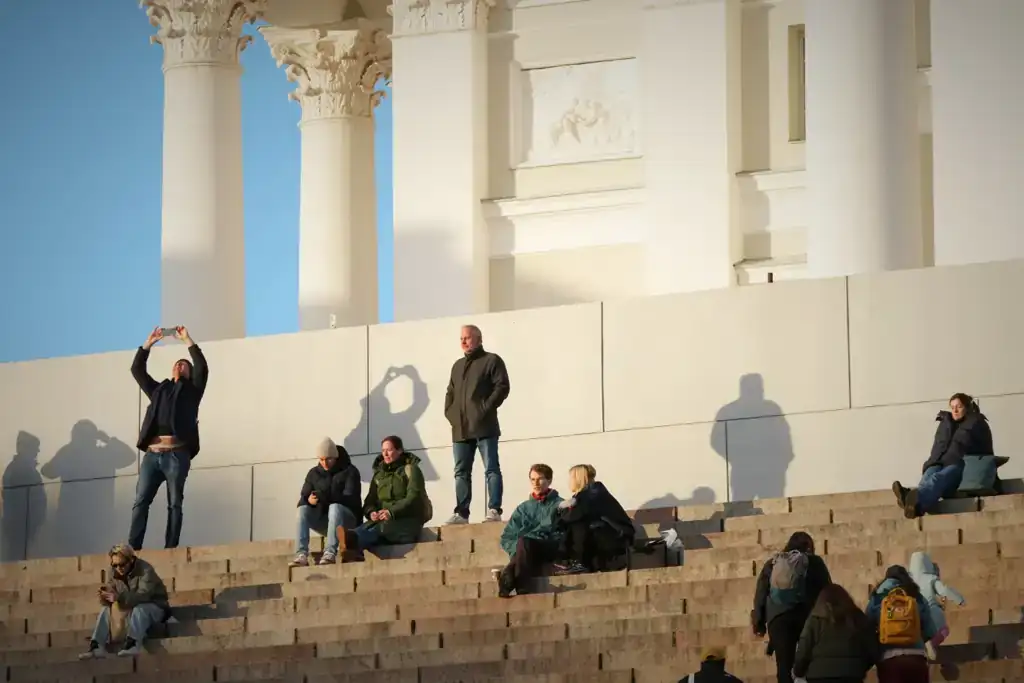
The Nordic region spends much of winter in partial or near-total darkness, with daylight shrinking to just a few hours in northern areas. Yet communities across Norway, Sweden and Finland have learned to manage the long, cold months with habits shaped by generations of adaptation. Experts say the same strategies can help people everywhere cope with the fatigue and low mood that arrive when sunlight disappears.
The winter solstice marks the year’s shortest day, but the season stretches well beyond that point. For many, feelings associated with the “winter blues” can begin as early as October and last until spring. Researchers interviewed across the region say the key to enduring this period lies in balancing sleep, social connection, light exposure and mindset — tools that have become part of Nordic winter culture.
Understanding How Darkness Disrupts the Body
Finland’s Dr. Timo Partonen, a research professor at the Finnish Institute for Health and Welfare, says the lack of daylight directly affects our circadian rhythm, the internal clock that regulates sleep and alertness. Without enough natural light, the body struggles to reset itself each morning.
People may sleep longer, he says, yet still wake feeling unrested. The lingering tiredness continues throughout the day because the sleep-wake cycle becomes misaligned. To counter this, Partonen recommends using a dawn simulator — sometimes called a sunrise alarm clock — which brightens a room gradually before waking hours. The slow increase in light can nudge the body back toward a healthier rhythm.
Alongside disrupted sleep, social withdrawal often becomes more common in wintertime. Irritability rises, tensions flare more easily and connections can weaken. Partonen notes that isolating only reinforces low mood, while maintaining relationships plays a significant role in improving symptoms.
Physical activity is another pillar of winter wellbeing. Consistent movement helps stabilize energy levels and reduce the risk of weight gain — typically ranging from 2 to 5 kilograms (4 to 11 pounds) during the darker months. Inviting a friend along for a walk or workout can strengthen both social ties and motivation.
Light Therapy Emerges as a Proven Tool
Seasonal affective disorder (SAD) affects millions worldwide and often appears during late autumn when sunlight begins to fade. A milder category, known as subsyndromal SAD, is recognized by many clinicians; a summertime variant exists as well, though research on it remains limited.
Scientists continue to uncover the mechanisms behind seasonal depression. Specialized cells in the eye respond to blue wavelengths in light — wavelengths that are abundant in natural sunlight. These cells send signals to regions of the brain involved in regulating mood, alertness and energy.
Research from Kathryn Roecklein of the University of Pittsburgh found that people with SAD are generally less sensitive to blue light, especially during winter months. The diminished sensitivity may help explain why their mood declines when daylight decreases.
In severe cases, clinical support and antidepressant medication may be necessary. But Christian Benedict, a pharmacology professor at Uppsala University in Sweden, says light therapy has become an important option for people with both diagnosed SAD and milder winter-related mood changes.
A structured morning light therapy routine — using devices that emit light roughly 20 times brighter than standard indoor lighting — can help boost alertness and regulate circadian rhythms. According to Benedict, exposure to bright light also increases serotonin activity in the brain, which can improve mood.
Medical guidelines generally recommend using a 10,000-lux light source for about 30 minutes each morning. While prices range from $70 to $400, some products marketed for SAD are not bright enough to make a difference. Depending on insurance policies, part of the cost may be reimbursed for patients with a formal diagnosis.
Partonen advises using both a dawn simulator and a light therapy device before noon for the strongest effect. Independent organizations including Yale’s research teams and the nonprofit Center for Environmental Therapeutics provide consumer guidance on selecting safe, effective devices.
Shaping a Positive Outlook as a Winter Strategy
Beyond tools and treatments, embracing the season itself may be one of the most powerful sources of resilience. Ida Solhaug, an associate professor of psychology at the University of Tromsø — the world’s northernmost university — says people living in the Arctic region learn not only to accept the darkness but to appreciate the character each season brings.
She emphasizes that maintaining a positive outlook is not about ignoring challenges. Instead, it involves recognizing winter as a meaningful part of life in the north. This cultural mindset, she says, has long been embedded in Norwegian thinking.
Indoor coziness also plays a large role. The concept of hygge, the Danish tradition of warmth and comfort, invites people to lean into blankets, warm drinks and quiet routines. But Solhaug warns against spending the entire season indoors. After enjoying a film or a cozy evening, she encourages heading outdoors — even briefly — for fresh air or a fika, the Swedish custom of a shared coffee break.
Exposure to daylight, even on cloudy days, helps maintain energy levels and regulate mood. Some embrace cold-water plunges, a practice that has grown in popularity across the Nordics. Solhaug says she takes weekly dips in the frigid waters surrounding Tromsø, about 350 kilometers (217 miles) north of the Arctic Circle, to feel recharged during the darkest weeks of the year.
“Challenge yourself to look for light in the darkness,” she says. The regional saying captures the approach: there is no bad weather, only inadequate clothing.
Even leaders embrace the culture. Finland’s President Alexander Stubb recently shared his own winter survival routine, recommending a sequence of ice baths and sauna sessions to stay energized through the season.
Light, Connection and Culture Shape a Nordic Winter Toolkit
Taken together, Nordic strategies for beating the winter blues rely on a mix of scientific insight and cultural resilience. From light therapy and structured sleep routines to outdoor breaks and positive mental framing, communities across the region have long navigated the darkest months with a careful balance of preparedness and optimism.
Their approach offers a reminder that even in the coldest seasons, moments of brightness can be created — through connection, routine and a willingness to embrace what winter brings.
This article was rewritten by JournosNews.com based on verified reporting from trusted sources. The content has been independently reviewed, fact-checked, and edited for accuracy, neutrality, tone, and global readability in accordance with Google News and AdSense standards.
All opinions, quotes, or statements from contributors, experts, or sourced organizations do not necessarily reflect the views of JournosNews.com. JournosNews.com maintains full editorial independence from any external funders, sponsors, or organizations.
Stay informed with JournosNews.com — your trusted source for verified global reporting and in-depth analysis. Follow us on Google News, BlueSky, and X for real-time updates.