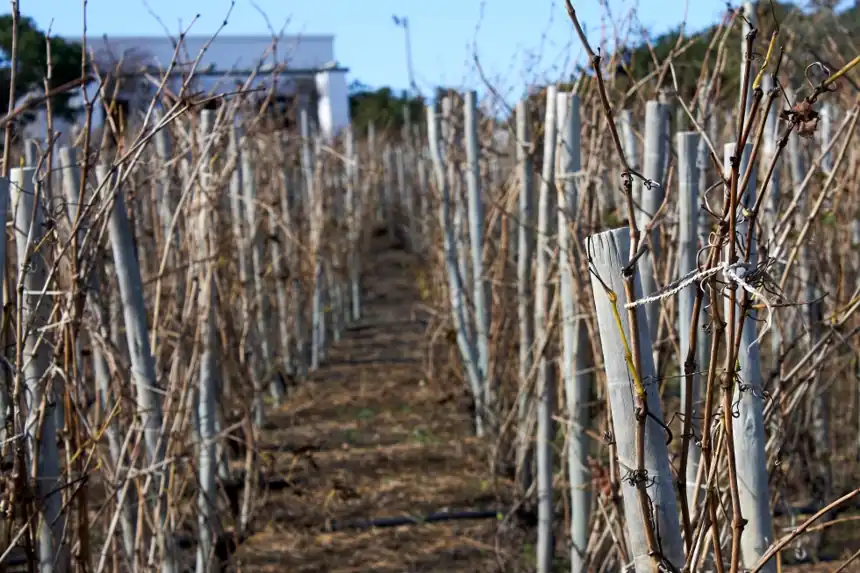
CAPE TOWN, South Africa – A COVID-19 lockdown in South Africa has unexpectedly helped launch an award-winning winemaking journey for Natasha Jacka, a Cape Town-based viticulture student who turned isolation into opportunity by planting a micro-vineyard at her family home. What began as a response to pandemic restrictions in Cape Town has grown into a critically praised craft wine project, highlighting both the resilience and creativity emerging from the disruption of 2020.
Lockdown Isolation Sparks a Vineyard Experiment
When the pandemic forced her studies at an agricultural college in Stellenbosch to pause, Jacka found herself confined to her parents’ home in Noordhoek, near Cape Town. The disruption, she said, prompted a shift in perspective, leading her to imagine transforming unused garden space into a working vineyard.
At 27, she began clearing land and planting more than 1,400 vines across two small blocks in her family’s garden overlooking the sea. The project marked an unusually early step into viticulture, typically a field that requires large-scale farms and years of development before any meaningful harvest.

A Micro-Vineyard in a Traditional Wine Landscape
Jacka’s vineyard stands in stark contrast to conventional wine farms in South Africa’s established wine regions, where tens of thousands of vines are the norm. Her experimental plot was designed for two varieties — a white blend and a syrah red — grown entirely within the boundaries of a suburban property.
Wine critics noted the scale of the undertaking as highly unconventional. Christian Eedes, editor of the South African wine review platform winemag.co.za, described the project as “a triumph of hope over good sense,” emphasizing the difficulty of producing fine wine and sustaining profitability on such a small scale.
From Family Garden to First Harvest
The project required extensive manual work, including clearing soil, sourcing vines, and individually staking each plant. Jacka was supported by her family, though early efforts were marked by trial and error, including mistakes during planting and challenges keeping the vineyard intact.
The small plot also faced unexpected obstacles, including damage from a miniature horse kept on the property, which reportedly consumed several vines. Despite setbacks, the vineyard eventually produced its first harvest after four years of development.
Critical Recognition for Craft Winemaking
The debut wines produced from the Noordhoek vineyard were met with strong praise from critics, marking a significant milestone for Jacka’s unconventional project. The recognition helped establish her growing reputation in South Africa’s competitive wine industry.
■ Related News




Eedes highlighted the project as an example of artisanal winemaking, describing it as a form of craft production that prioritizes care, intention, and limited output rather than mass-scale commercial production.
Expanding Beyond the Backyard Vineyard
While continuing to tend the micro-vineyard at her family home, Jacka has also expanded her winemaking work through her Alinea label, producing additional wines sourced from grapes grown across the Cape Town region, an area with a long-established wine tradition.
She continues to balance multiple roles in her small-scale operation, managing production, labeling, sales, and distribution herself as she builds on her early success.
Pandemic Disruption and Unexpected Opportunity
Jacka’s journey reflects a broader pattern of pandemic-era disruption reshaping personal and professional trajectories. What began as confinement during a global health crisis evolved into a long-term creative project rooted in agriculture, patience, and experimentation.
Wine critic commentary has underscored the unusual nature of the achievement, noting how a period of widespread uncertainty ultimately led to a distinctive contribution in South Africa’s craft wine scene.
Tags: South Africa, Cape Town, COVID-19 pandemic, winemaking, viticulture, craft wine, agriculture, Stellenbosch