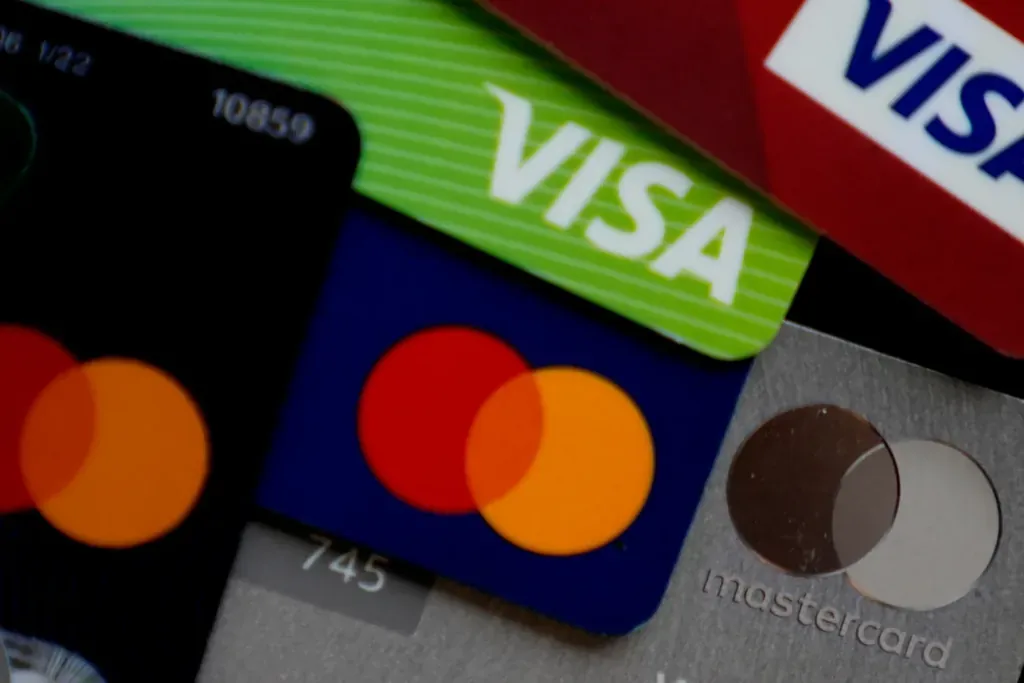
President Donald Trump has renewed a campaign pledge to impose a temporary 10% cap on credit card interest rates, arguing it would ease pressure on households burdened by record levels of consumer debt. The proposal drew swift opposition from banks and industry groups, which warned it could restrict access to credit, particularly for lower-income borrowers.
President Donald Trump said he wants to impose a one-year cap of 10% on credit card interest rates, reviving a promise made during his 2024 campaign and reopening a debate over consumer borrowing costs and bank profits.
In a post on his Truth Social platform late Friday, Trump said credit card companies were charging “20 to 30%” interest and that his administration would no longer allow consumers to be “ripped off.” He said he hoped the cap would be in place by Jan. 20, marking one year since he returned to office.

Trump did not specify whether the cap would be implemented through executive action or legislation. Senator Roger Marshall, a Republican from Kansas, said he spoke with the president and would work on a bill with Trump’s “full support,” suggesting Congress could be asked to act.
Industry opposition and credit access concerns
Banks and credit card companies reacted quickly, warning that a strict interest rate cap could lead lenders to reduce or eliminate credit lines for higher-risk borrowers. Industry groups argue that such consumers could be pushed toward less regulated and often more expensive alternatives, including payday loans and pawnshops.
In a joint statement, the American Bankers Association and allied trade groups said a cap “would only drive consumers toward less regulated, more costly alternatives,” repeating long-standing industry concerns about the impact of price controls on lending.
Wall Street opposition is also expected. Major banks and financial firms were significant donors to Trump’s 2024 campaign and have generally supported much of his second-term economic agenda. Until now, the administration has been seen as relatively friendly to the financial sector.
Potential savings for consumers
Researchers who analyzed Trump’s proposal when it was first raised during the campaign estimated that Americans could save roughly $100 billion a year in interest payments if credit card rates were capped at 10%. The studies found that while the credit card industry would take a substantial hit, it would likely remain profitable, though rewards programs and other perks could be scaled back.
According to the Consumer Financial Protection Bureau, about 195 million people in the United States had at least one credit card in 2024 and were charged roughly $160 billion in interest over the year. Consumer debt has continued to rise, with Americans carrying about $1.23 trillion in credit card balances as of the third quarter of last year, based on data from the Federal Reserve Bank of New York.
Average credit card interest rates currently range between about 19.65% and 21.5%, according to the Federal Reserve and industry tracking firms. While rates have eased slightly as the central bank lowered benchmark interest rates, they remain near the highest levels recorded since regulators began tracking them in the mid-1990s. A decade ago, the average rate was closer to 12%.
A shift from past policy
The renewed push marks a notable shift in tone from an administration that has so far taken a lighter regulatory approach toward the credit card industry. Capital One faced little resistance from the White House when it completed its acquisition of Discover Financial in early 2025, creating the largest credit card company in the country.
At the same time, the Consumer Financial Protection Bureau, the federal agency tasked with policing consumer finance abuses, has been largely inactive since Trump took office, according to former officials and consumer advocates.
Existing caps and historical examples
The United States already imposes interest rate limits on certain financial products and for specific groups. Under the Military Lending Act, lenders cannot charge active-duty service members more than 36% interest on most consumer loans. Credit unions are subject to an 18% cap on interest rates for credit card products under rules set by their federal regulator.
Banks argue that broader caps would make it harder to price risk accurately. When Congress previously capped interchange fees on debit card transactions, many large banks responded by eliminating debit card rewards programs. Some perks have returned in recent years, but on a more limited basis.
There are also state-level examples. Arkansas enforces a strict interest rate cap of 17%, and studies have found that lower-income and less creditworthy borrowers in the state have reduced access to consumer credit as a result.
Research on Trump’s proposal suggests a similar pattern could emerge nationally. Analysts found that a 10% cap would likely lead banks to lend less to borrowers with credit scores below 600, even as it delivers significant savings to consumers who retain access to credit.
Political support across party lines
Despite industry resistance, the idea has drawn backing from lawmakers across the political spectrum. Senators Bernie Sanders, an independent from Vermont, and Josh Hawley, a Republican from Missouri, introduced legislation in February that would cap credit card interest rates at 10% for five years.
In the House of Representatives, similar proposals have been introduced by Alexandria Ocasio-Cortez, a Democrat from New York, and Anna Paulina Luna, a Republican from Florida. Ocasio-Cortez is a frequent critic of Trump, while Luna is a close ally of the president.
Brian Shearer, director of competition and regulatory policy at the Vanderbilt Policy Accelerator, who authored research on the impact of a 10% cap, said banks earn substantial revenue from fees charged to merchants, in addition to interest and customer fees. He argued that this revenue could allow lenders to remain profitable even with lower interest rates.
“A 10% credit card interest cap would save Americans $100 billion a year without causing massive account closures, as banks claim,” Shearer said, adding that large banks dominate the market and generate “absolutely massive profits” across income levels.
Unanswered questions
The White House did not respond to questions about how the administration would implement the proposed cap or whether Trump has consulted with credit card companies and banks on the plan.
If pursued through legislation, the proposal is likely to face intense lobbying and a contentious debate in Congress, balancing consumer relief against concerns over credit availability and financial stability.
This article was rewritten by JournosNews.com based on verified reporting from trusted sources. The content has been independently reviewed, fact-checked, and edited for accuracy, neutrality, tone, and global readability in accordance with Google News and AdSense standards.
All opinions, quotes, or statements from contributors, experts, or sourced organizations do not necessarily reflect the views of JournosNews.com. JournosNews.com maintains full editorial independence from any external funders, sponsors, or organizations.
Stay informed with JournosNews.com — your trusted source for verified global reporting and in-depth analysis. Follow us on Google News, BlueSky, and X for real-time updates.