BEIJING (Journos News) – China’s carefully calibrated reaction to the recent U.S. strike on Iran underscores a defining feature of Beijing’s foreign policy: strategic restraint in crises it cannot directly control. Within hours of the attack, Chinese officials expressed concern and called for dialogue. Yet beyond diplomatic condemnation, Beijing has shown little appetite for deeper involvement — a posture that reveals both calculated caution and structural limits.
As first reported by the Associated Press, China waited several hours before issuing its initial response, describing itself as “highly concerned” and urging an immediate halt to military operations. The following day, Foreign Minister Wang Yi condemned the strikes as unacceptable while reiterating the need for negotiations.
The timing and tone were deliberate. Beijing signaled disapproval without risking confrontation, reinforcing a pattern that has defined its approach to Middle East instability.

Strategic Depth Shrinks as Hard Power Dominates
China’s global influence has expanded significantly over the past decade, from naval modernization to overseas infrastructure investments. Yet when military force reshapes events, Beijing’s leverage narrows.
Analysts note that China has consistently avoided assuming the role of security guarantor in volatile regions. William Yang of the International Crisis Group observed that Beijing remains reluctant to project sustained military power beyond its immediate periphery. Its core priorities remain closer to home — Taiwan and the South China Sea — where strategic stakes are direct and enduring.
This pattern is not new. China facilitated a diplomatic thaw between Iran and Saudi Arabia in 2023, positioning itself as a broker rather than a combatant. But mediation thrives in political openings; it falters when kinetic force takes over. Once missiles are launched, diplomatic influence diminishes.
Craig Singleton of the Foundation for Defense of Democracies told AP that Beijing’s response was predictably restrained, reflecting limited capacity to deter U.S.-Israeli military action once underway. In effect, China can register unease but cannot materially alter battlefield dynamics.
The episode reinforces a broader reality: China’s global ambitions remain constrained by a strategic doctrine that prioritizes risk avoidance over intervention.
■ Related News




Diplomacy With Washington Outweighs Alignment With Tehran
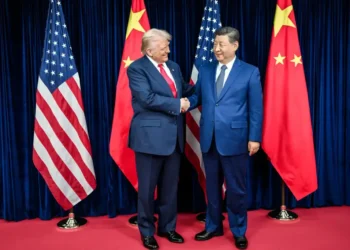
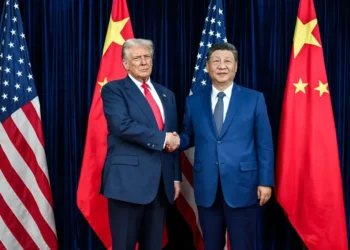
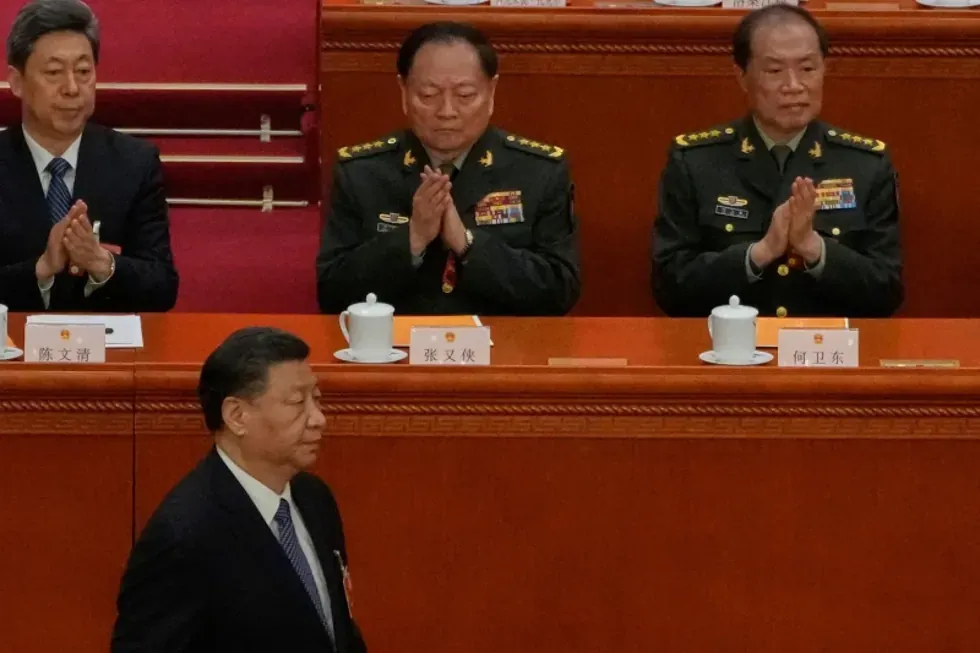
Another factor shaping Beijing’s caution is its relationship with the United States. A potential visit to China by U.S. President Donald Trump in the coming weeks carries significant economic and political weight. Bilateral tensions over trade, technology, and Taiwan already strain ties.
Escalating over Iran would introduce additional volatility at a delicate moment.
George Chen of The Asia Group told AP that while Beijing may engage in rhetorical exchanges with Washington, it is unlikely to allow the Iran crisis to derail broader diplomatic calculations. For Chinese leadership under President Xi Jinping, stabilizing U.S.-China relations carries greater long-term importance than deepening strategic alignment with Tehran.
This balancing act illustrates institutional resilience under pressure. Beijing separates public condemnation from policy escalation, preserving maneuverability.
Still, postponing high-level meetings remains a possible signal if tensions intensify. The calculus hinges on whether events spiral or stabilize.
Energy Security Faces Regional Shock Risk
China’s immediate vulnerability lies less in Iranian oil supplies and more in broader Gulf instability.
China imports significant volumes of Iranian crude, but analysts say alternative supply routes and existing reserves provide short-term cushioning. According to energy analytics firm Kpler, sufficient oil is already in transit to mitigate immediate disruption. Independent refiners could pivot toward discounted Russian crude if necessary.
The larger strategic concern is maritime chokepoints and liquefied natural gas infrastructure across the Gulf. Any disruption to the Strait of Hormuz would affect global energy prices and shipping lanes. Recent operational pauses by QatarEnergy following attacks on regional facilities highlight the fragility of supply networks.
Energy inflation, not lost Iranian barrels, presents the more consequential risk for Beijing’s economic planners.
Military Support to Iran Remains Unlikely
Speculation about potential Chinese arms support to Iran has surfaced, but analysts remain skeptical.
Muhammad Zulfikar Rakhmat of Indonesia’s Center of Economic and Law Studies told AP that any tangible military assistance would likely remain confined to existing long-term agreements rather than emergency battlefield transfers. Direct involvement would risk confrontation with the United States and its allies — a threshold Beijing has consistently avoided.
China has previously criticized Washington for supplying weapons to Ukraine, arguing that arms transfers prolong conflicts. Extending rapid military aid to Iran would undermine that diplomatic position and expose Beijing to sanctions or retaliation.
James M. Dorsey of Nanyang Technological University noted that while Iran’s missile development has historical links to Chinese technology, Beijing is expected to err on the side of caution.
The pattern holds: rhetorical opposition, strategic patience, operational distance.
Restraint as Doctrine, Not Hesitation
China’s response to the U.S. strike on Iran reveals a foreign policy doctrine shaped by risk management rather than ideological alignment. Beijing seeks influence through economic leverage and diplomacy, not expeditionary warfare.
When military escalation compresses the strategic environment, China steps back rather than forward.
Whether this approach preserves long-term credibility as a global power remains an open question. For now, Beijing appears determined to avoid entanglement, safeguard its economic interests, and keep diplomatic channels intact — even as regional tensions test the limits of that restraint.