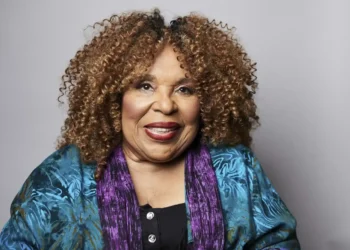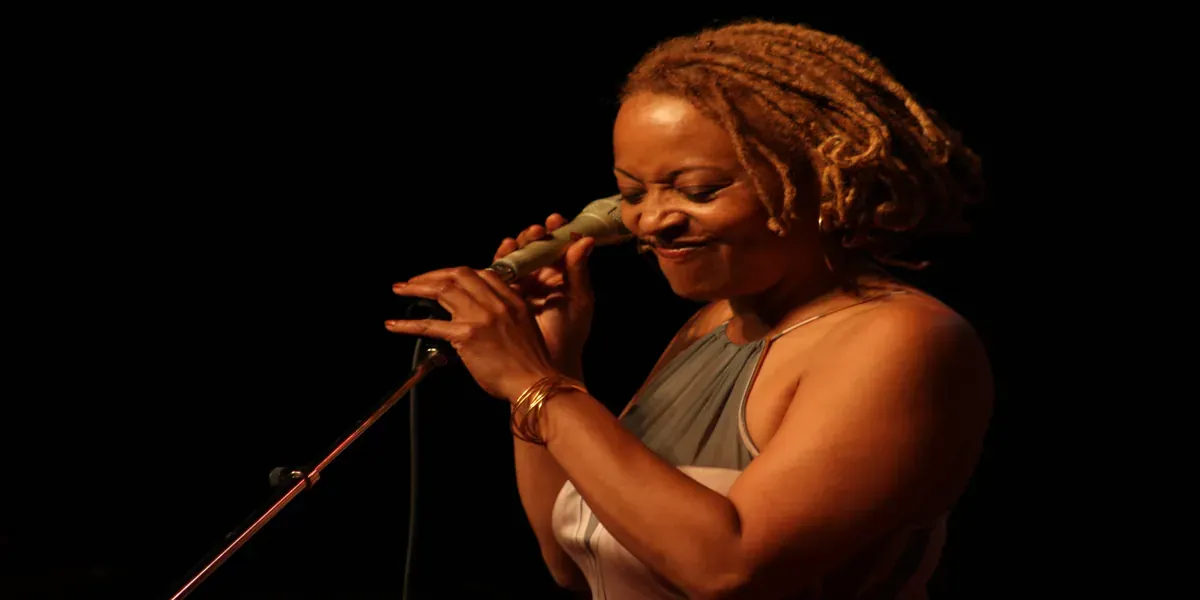
JACKSON, Mississippi – Cassandra Wilson, the Grammy-winning jazz singer whose deep contralto and genre-spanning approach helped broaden the sound of contemporary jazz, has died at 70.
Wilson died Tuesday morning in her hometown of Jackson, Mississippi, according to Hinds County Coroner Jeramiah Howard. Her longtime manager, Robert Torry, said she died peacefully at home surrounded by family, close friends and her manager. No cause of death was announced.
Her death closes the career of a vocalist who resisted easy musical labels. Wilson moved naturally between jazz, Delta blues, folk, country, pop and R&B, using a smoky, resonant voice that became one of the most recognizable sounds in modern jazz.

A Mississippi voice reaches the world
Wilson was born and raised in Jackson and grew up in a musical household. She began piano lessons at 6, later played clarinet and performed in coffeehouses and cover bands while studying at Millsaps College and Jackson State University.
She moved to New York in the early 1980s after spending time around the New Orleans jazz scene and became associated with Steve Coleman’s M-Base Collective. The experience placed her within an adventurous generation of musicians looking for new approaches to jazz composition and performance.
Her breakthrough came with Blue Note Records and the 1993 album “Blue Light ’Til Dawn,” which established the expansive musical approach that would define much of her career.
Rather than treating jazz as a closed tradition, Wilson drew from the wider American songbook. Her interpretations of songs associated with artists such as Joni Mitchell, Robert Johnson and Neil Young showed how comfortably her voice could move across musical boundaries.
Two Grammy Awards marked her career
Wilson received four Grammy nominations and won twice for Best Jazz Vocal Album.




Her first win came for “New Moon Daughter,” and her second followed for “Loverly.” The Recording Academy lists both victories among Wilson’s four career nominations.
The awards recognized work that was notable not only for vocal control but for its refusal to stay within conventional genre boundaries.
Wilson’s influence extended beyond her own recordings. She became an important collaborator and interpreter, bringing the traditions of Mississippi and the American South into contemporary jazz settings without reducing them to nostalgia.
Her music carried Mississippi history
Wilson’s connection to Mississippi remained central to how she was understood both at home and internationally.
Jackson Mayor John Horhn described her after her death as an extraordinary native daughter whose music carried the sound, spirit and history of Mississippi wherever she performed.
That connection could be heard in the earthy character of her singing. Even when she interpreted material from outside jazz, Wilson retained a sense of blues phrasing and Southern musical storytelling.
Her work became part of a broader effort to show that jazz could absorb other American traditions without losing its identity.
She became an NEA Jazz Master
Wilson’s standing in American music was formally recognized in 2022, when the National Endowment for the Arts named her a Jazz Master, one of the country’s highest honors for jazz musicians.
The honor reflected a career that had stretched across several generations of jazz and incorporated influences far beyond the genre’s traditional boundaries.
She also became closely associated with the music of Billie Holiday. In 2015, Wilson performed at the Apollo Theater as part of a centennial tribute to Holiday and released “Coming Forth by Day,” an album devoted to Holiday’s repertoire.
A career built beyond musical boundaries
Wilson’s importance was not simply a matter of awards or recordings.
She helped redefine what a contemporary jazz vocalist could sound like at a time when the genre was increasingly engaging with blues, rock, folk, R&B and other forms of American music.
Her contralto gave her performances a distinctive weight, but it was her interpretive choices that made the recordings endure. She could make familiar songs feel newly discovered while maintaining a clear connection to the traditions from which they emerged.
Jon Batiste, among the musicians who paid tribute after her death, emphasized that quality of her sound and its connection to the South.
Her musical legacy extends beyond jazz
Wilson’s career leaves a legacy that reaches beyond the jazz category itself.
Her recordings demonstrated that genre boundaries could be crossed without sacrificing musical depth, and her work helped bring blues, folk and other American traditions into conversations about contemporary jazz.
She was also part of a generation of musicians who treated interpretation as an act of discovery rather than simple reproduction.
Wilson’s final studio album, “Coming Forth by Day,” arrived in 2015, but her influence continued through the musicians who absorbed her approach and the listeners who found in her music a bridge between different parts of the American musical tradition.
Cassandra Wilson leaves behind a body of work defined by a voice that was unmistakably her own and by a willingness to let jazz remain open to the musical world around it.
Reporting Credit: Hinds County Coroner Jeramiah Howard; Recording Academy/GRAMMY.com; National Endowment for the Arts; Cassandra Wilson’s longtime manager Robert Torry.