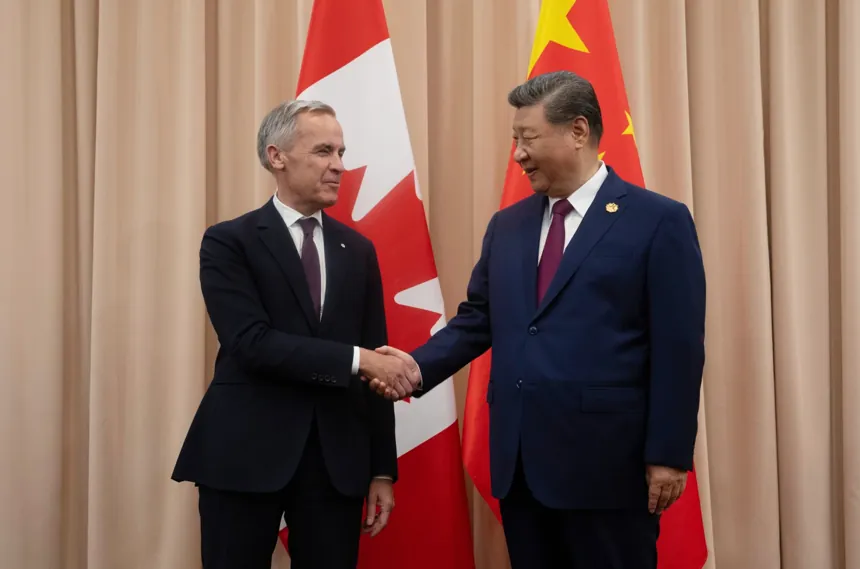
Canada is moving to recalibrate its global trade relationships as Prime Minister Mark Carney prepares for a high-stakes visit to China, underscoring efforts to reduce economic reliance on the United States. The trip comes at a time of renewed tariff pressure from Washington, raising concerns over long-term stability in North American trade ties and prompting Ottawa to diversify its economic partnerships.
The planned diplomatic outreach highlights a broader shift in Canada’s international economic posture, as policymakers respond to evolving global trade dynamics and geopolitical uncertainty. Analysts say the visit reflects a calculated attempt to stabilize relations with Beijing while managing tensions with its largest trading partner.
Officials familiar with the matter told The Associated Press that Carney’s trip aims to reopen channels of communication that have been strained in recent years, particularly over trade disputes and political disagreements. The visit is expected to include discussions on tariffs, investment flows, and supply chain cooperation.

Diplomatic Pressure Builds Around Trade Diversification
Canada’s renewed engagement with China comes as the United States, under President Donald Trump, has signaled the potential expansion of tariffs affecting key Canadian exports. These measures have intensified concerns in Ottawa about overdependence on a single market, particularly as protectionist policies gain traction in Washington.
Trade experts note that while the U.S. remains Canada’s dominant economic partner, recent policy shifts have exposed vulnerabilities in that relationship. Expanding ties with China, despite political complexities, offers a pathway to mitigate risk and enhance economic resilience.
At the same time, officials caution that rebuilding trust with Beijing will require careful navigation of longstanding disputes, including issues related to security, human rights, and market access.
Strategic Stakes Rise in Global Economic Alignment
The potential reset in Canada-China relations carries broader implications for global trade patterns, particularly as major economies reassess alliances in response to shifting geopolitical priorities. Canada’s outreach may also influence how middle powers balance relations between competing economic blocs.
Reporting from Reuters indicates that business groups in Canada have expressed cautious optimism about renewed engagement with China, citing opportunities in sectors such as agriculture, energy, and technology. However, they also emphasize the need for safeguards to protect domestic industries and national interests.

Meanwhile, policymakers are weighing the risks of closer ties with China against the importance of maintaining strong economic and security links with the United States.
International Response Intensifies as Allies Monitor Shift
Canada’s allies are closely observing the diplomatic move, particularly within the context of broader Western relations with China. Analysts interviewed by Financial Times suggest that Ottawa’s approach could serve as a test case for how countries navigate economic engagement with Beijing while aligning with Western strategic priorities.
There are also indications that multilateral forums may play a role in shaping the outcome of Canada’s outreach, as global institutions seek to manage trade tensions and promote stability.
The visit is expected to set the tone for future negotiations and could influence Canada’s positioning in ongoing international economic discussions.
Strategic Outlook Hinges on Balancing Competing Interests
As Canada prepares for this дипломатический pivot, the success of its strategy will depend on its ability to balance competing economic and political interests. Strengthening ties with China may provide short-term economic relief, but it also introduces new complexities in Canada’s foreign policy framework.
Looking ahead, the outcome of Carney’s visit could redefine Canada’s role in global trade networks and signal a broader shift among mid-sized economies seeking greater autonomy in an increasingly fragmented international system.