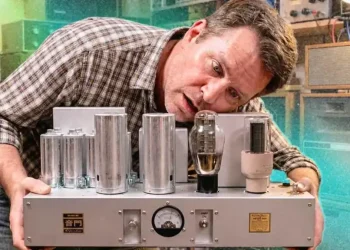
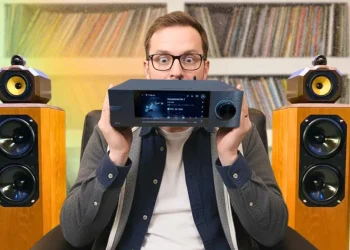
For many shoppers, the audio market appears dominated by familiar giants. Yet thousands of dedicated listeners say much of the industry’s real innovation happens elsewhere — among brands that rarely trend, seldom advertise, and often receive only limited attention outside enthusiast circles. Their collective feedback points to a consistent theme: in 2025, “Audiophile brands 2025” includes far more than the usual household names.
Below is a closer look at 20 brands that experienced listeners say deserve far more recognition, along with the context behind their reputations and the reasons they often remain overlooked.
Philips’ Quiet Influence on the Modern Audio Era
Long known for domestic appliances, Philips played a foundational role in shaping recorded sound. The company co-created the compact cassette in the early 1960s and partnered with Sony on the compact disc two decades later, effectively defining two generations of global music playback. Many of its most advanced digital components — including TDA1541 DACs and swing-arm transports — lived inside other companies’ flagship players, building a legacy that was often invisible to casual buyers.

Why overlooked: Philips’ broader consumer identity masked contributions that were deeply technical and often hidden inside other brands’ products.
Realistic: A Store Brand That Punched Above Its Weight
RadioShack’s Realistic line carried a stigma common among department-store labels, but enthusiasts continue to praise several standout models. Receivers such as the STA-2000 earned admiration for performance that rivaled more established Japanese brands, while the Mach One speakers gained a cult following for their efficiency and energy. Miniature models like the Minimus-7 also remain surprisingly capable even by modern standards.
Why overlooked: Uneven product quality and department-store perceptions obscured the performance of the best pieces in the lineup.
Yamaha: Engineering Depth Hidden Behind a Broad Catalogue
Yamaha’s vast portfolio — from musical instruments to motorcycles — often overshadows its credentials in high-fidelity audio. Yet the company’s track record is formidable. Beryllium-dome NS-1000 monitors remain icons, and vintage integrated amplifiers are frequently praised for their durability and linearity. Modern reference lines, particularly the 5000 series, demonstrate that Yamaha continues to operate at the top tier of acoustic and electronic design.
Why overlooked: Its expansive product range can make it difficult for casual buyers to identify where the “audiophile” line truly begins.
Luxman: A Century of Refined Japanese Craftsmanship
Luxman has spent more than 100 years building equipment that blends technical precision with understated elegance. Integrated amplifiers such as the L-509Z feature elaborate power supplies and finely machined internals that reflect the company’s long-held devotion to musical realism.
Why overlooked: Historically limited distribution outside Japan kept Luxman under the radar for many prospective buyers.
Denon: A Digital Pioneer Beyond Home Theater
A leader in digital recording history, Denon introduced early PCM recorders in the 1970s and released some of the first consumer CD players shortly after the format arrived. Its DL-103 moving-coil cartridge, launched in 1964, remains in continuous production and is still regarded as a benchmark for value and longevity.
Why overlooked: The brand’s strong association with home-theater receivers often overshadows its deeper audiophile heritage.
Electrocompaniet: Norway’s Boutique Challenger
Electrocompaniet gained international recognition in the 1970s when reviewers praised its early amplifiers for sound quality that rivaled the world’s most established firms. Hand-built in Norway, the company continues to emphasize warm, controlled class-AB performance and meticulous construction.
Why overlooked: Limited distribution and modest corporate scale kept it less visible outside Northern Europe.
Jensen and the Origins of the Loudspeaker
Jensen’s early innovations helped define the loudspeaker as we know it. From field-coil woofers to early coaxial drivers, the company shaped decades of acoustic design. Many surviving models from the mid-20th century continue to command high collector interest.
Why overlooked: Brand dilution over time shifted public perception toward automotive and RV speakers, obscuring the company’s historic achievements.
Rotel: Reliability and Restraint Over Flash
Rotel has long focused on engineering over aesthetics, delivering clean power, conservative ratings, and components designed for decades of use. Many of its amplifiers from the 1990s remain sought after for their stability and transparency.
Why overlooked: Minimal marketing and plain industrial styling mean Rotel rarely captures mainstream attention despite strong performance.
Parasound: Studio-Grade Sound Without Luxury Pricing
Used in professional environments including renowned film studios, Parasound’s amplifiers — especially the John Curl–designed Halo series — combine robust construction with honest, high-current performance. The company’s pragmatic approach often appeals to both engineers and home listeners.
Why overlooked: Reasonable pricing and infrequent model refreshes leave the brand outside typical “high-end” hype cycles.
NAD: Budget-Friendly Engineering That Became Iconic
NAD’s 3020 amplifier remains one of the best-selling integrated amps in history. Its high dynamic headroom and understated design set new expectations for affordable performance. Decades later, NAD continues to focus on sensible engineering rather than cosmetic complexity.
Why overlooked: A cost-conscious aesthetic sometimes leads buyers to underestimate the underlying capability.
Onkyo: Past Achievements Hidden by Corporate Turbulence
Though often associated with home-theater receivers, Onkyo produced noteworthy high-fidelity models long before surround sound became mainstream. The massive Grand Integra M-510 remains an example of how far the company once pushed in the pursuit of uncompromising two-channel power.
Why overlooked: Bankruptcy proceedings and shifting market identity overshadow its earlier legacy.
Amstrad and the Democratization of Hi-Fi
While rarely considered an audiophile name, Amstrad served as a first step into hi-fi for many households in the UK. Some of its turntables and integrated components, though affordable, perform well with proper servicing.
Why overlooked: Cost-driven production created uneven quality, shaping a reputation that often ignored the brand’s few standout designs.
Magnavox: An Innovator Recast as a Budget Label
Magnavox played a pioneering role in loudspeaker development and later produced digital players using respected Philips mechanisms. Many of its vacuum-tube amplifiers from mid-century consoles are now prized for their musicality.
Why overlooked: Over time, retail repositioning shifted the brand firmly into the value category.
MCS: Retail Label, Brand-Name Performance
JCPenney’s MCS line included numerous components built by Technics, NEC, and Toshiba. These OEM origins mean many units offer performance nearly identical to their brand-name counterparts.
Why overlooked: Few buyers understood that the internals were sourced from major Japanese manufacturers.
Meridian: Digital Thinking Ahead of Its Time
Meridian helped introduce audiophile-grade CD playback and later developed digital active loudspeaker systems that integrated amplification, conversion, and DSP into a single enclosure. These systems still attract interest for their clarity and precision.
Why overlooked: The company’s system-centric philosophy falls outside traditional “separates-based” hi-fi culture.
Naim: Rhythmic Precision and Long-Term Serviceability
Naim is known for its distinctive sound priorities — particularly pace and timing — and for manufacturing products designed for decades of service. The NAP 250 power amplifier exemplifies that continuity.
Why overlooked: Proprietary connections and modular upgrades require commitment that some buyers hesitate to make.
Tandberg: Norwegian Craft in the Analog Era
From tuners to cassette decks, Tandberg earned a reputation for refined engineering and warm, open sound. Its TCD 3014 deck remains one of the most respected analog recorders of the 1980s.
Why overlooked: Financial difficulties ended its consumer audio operations before digital formats reshaped the market.
Bryston: Professional-Grade Neutrality
Canadian manufacturer Bryston offers 20-year analog warranties and a reputation for bulletproof construction. Its amplifiers power professional suites as well as home systems, favored for their transparency and control.
Why overlooked: Its utilitarian styling and measured neutrality generate less excitement than more flamboyant high-end brands.
Emotiva: High Performance at Disruptively Low Prices
Emotiva built its following by offering powerful amplifiers with oversized transformers and solid measurements at accessible price points. Independent tests often show output that exceeds published figures.
Why overlooked: Low pricing can trigger assumptions that the products lack audiophile credibility.
Cambridge Audio: Consistent Quality Across Decades
Cambridge Audio blends British engineering with efficient offshore production to deliver value-focused equipment that regularly attracts strong reviews. Its network streamers and integrated amplifiers remain competitive within their classes.
Why overlooked: Without ultra-luxury models to draw headlines, Cambridge often remains categorized as mid-tier despite long-running consistency.
This article was rewritten by JournosNews.com based on verified reporting from trusted sources. The content has been independently reviewed, fact-checked, and edited for accuracy, neutrality, tone, and global readability in accordance with Google News and AdSense standards.
All opinions, quotes, or statements from contributors, experts, or sourced organizations do not necessarily reflect the views of JournosNews.com. JournosNews.com maintains full editorial independence from any external funders, sponsors, or organizations.
Stay informed with JournosNews.com — your trusted source for verified global reporting and in-depth analysis. Follow us on Google News, BlueSky, and X for real-time updates.