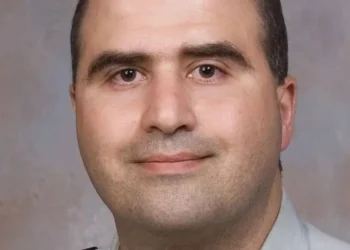
WASHINGTON, D.C., United States – President Donald Trump has reversed the plan to livestream the scheduled execution of Nidal Malik Hasan, the former Army psychiatrist convicted of killing 13 people in the 2009 Fort Hood shooting, while maintaining that the execution will proceed as scheduled.
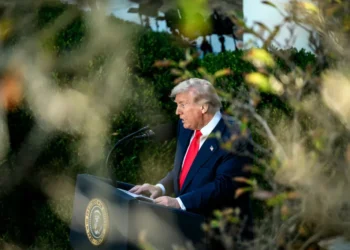
In a statement published on his Truth Social account on October 15, Trump said Hasan would die by firing squad but that the event would not be streamed. He said immediate family members of the victims could attend the execution in person if they chose.
Trump acknowledged that he had viewed a public broadcast as a possible deterrent but said many people would prefer not to watch the execution. His statement established the administration’s stated rationale for the reversal but did not explain the full decision-making process.

Execution Remains Scheduled for December 3
The U.S. Army has scheduled Hasan’s execution for 1 p.m. Central Standard Time on December 3 at Fort Hood, Texas.
The Army said Acting Secretary of the Army Adam Telle directed the execution by firing squad on October 6, following Trump’s approval of the death sentence on October 2. The Army’s announcement said the conviction and sentence had survived the appellate process, with the Supreme Court denying Hasan’s request for review in March 2025.
Trump’s decision concerns the proposed public broadcast, not the execution itself. His statement explicitly maintained the scheduled date and method. The available official records do not establish whether any subsequent legal action could affect the timetable.
Livestream Proposal Drew Objections
The proposed broadcast drew objections from lawmakers who argued that showing an execution to a mass audience would undermine the seriousness of military justice.
Representative Adam Smith, the ranking Democrat on the House Armed Services Committee, said on October 8 that livestreaming the execution would turn the administration’s response into a spectacle. Representative Chrissy Houlahan of Pennsylvania also urged Defense Secretary Pete Hegseth to reconsider the proposal, arguing that justice should not become entertainment or glorify violence.


Senator Jack Reed, the ranking Democrat on the Senate Armed Services Committee, separately warned that a public broadcast could give extremist recruiters material to exploit. These statements document opposition to the proposal, although they do not establish which objections, if any, determined Trump’s final decision.
Decision-Making Process Remains Unclear
Trump’s announcement reversed the administration’s earlier position on allowing the public to watch the execution. However, the available primary-source material does not establish when the president decided to cancel the broadcast, who participated in the final deliberations or how much influence individual critics had on the outcome.
The reversal leaves two distinct issues: the execution’s scheduled implementation under military procedures and the administration’s decision about public access to it. The Army’s published schedule remains in place, while Trump’s statement rules out a public livestream.
The administration has not, in the original statements examined for this report, provided a detailed account of the deliberations behind the reversal. The precise role of political pressure and the reasoning of individual decision-makers therefore remain unresolved.
Reporting Credit: President Donald Trump’s Truth Social statement; U.S. Army Public Affairs; House Armed Services Committee, Democratic press release; Office of Representative Chrissy Houlahan; Office of Senator Jack Reed.