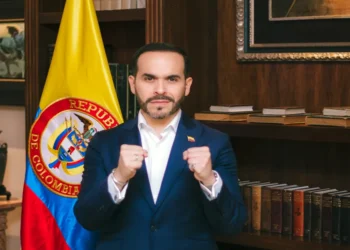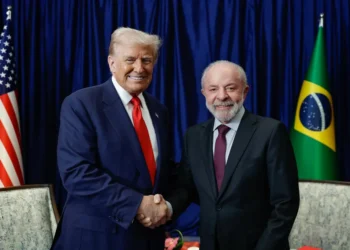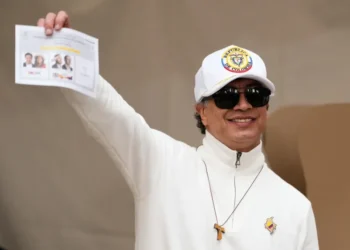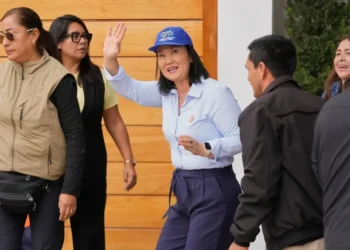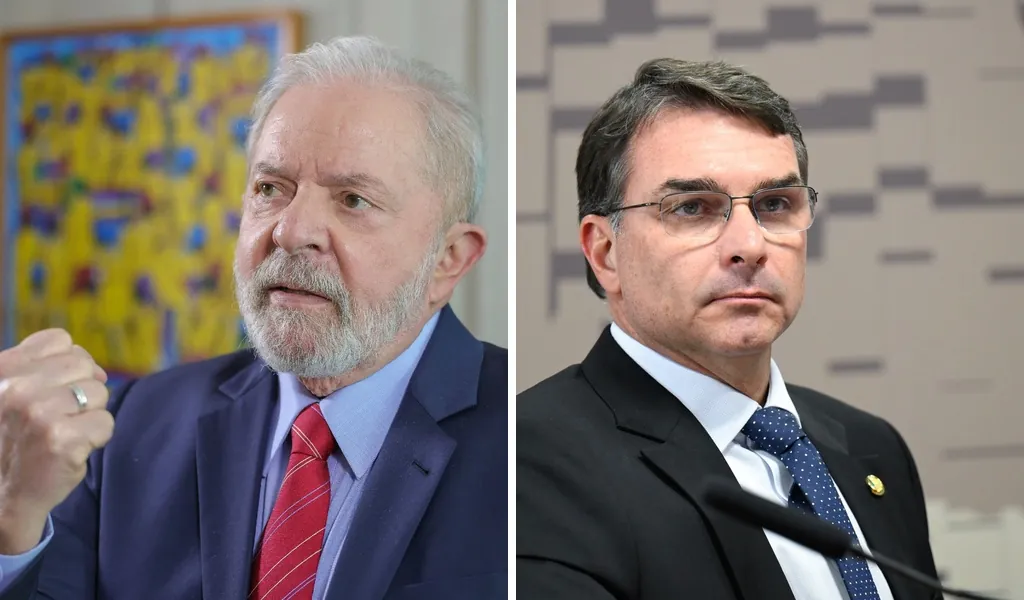
SÃO PAULO, Brazil – Brazilian President Luiz Inácio Lula da Silva and Senator Flávio Bolsonaro closed their presidential campaigns on Saturday in São Paulo state, one day before Brazil’s first-round election, with both candidates saying they could win the presidency without a runoff.
Lula ended his campaign with a march through São Paulo city, while Bolsonaro held a motorcycle caravan through the cities of Santa Bárbara d’Oeste and Americana before continuing to Rio de Janeiro for another campaign appearance.
The events marked the final major campaign appearances before voting begins Sunday.

Final appeals in Brazil’s largest electoral state
São Paulo is Brazil’s largest electoral state and has roughly 34 million registered voters, making it the country’s most important single state in terms of electorate size. Voters there are also choosing a governor, senators and members of the federal and state legislatures.
Lula’s closing march moved through central São Paulo, where he appeared with political allies and urged supporters to vote. His campaign emphasized democracy, national sovereignty and opposition to the return of the Bolsonaro political movement.
Flávio Bolsonaro used the interior of São Paulo for his final state-level campaign event, joining supporters on a motorcycle caravan in Santa Bárbara d’Oeste and Americana. He later campaigned in Rio de Janeiro.
The two events were campaign activities rather than official electoral results, and turnout at either event does not establish the level of support each candidate will receive at the polls.
Both candidates claim a first-round victory is possible
Lula told supporters that he expected to win the election in the first round. Flávio Bolsonaro likewise said he was convinced his campaign could secure an outright victory Sunday.




Those statements are campaign positions rather than independent projections.
Brazilian law requires a presidential candidate to receive more than half of the valid votes to win in the first round. Blank and null ballots are not included in the valid-vote calculation.
If no candidate reaches that threshold, the two candidates with the most valid votes advance to a second round scheduled for October 25. The Superior Electoral Court has confirmed October 4 as the first-round voting date and October 25 as the date for a second round when required.
Polling points to a close first round
Recent polling has shown Lula and Flávio Bolsonaro separated by relatively narrow margins, although individual surveys differ.
A Quaest national survey conducted before the final campaign day continued to show Lula leading the first-round field, while Flávio remained the principal challenger. Quaest’s published research shows the broader presidential contest remained concentrated around the two candidates as the campaign entered its final stage.
A separate CNT/MDA poll cited in current election coverage also placed Lula ahead of Flávio, while other surveys produced different margins. These differences are a reminder that polling measurements are not election results.
The polls also do not determine whether a runoff will occur. That depends on the votes actually counted on October 4.
Twelve presidential candidacies are on the ballot
Although Lula and Flávio Bolsonaro have dominated the final campaign and polling, Brazil’s presidential election is not formally a two-candidate race.
The Superior Electoral Court says 12 presidential candidacies are competing in the 2026 election.
Other presidential candidates therefore remain eligible to receive votes in the first round. The significance of their campaigns extends beyond the possibility of winning the presidency: their vote shares can affect which two candidates advance if no one secures an outright majority.
The same election also includes contests for governors and vice governors, two-thirds of the Senate, the Chamber of Deputies and state legislative assemblies.
What happens after voting
Voting is scheduled nationwide from 8 a.m. to 5 p.m. Brasília time on October 4. The TSE says 158,765,543 voters are eligible to participate in the 2026 general election.
The first-round count will determine whether Brazil elects its president immediately or holds another presidential vote three weeks later.
If one candidate receives more than 50% of valid votes, that candidate wins the presidency in the first round.
If no candidate reaches the threshold, the two leading candidates proceed to the October 25 runoff.
That makes the first-round result consequential even if neither Lula nor Flávio Bolsonaro wins outright: the vote will determine the composition of the final presidential contest.
Final campaign, then the vote
Saturday’s events brought the presidential campaign to a close after weeks of increasingly concentrated competition between Lula and Flávio Bolsonaro.
Lula used his final São Paulo appearance to mobilize supporters around his campaign themes, while Flávio Bolsonaro sought to consolidate the conservative vote and demonstrate support in the state before moving his final campaign activities to Rio.
Both candidates publicly expressed confidence in a first-round victory. The actual outcome, however, will be determined by votes cast and counted on October 4.
For JournosNews, the immediate question is therefore not which candidate is favored, but whether Sunday’s vote produces an outright winner or sends Brazil’s presidential contest to the scheduled October 25 runoff.
Reporting Credit: Brazil’s Superior Electoral Court (TSE); Brazilian electoral authorities; official campaign statements from Luiz Inácio Lula da Silva and Flávio Bolsonaro; São Paulo electoral authorities; and published Quaest and CNT/MDA polling results and methodologies.