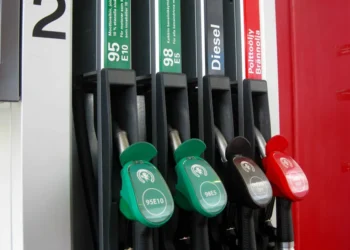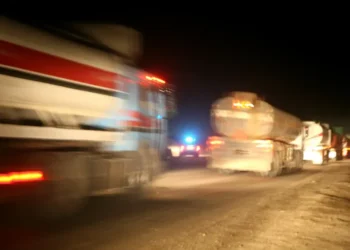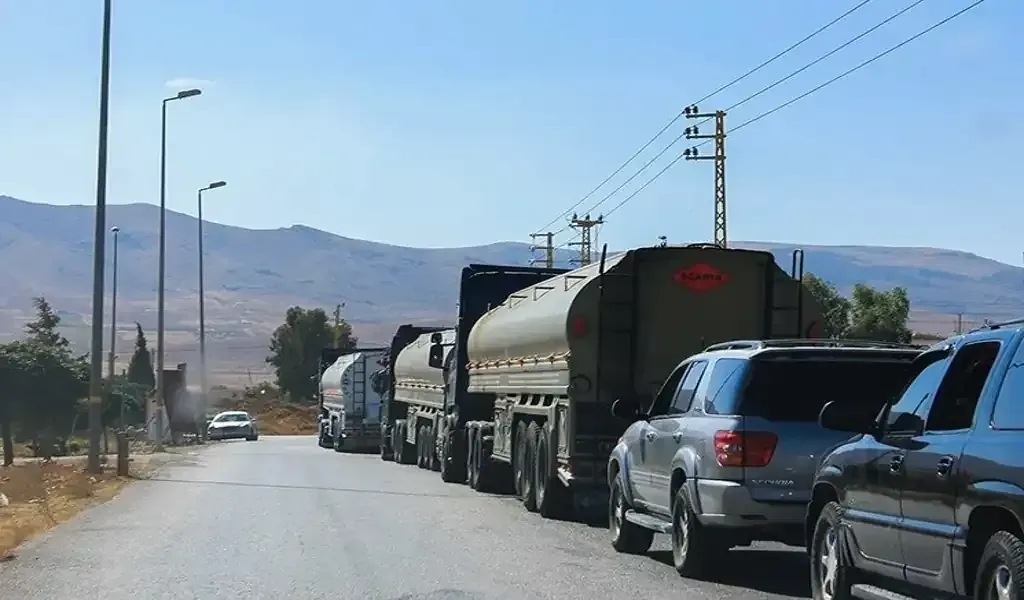
DUBAI, United Arab Emirates — Long lines at gas stations across Tehran are becoming a visible sign of the economic pressure facing Iran as the United States tightens sanctions and seeks to further restrict the country’s access to global trade.
Some motorists have waited two hours or more to refuel in recent weeks as fuel shortages emerge amid the blockade and existing sanctions. The pressure comes nearly six months into the war involving Iran, the United States and Israel, which has weakened Iran’s economy and reduced the purchasing power of households.
The situation intensified after U.S. Treasury Secretary Scott Bessent said Tuesday that Washington intended to fully sever Iran from the global economy. Iranian officials have also discussed reducing fuel subsidies as the government attempts to manage the growing economic strain.

Fuel shortages expose broader economic problems
The pressure is extending beyond Tehran’s fuel stations.
Iran is experiencing double-digit inflation, while the rial has fallen to a record low. As a result, many households are finding that their incomes buy less than they did previously.
Grocery stores and pharmacies remain stocked, and there have not been similar lines outside banks. But consumers say rising prices are making everyday necessities harder to afford.
Morteza Daryani, who operates a grocery store in Tehran, said some regular customers have started buying goods on credit because their purchasing power has declined.
Fuel concerns are also changing motorists’ behavior. Taxi driver Mahmoud Chavoshi said he had been trying to buy as much fuel as possible because he expected prices to increase.


Despite the worsening conditions, there have been no clear signs of a new nationwide protest movement. Iranian authorities violently suppressed demonstrations earlier this year, according to reporting cited by The Associated Press.
Iran rejects calls for capitulation
Iranian President Masoud Pezeshkian has accused Washington of using economic pressure after failing to defeat Iran militarily.
Pezeshkian said the United States was seeking to create economic dissatisfaction and social problems that could push Iran toward instability. He rejected the idea that economic difficulties would force Tehran to surrender.
Iran has lived under international sanctions for decades because of disputes over its nuclear program and its support for armed groups.
Oil exports to China remain an important source of revenue. However, the extent to which the United States can disrupt those sales remains uncertain.
Economists and analysts warn that Iran’s ability to withstand prolonged economic pressure also has limits.
Mohammad Farzanegan, a professor of Middle Eastern economics at the University of Marburg in Germany, said declining purchasing power, worsening diplomatic prospects and the psychological effects of continued pressure could eventually increase public frustration.
Esfandyar Batmanghelidj, head of the Bourse & Bazaar Foundation, said several sectors targeted by Washington are important to ordinary Iranians as well as the government.
Digital assets and gold can help people protect their savings, while technology supports connections with the outside world. Aviation supports travel, and shipping helps bring food and medicine into the country.
UAE trade restrictions could increase pressure
Washington is also seeking to discourage other countries from maintaining commercial ties with Iran.
Bessent has threatened secondary U.S. sanctions against countries that continue doing business with Tehran.
The United Arab Emirates announced last week that it would cut off trade and financial transactions with Iran. Sascha Bruchmann, an analyst with the International Institute for Strategic Studies’ Middle East office in Bahrain, said such a move could have longer-term consequences if implemented.
Bessent said the UAE’s decision was likely connected to U.S. pressure and predicted that other countries could take similar steps.
For Iran, reduced commercial and financial links through the UAE could add to the effects of existing sanctions and restrictions.
The consequences could also extend beyond Iran because the confrontation is already affecting regional trade and energy flows.
Strait of Hormuz remains a key pressure point
Iran is also using control over regional energy routes as leverage.
Tehran has largely closed the Strait of Hormuz, a strategically important waterway that carried about one-fifth of global oil and gas flows before the war.
Iran is betting that disruption to international energy markets, including potential effects on U.S. fuel prices ahead of the midterm elections, will increase pressure on President Donald Trump to change course.
Bruchmann described the confrontation as two competing pressure campaigns.
Washington is relying on economic and naval pressure to force Iran to make concessions. Tehran, meanwhile, is relying on disruptions to energy flows and the resulting economic consequences for other countries.
Economic pressure has yet to force a political shift
For now, neither strategy has produced a decisive outcome.
Iran’s deteriorating economic conditions have not resulted in the political capitulation Washington is seeking. At the same time, the longer-term effects of the blockade, sanctions and restrictions on Iran’s commercial relationships remain uncertain.
The growing lines at Tehran’s gas stations provide a visible measure of the pressure facing ordinary people. But whether that pressure will translate into a broader political change remains unresolved.
For Iran’s leadership, the immediate challenge is to maintain access to essential goods and economic activity while limiting the domestic effects of sanctions and reduced trade. For Washington, the question is whether increasingly severe economic pressure can achieve political concessions without producing wider regional and global consequences.
Reporting Credit: The Associated Press