WASHINGTON – President Donald Trump on Monday signed proclamations imposing 50% tariffs on most Canadian imports, citing what the administration described as discriminatory Canadian trade practices affecting U.S. automobiles, alcoholic beverages and dairy products.
According to a White House fact sheet and an administration official who briefed reporters on condition of anonymity, the tariffs will take effect in 30 days. The delay provides an opportunity for negotiations before the new duties are implemented.
The administration said Canada had responded to earlier U.S. tariffs with retaliatory measures and argued that the new action was intended to hold Ottawa accountable. The official also said Trump relied on Section 338 of the Trade Act of 1930 to authorize the tariffs, an infrequently used legal provision that grants the president authority to respond to what the administration considers discriminatory treatment of U.S. commerce by foreign governments.

The measures exempt energy products, potash, fish and critical minerals. However, they apply to many goods that previously entered the United States duty-free under the United States-Mexico-Canada Agreement (USMCA). The agreement remains in force and is scheduled for a joint review process that could determine whether it continues through 2036.
White House cites trade disputes with Canada
In the signed proclamations, Trump argued that Canada has treated American automobiles, alcoholic beverages and cheese less favorably than products from other countries.
The administration pointed to Canada’s continued 25% tariff on certain U.S. motor vehicles that do not qualify for preferential treatment under the USMCA, as well as provincial decisions to halt purchases and retail sales of many American alcoholic beverages following earlier U.S. tariff actions.
Trump also renewed longstanding criticism of Canada’s dairy import system, asserting that it disadvantages American cheese producers relative to European competitors.
According to the administration official, Trump has also asked advisers to examine whether additional tariffs should be considered after Canadian wildfires affected air quality in parts of the United States. The official said the request reflected comments Trump had previously made publicly.
Canada signals willingness to negotiate
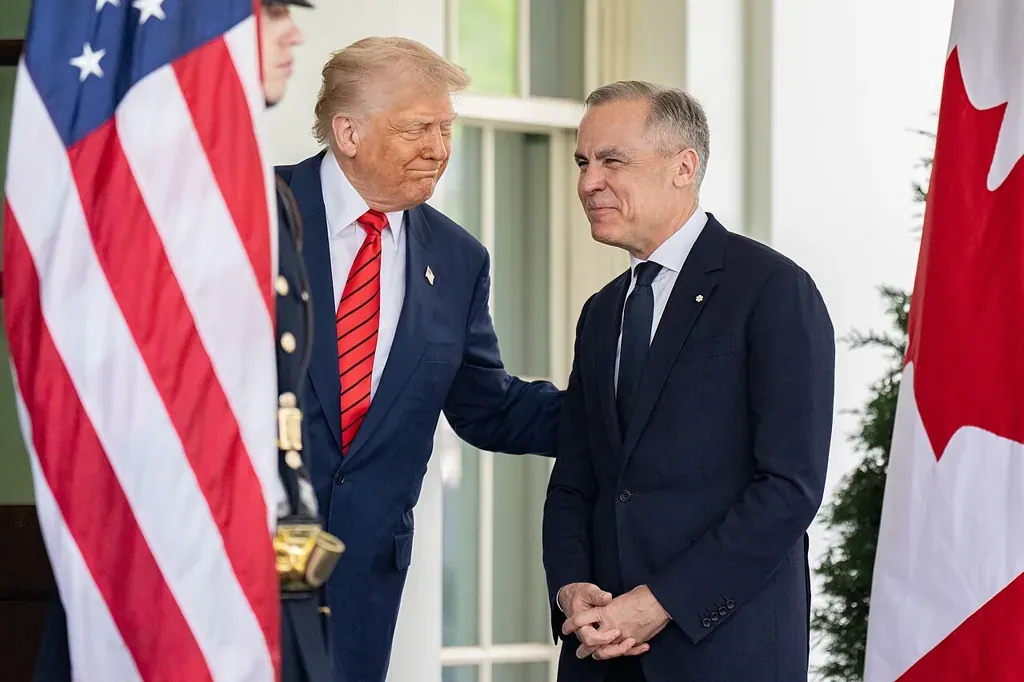
Canadian Prime Minister Mark Carney said his government remains committed to free and fair trade while seeking a negotiated resolution with Washington.
In a statement, Carney said Canada had expanded its international economic and security partnerships and was prepared to engage intensively with the United States.
He said the trade dispute had increased costs for families, particularly in the United States, and expressed hope that outstanding issues could be resolved for the benefit of citizens in both countries.
Ontario Premier Doug Ford adopted a tougher position, stating on social media that Canada should respond “tariff for tariff, dollar for dollar” if the U.S. measures proceed.
Business organizations on both sides of the border also urged renewed negotiations during the 30-day implementation period.
Candace Laing, chief executive of the Canadian Chamber of Commerce, described the tariffs as regrettable while encouraging both governments to use the available time to advance formal discussions.
Chris Swonger, president and chief executive of the Distilled Spirits Council of the United States, similarly called for a negotiated agreement that would restore market access for U.S. spirits and avoid further damage to the hospitality sector.
Legal authority and economic implications draw scrutiny
The administration’s decision comes as its use of tariff authorities continues to face legal and political scrutiny. The White House has increasingly relied on alternative statutory authorities, including Section 338 of the Trade Act of 1930, for new import restrictions.
Section 338 has seen relatively little use in modern trade policy, and some lawmakers have previously proposed repealing it, arguing that it could provide broad authority for tariff actions with significant economic consequences.
Scott Lincicome, vice president of general economics at the Cato Institute, said invoking the statute could create greater uncertainty because it may provide a basis for similar tariff actions involving other U.S. trading partners.
Economists generally describe tariffs as taxes on imported goods paid by importers, who often pass at least part of the added costs on to consumers through higher prices. Trump has argued that tariffs encourage manufacturers to relocate production to the United States, although economists continue to debate the extent of those effects.
Political and economic implications
The latest tariffs arrive as trade policy remains a prominent issue ahead of November’s congressional midterm elections.
Last year’s broad tariff announcements unsettled financial markets amid concerns over inflation and slower economic growth before the administration later reduced some proposed rates during negotiations.
Representative Suzan DelBene of Washington, chair of the Democratic Congressional Campaign Committee, criticized the new tariffs, arguing they would raise costs for American consumers and invite further retaliation against U.S. industries.
Inflation remains a politically sensitive issue as policymakers and economists continue to assess how tariffs, supply chains and energy prices could affect consumer costs.
Although Trump and Carney attended the FIFA World Cup final together on Sunday, the administration official said their meeting was not intended as a working session on trade policy.
The White House maintains that the 30-day implementation period leaves open the possibility of negotiations, while Canadian officials have indicated they are prepared to continue discussions aimed at resolving the dispute.
This report is based on reporting by The Associated Press.
Article Topics: U.S.-Canada Trade | Tariffs | Donald Trump | Mark Carney | USMCA | Trade Policy | Canada Relations