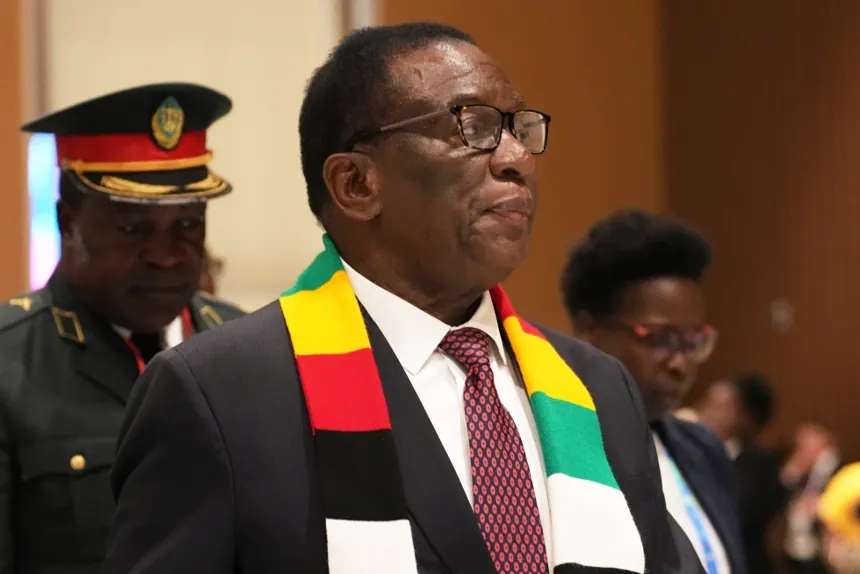
HARARE, Zimbabwe – Zimbabwean President Emmerson Mnangagwa has signed constitutional amendments into law that postpone the country’s next presidential election, abolish direct presidential voting and extend the terms of both the president and lawmakers, despite criticism from opposition figures, legal experts and civil society organizations.
The changes, confirmed in a government notice issued Tuesday, delay the next election from 2028 to 2030, effectively extending Mnangagwa’s tenure by two years. The 83-year-old president had previously pledged to leave office when his second and final term ended in 2028.
The legislation makes Zimbabwe the latest African nation to amend its constitution in a way that allows an incumbent leader to remain in office for a longer period.
Constitutional amendments reshape electoral system
Parliament approved the constitutional amendments in June after they were backed by the ruling Zimbabwe African National Union–Patriotic Front (ZANU-PF) and supported by some lawmakers from the divided opposition.
Under the revised constitution, Zimbabwe will no longer elect its president through a nationwide public vote. Instead, members of Parliament will choose the country’s head of state.
The amendments also extend the terms of both the president and members of Parliament from five years to seven years while retaining the existing constitutional limit of two presidential terms.
Critics challenge legality of reforms
The constitutional changes have been strongly opposed by human rights lawyers, civil society organizations, opposition politicians and some veterans of Zimbabwe’s 1970s liberation struggle.
Critics argue that extending the length of presidential terms required approval through a national referendum rather than parliamentary action alone.
Supporters of the amendments maintain that Parliament had the constitutional authority to adopt the reforms because the existing two-term limit for presidents remains unchanged, even though each term has been lengthened.
Several legal challenges seeking to overturn the amendments remain before Zimbabwe’s courts, which have not yet ruled on the cases.
Political tensions continue to rise
The constitutional changes have intensified political tensions in the southern African country of about 15 million people.
In recent months, police have prohibited some public gatherings while authorities have arrested and detained critics of the constitutional reforms. Opponents have also alleged harassment and intimidation linked to the political dispute.
Mnangagwa has led Zimbabwe since 2017 after the military-backed removal of longtime President Robert Mugabe, who died in 2019.
This report is based on reporting by The Associated Press.
Topics: Zimbabwe | Emmerson Mnangagwa | Constitutional Reform | Elections | Democracy | ZANU-PF | Africa Politics | Governance