New Jersey has become the latest state to require certain employers to help offset Medicaid costs by introducing a new fee tied to workers enrolled in the public health insurance program, a policy that could influence similar debates in other states as lawmakers confront rising healthcare expenditures.
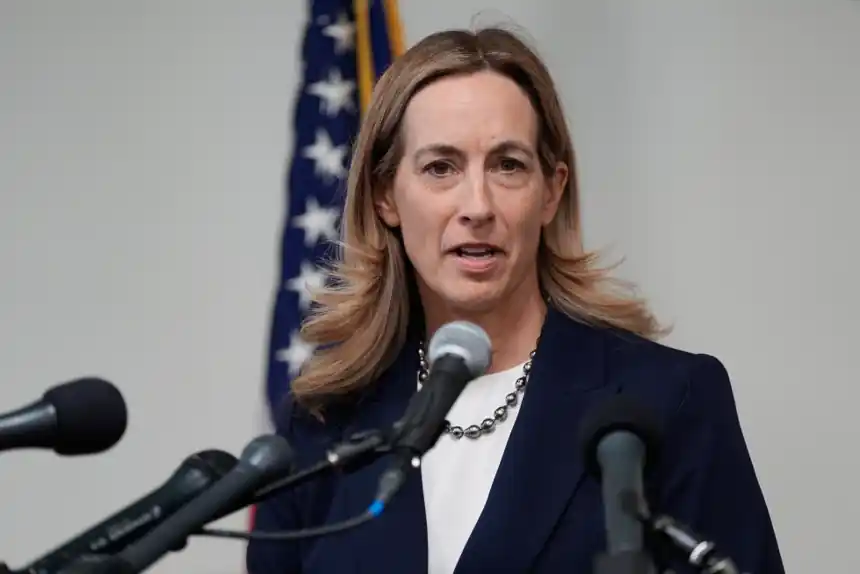
Gov. Mikie Sherrill signed the measure into law Tuesday, establishing a new assessment on larger employers whose workers and their dependents receive Medicaid coverage instead of employer-sponsored insurance. State officials included an estimated $145 million in anticipated revenue from the program in the fiscal year budget approved earlier this week.
The policy reflects broader concerns among several Democratic-led states about Medicaid financing following recent federal policy changes that are expected to increase state spending obligations and affect insurance coverage for millions of Americans.

Medicaid is jointly funded by federal and state governments and provides health coverage for eligible low-income individuals and families. State leaders argue that employers whose workforces rely heavily on the program benefit from taxpayer-funded healthcare without bearing the full cost through employer-sponsored insurance.
New Employer Assessment Takes Effect
Under New Jersey’s new law, employers with at least 50 workers or covered dependents enrolled in Medicaid will be required to pay an annual assessment based on the number of beneficiaries associated with their workforce.
The fee begins at $325 per covered individual for employers with between 50 and 249 Medicaid beneficiaries and rises to as much as $725 per person annually for employers with at least 500 beneficiaries.
State lawmakers designed the measure to generate additional funding for Medicaid while attempting to limit unintended employment consequences. The legislation exempts temporary, seasonal and part-time workers from the assessment and prohibits employers from making hiring, firing or other employment decisions based on an individual’s Medicaid enrollment.
Federal Policy Changes Shape State Decisions
New Jersey’s action comes as several other states examine similar approaches to financing Medicaid amid shifting federal requirements.
■ Related News



In California, lawmakers approved legislation directing the state administration to develop options for a comparable employer assessment next year, although no immediate fee has been enacted. The proposal follows concerns that federal Medicaid policy changes signed into law by President Donald Trump could increase financial pressure on state healthcare programs.
California State Sen. John Laird, who sponsored the legislation, argued that employers offering health insurance should not shoulder additional tax burdens while some larger companies benefit from employees relying on publicly funded coverage.
The Congressional Budget Office has projected that more than 10 million people could become uninsured by 2034 under the federal law. Among its provisions are work, education or volunteer activity requirements for certain Medicaid beneficiaries, along with expanded documentation requirements to demonstrate eligibility. The budget office’s estimate has become part of the debate over how states may finance Medicaid in the coming years.
Beyond California, lawmakers in Colorado and Oregon approved similar proposals in one legislative chamber during the most recent session, although neither measure ultimately became law. Comparable legislation was also introduced in Washington state, while Connecticut Gov. Ned Lamont has proposed incorporating an employer assessment into a future state budget.
Business Groups Raise Concerns
Business organizations have criticized New Jersey’s approach, arguing that employers may be charged even when workers voluntarily choose Medicaid over an available employer-sponsored health plan.
Christopher Emigholz, chief government affairs officer for the New Jersey Business and Industry Association, said in a statement that employers could be penalized for decisions outside their control if employees decline workplace health coverage in favor of Medicaid.
Opponents contend the additional assessment could increase operating costs for businesses already managing higher labor and healthcare expenses.
Some Policy Advocates Warn of Unintended Effects
Opposition has also emerged from some left-leaning policy organizations that generally support Medicaid expansion.
Gideon Lukens, a health policy analyst at the Center on Budget and Policy Priorities, said the assessment could unintentionally influence hiring decisions involving workers from lower-income households or single-parent families. He also warned that some individuals might avoid enrolling in Medicaid if they believe doing so could affect employment opportunities.
Lukens said taxes or fees tied to a particular activity often create incentives to reduce the behavior being taxed, raising concerns about possible unintended labor market effects.
New Jersey’s legislation attempts to address those concerns by explicitly prohibiting employment decisions based on Medicaid enrollment status.
Similar Policies Have Been Tried Before
Employer assessments linked to Medicaid participation are not new, although previous efforts have had mixed outcomes.
Massachusetts introduced a similar employer fee in 2018 that applied to certain workers covered through Medicaid or a state-subsidized health insurance exchange. The program expired the following year and was not renewed.
Maryland pursued an earlier version of the policy in 2006 that primarily affected Walmart. An industry challenge ultimately halted the measure after a federal court ruled that it conflicted with federal law governing self-insured employee health plans.
Supporters of more recent proposals believe newer legislative approaches may avoid those legal issues by structuring employer assessments differently and avoiding references to self-insured health plans.
As states continue evaluating how to finance Medicaid amid changing federal requirements, New Jersey’s new employer assessment is likely to remain closely watched by policymakers weighing similar strategies elsewhere.
Tags: Medicaid, New Jersey, Healthcare Policy, Employer Health Coverage, Medicaid Funding, Public Health Financing, California Legislature, Congressional Budget Office, Gov. Mikie Sherrill, Employer Assessment, Health Insurance, State Budgets,