LONDON — The United Kingdom has announced a 15 billion pound ($20 billion) increase in defense spending, unveiling an investment plan focused on advanced military technologies such as autonomous fighter aircraft, drones, and uncrewed submarines. According to The Associated Press, the strategy is intended to strengthen Britain’s armed forces as NATO allies respond to mounting security threats from Russia and shifting defense priorities in the United States.
Prime Minister Keir Starmer said the plan reflects a rapidly evolving security environment where technological innovation is reshaping modern warfare. He argued that strengthening Britain’s military capabilities is essential to maintaining national security in what he described as an increasingly dangerous and unpredictable world.
“When the world is arming and aggression is rising, the best way to avoid war is to prepare for it,” Starmer said.

Defense Spending Falls Short of Some Military Expectations
Despite the funding increase, the investment plan has drawn criticism from political figures and defense experts who argue that Britain is not moving quickly enough to meet its long-term military commitments.
The blueprint raises defense spending to 2.7% of the United Kingdom’s gross domestic product by 2029 but stops short of committing to a 3% target by 2030. Instead, Starmer said the government expects to reach that level during the next parliamentary term, which could extend until 2034.
The United Kingdom has also reaffirmed its commitment to NATO’s goal of allocating 3.5% of GDP to defense by 2035, although officials have yet to outline how that objective will be financed.
The issue contributed to the resignation of former Defense Secretary John Healey on June 11. Healey argued Britain was failing to invest sufficiently in its armed forces despite growing security risks, citing an intelligence assessment that Russia could be capable of attacking a NATO member by 2030.
Addressing Parliament on Tuesday, Healey urged the government to establish a credible financial roadmap that would achieve both the 3% spending target and NATO’s broader 3.5% commitment.
■ Related News

Starmer said Healey’s successor, Defense Secretary Dan Jarvis, had strengthened the investment package. The final plan provides 15 billion pounds in additional funding, exceeding the 13.5 billion pounds initially offered by the Treasury but remaining well below the 28 billion pounds requested by defense officials.
Advanced Technology Becomes Central to Britain’s Military Strategy
The government said nearly 300 billion pounds ($400 billion) will be allocated to defense over the next four years.
Among the largest investments are 5 billion pounds ($6.6 billion) for drone technologies, 8 billion pounds ($10.6 billion) to jointly develop next-generation stealth fighter aircraft with Japan and Italy, and 11 billion pounds ($14.5 billion) to expand military weapons stockpiles.
An additional 64 billion pounds ($85 billion) will be directed toward modernizing Britain’s nuclear deterrent.
To finance the increased military spending, Starmer said several road infrastructure and energy projects would be canceled.
Lessons From Ukraine Shape Britain’s Future Force
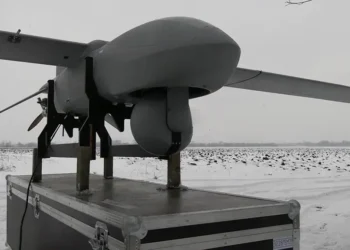
British defense planners have increasingly looked to the conflict in Ukraine as evidence that unmanned systems and precision technologies are transforming modern warfare.
Officials noted that Ukrainian forces now deploy approximately 200,000 drones each month in their defense against Russian forces. Britain intends to expand drone capabilities across all branches of its military as part of its modernization effort.
Rather than constructing a larger fleet of traditional destroyers, the Royal Navy plans to introduce hybrid vessels designed to serve as command platforms for autonomous and unmanned systems.
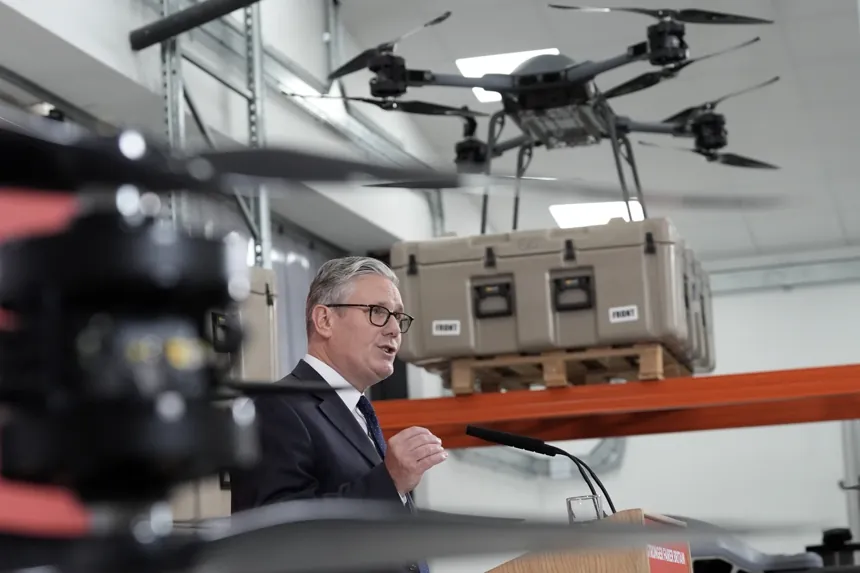
Speaking at a drone manufacturing facility near London, Starmer said Ukraine’s use of advanced technology had significantly altered the battlefield, allowing its forces to damage Russia’s Black Sea fleet, conduct long-range strikes inside Russian territory, and slow the advance of one of the world’s largest militaries.
Political Pressure Mounts Ahead of Leadership Transition
Britain’s defense strategy also reflects continued pressure from U.S. President Donald Trump, who has repeatedly urged NATO allies to increase military spending while questioning whether the United States should continue bearing the largest share of Europe’s defense burden.
The release of the investment plan comes during a period of political uncertainty in Britain. Following the resignations of Healey and junior Defense Minister Al Carns, Starmer announced last week that he intends to step down as prime minister.
A NATO summit scheduled in Turkey on July 7 and 8 is expected to be among his final international engagements before a successor is chosen.
Former Greater Manchester Mayor Andy Burnham is widely viewed as the leading candidate to replace Starmer and would inherit responsibility for implementing the defense strategy.
Starmer described the investment package as a foundation for future governments to expand upon.
“It is a platform on which I know my successor will build,” he said.
Opposition Conservative defense spokesperson James Cartlidge dismissed the proposal as “too little, too late,” while retired Gen. Richard Barrons, who helped prepare a defense review that informed the investment plan, argued Britain must accelerate military spending to match the pace of its allies and respond to evolving threats.
Tags: United Kingdom, NATO, Keir Starmer, Dan Jarvis, John Healey, Russia, Ukraine, Defense Spending, Military Modernization, Royal Navy, Donald Trump, European Security