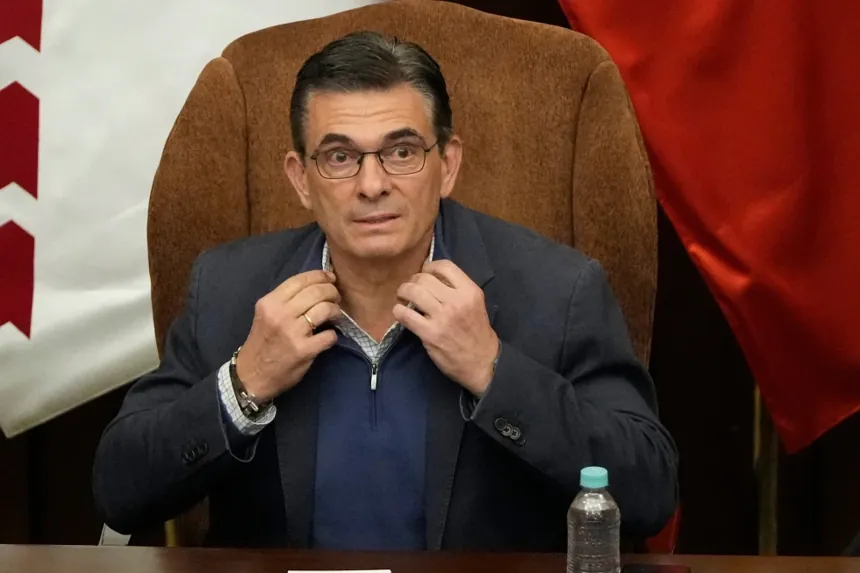
LA PAZ, Bolivia — Bolivian President Rodrigo Paz declared a nationwide state of emergency early Saturday as authorities moved to dismantle road blockades that have disrupted transportation, fuel distribution, and food supplies for more than 50 days amid escalating anti-government protests.
The announcement came as security forces gradually reopened major highways across the country, restoring key transport routes that had left the political capital, La Paz, largely isolated from other regions. Officials said the operation proceeded peacefully, bringing relief to residents who had faced shortages of essential goods.
In a national address, Paz described the measure as an effort to restore public freedoms rather than impose additional restrictions.

“This is not a state of emergency intended to limit people’s lives. It is a state of emergency intended to return freedom to the people,” the president said.
Defense Minister Ernesto Justiniano reported that demonstrators withdrew as security forces advanced, leaving behind debris and obstacles that delayed the full reopening of several roads. Thousands of trucks and vehicles stranded during the prolonged blockades were eventually able to resume travel.
Protest Movement Shows Signs of Fragmentation
Late Saturday, the rural labor organization Túpac Katari, which had been responsible for blocking several access points to La Paz, announced a temporary suspension of its protests and instructed demonstrators to withdraw until next week.
The decision narrowed the active protest movement primarily to supporters of former President Evo Morales, who continue demonstrations in central Bolivia while maintaining a single demand: the resignation of President Paz.
Speaking from the Chapare region, union leader Severo Marca rejected the government’s latest action and vowed that protests would continue despite the emergency decree.


Authorities reported that many communities welcomed the arrival of security forces. Residents in several areas greeted personnel with flags and applause as roads reopened and transportation resumed.
Emergency Measures Target Road Blockades
The government decree prohibits the blocking of streets, highways, and transportation routes that interfere with the movement of people and essential goods. It also authorizes the Armed Forces to provide temporary support to police operations aimed at restoring public order and protecting civilians.
Government officials stated that the emergency measures could remain in effect for up to 90 days but may be lifted earlier if blockades, violence, and threats against the population cease.
According to the government, constitutional protections and due process rights remain in force, allowing citizens to continue their daily activities without additional restrictions.
Bolivia’s legislature is expected to review and ratify the emergency declaration in the coming days.
Economic and Humanitarian Impact Deepens
The prolonged transport disruptions have significantly affected supply chains, leaving La Paz with shortages of food and fuel.
The country’s Ombudsman’s Office and human rights organizations have linked at least 17 deaths to the crisis, with most reportedly resulting from the inability of affected individuals to receive timely medical care.
Efforts to ease tensions gained momentum Friday night when the government reached an agreement with one of Bolivia’s labor organizations. Leaders from that group subsequently urged protesters to remove roadblocks.
The country’s main labor federation, the Central Obrera Boliviana, distanced itself from rural organizations in the La Paz highlands and from groups aligned with Morales that continued participating in demonstrations.
Political Tensions Remain Unresolved
The protests initially began as sector-specific demonstrations over grievances that organizers said had not been addressed by the government. Over time, however, the movement evolved into a broader campaign calling for President Paz to step down.
Government officials argue that the unrest has taken on destabilizing characteristics and accuse Morales of encouraging the demonstrations from his political stronghold in the Chapare region.
Morales has remained in the area since October 2024 while avoiding court proceedings connected to allegations involving a minor. The former president has repeatedly denied wrongdoing.
Although major transportation routes have begun reopening, tensions remain high as authorities seek to restore normal conditions while opposition groups continue to challenge the government’s authority.
The coming days are expected to test whether the easing of blockades leads to broader de-escalation or whether Bolivia’s political crisis enters a new phase.
Tags: Bolivia, Rodrigo Paz, Evo Morales, La Paz, State of Emergency, Protests, Political Crisis, Road Blockades