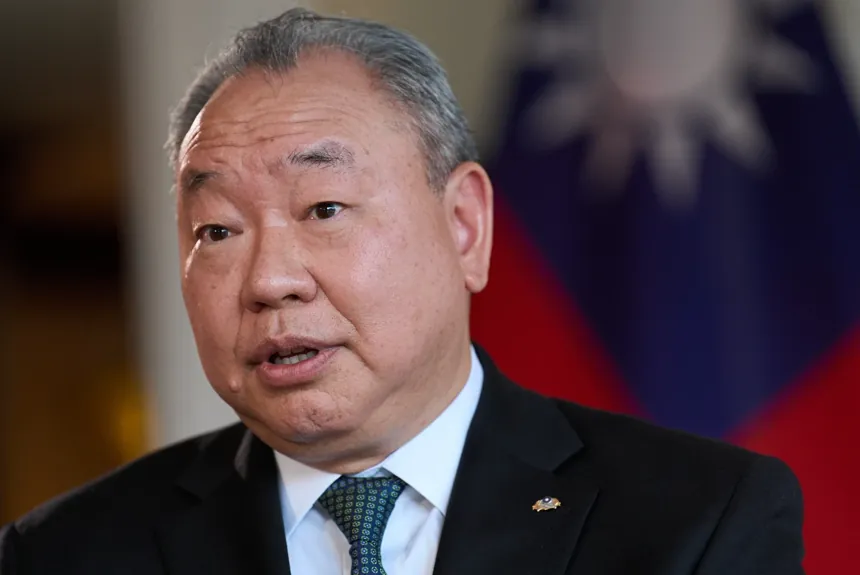
WASHINGTON — Taiwan continues to seek the approval of a proposed $14 billion U.S. arms package as concerns grow over military pressure from China, according to the island’s top representative in Washington, who said Taipei is working to strengthen its ability to defend itself against potential aggression.
Alexander Yui Tah-ray, head of the Taipei Economic and Cultural Representative Office in the United States, told The Associated Press that Taiwan requires the weapons for defensive purposes and is increasing defense spending to improve its ability to respond during a crisis.
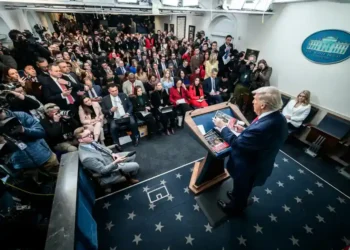
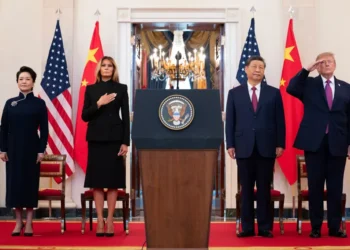
The proposed arms package remains under review after President Donald Trump said following a visit to Beijing in May that he had discussed the matter “in great detail” with Chinese President Xi Jinping. The comments raised concerns in Taiwan and among some lawmakers in Washington.

Although the United States does not formally recognize Taiwan as a country, Washington remains the island’s primary informal supporter and largest arms supplier. U.S. law requires the government to provide Taiwan with sufficient defensive capabilities to deter aggression.
Taiwan Emphasizes Self-Defense
Yui said Taiwan recognizes that responsibility for the island’s defense rests with its own government.
“This is our responsibility, so we will not wait and depend for the U.S. cavalry to come and save us,” Yui told AP. “That’s why we’re willing to acquire, to buy U.S. equipment and arms to make ourselves stronger.”
He added that weapons sales should reflect the level of threat facing Taiwan, which he described as “actually pretty high” because of China’s military activities near the island.
Yui said China regularly sends aircraft and naval vessels near Taiwan and accused Beijing of threatening the island’s democratic system and freedoms.
China has conducted large-scale military exercises around Taiwan in recent years and frequently deploys warships and military aircraft near the island. Beijing considers Taiwan part of its territory and has repeatedly criticized support for Taiwanese independence.
U.S. Policy on Taiwan Unchanged, Officials Say
Yui said he has seen no change in Washington’s position toward Taiwan and that Taipei will respect the Trump administration’s pace in making policy announcements.
The proposed arms package has received support from lawmakers in Congress, who questioned Secretary of State Marco Rubio about its status during a hearing this month.
Rubio said U.S. policy toward Taiwan remains unchanged and rejected suggestions that Washington consults Beijing on weapons sales involving the island.
“We’re aware of their position. They talk about it all the time,” Rubio said of China. “They are not negotiated, and they are not consulted.”
Rubio said the proposal remains under review rather than being delayed, adding that the administration must consider multiple factors, including the availability of U.S. weapons stockpiles.
“It includes the availability of the stocks in the short term,” Rubio said. “We have to balance that with our own procurement process.”
The administration previously approved a separate $11 billion arms package for Taiwan in December that included High Mobility Artillery Rocket Systems, known as HIMARS, and howitzers.
Taiwanese President Lai Ching-te said his government remains in close contact with Washington and expressed hope that the larger purchase would receive approval soon.
Beijing Reaffirms Opposition
China’s Foreign Ministry reiterated its opposition to U.S. weapons sales to Taiwan.
Foreign Ministry spokesperson Lin Jian described efforts to pursue independence through military means and reliance on U.S. support as “a dead end.”
“China’s opposition to American arms sales to Taiwan is consistent and clear,” Lin said.
Beijing has long opposed military cooperation between Washington and Taipei and maintains that Taiwan is an internal Chinese matter.
Navigating Relations Under Trump’s Second Term
Yui arrived in Washington in late 2023 during former President Joe Biden’s administration. Under Biden, the United States repeatedly signaled support for Taiwan’s defense in the event of a Chinese attack.
Since returning to office, Trump has pursued a more conciliatory tone toward Beijing following a period of trade tensions between the two countries. At the same time, he has suggested he could speak directly with President Lai, a step that would break with a longstanding practice under which sitting U.S. presidents have not directly spoken with Taiwan’s leader.
In its national defense strategy published in January, the Pentagon said it seeks to deter China through strength rather than confrontation. The strategy stated that the United States would maintain a strong defensive posture along a chain of strategic islands, including Taiwan.
Despite what he described as mixed messages from Washington, Yui expressed confidence in the broader relationship between Taiwan and the United States.
“It’s important to look at the actions, what is happening, not just the rhetoric,” Yui said. “The big stick is still there.”
Tags: Taiwan, China, United States, Donald Trump, Alexander Yui, Marco Rubio, Arms Sales, Indo-Pacific