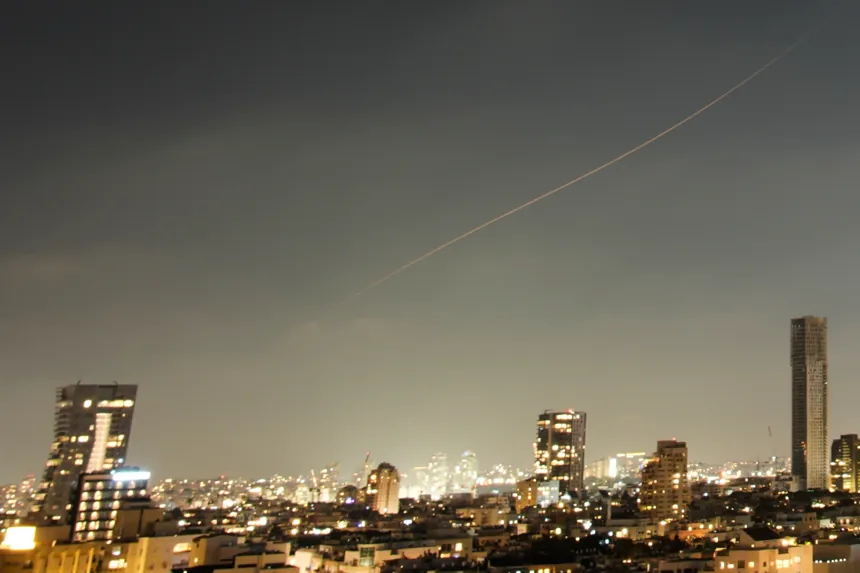
DUBAI, United Arab Emirate – Israel carried out airstrikes in central and western Iran early Monday after Tehran launched missiles toward Israel, escalating tensions and raising concerns that the Middle East could be drawn back into a broader regional conflict.
The Israeli military said its air force targeted military sites linked to Iran’s government, though it did not provide details about the specific locations or the extent of the operation.
“A short while ago, the Israeli Air Force struck military targets belonging to the Iranian terror regime in western and central Iran,” the military said in a brief statement issued as the operation began.

Explosions Reported Across Iran
Iranian state television reported explosions in several cities, including Isfahan, Karaj, Tabriz and Tehran. Authorities did not immediately provide information about potential casualties, damage, or the specific targets that were hit.
A witness in Tehran reported hearing at least one large explosion west of the capital. Following the strikes, Iranian authorities closed airspace around Imam Khomeini International Airport, the country’s primary international gateway.
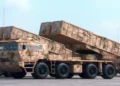
Iran’s paramilitary Revolutionary Guard claimed that Israel used air-launched ballistic missiles during the operation. No additional details were provided, and independent verification was not immediately available.
Escalation Follows Exchange of Attacks
The latest strikes came after a series of military actions that have complicated efforts to preserve a fragile ceasefire and resume diplomatic negotiations.
On Sunday, Israel conducted airstrikes in Beirut’s southern suburbs, an area associated with the Lebanese Shiite group Hezbollah. Iran later launched missiles toward Israel, prompting Israel’s response against targets inside Iran early Monday.

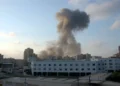


The sequence of attacks has heightened concerns that hostilities involving Israel, Iran and Hezbollah could expand beyond their current scope, potentially destabilizing a region already facing multiple security crises.
U.S. Seeks to Preserve Diplomatic Path
The United States has continued to encourage restraint while urging both sides to return to negotiations.
Earlier Sunday, U.S. President Donald Trump told Fox News that he wanted Iran to halt missile attacks and resume diplomatic discussions. Trump also said Israel’s operations in Lebanon were not coordinated with Washington and expressed dissatisfaction with the strikes.
A senior U.S. official, speaking on condition of anonymity because of the sensitivity of private discussions, said Trump spoke directly with Israeli Prime Minister Benjamin Netanyahu following Iran’s missile attack.
According to the official, Trump urged Netanyahu not to launch an immediate retaliatory strike and believed he had persuaded the Israeli leader to delay a response. The official did not provide additional details regarding the conversation, and there was no immediate comment from Netanyahu’s office.
Uncertainty Surrounds Next Steps
The White House did not immediately comment on whether Israel’s strikes inside Iran were coordinated with the United States.
Meanwhile, negotiations aimed at maintaining a ceasefire and reducing regional tensions remain stalled. Diplomatic efforts have faced increasing challenges amid continued clashes involving Israel, Iran and Hezbollah, as well as Israel’s military presence in southern Lebanon.
With both sides demonstrating a willingness to carry out long-range strikes beyond their borders, the risk of further escalation remains a central concern for regional governments and international mediators seeking to prevent a wider conflict.