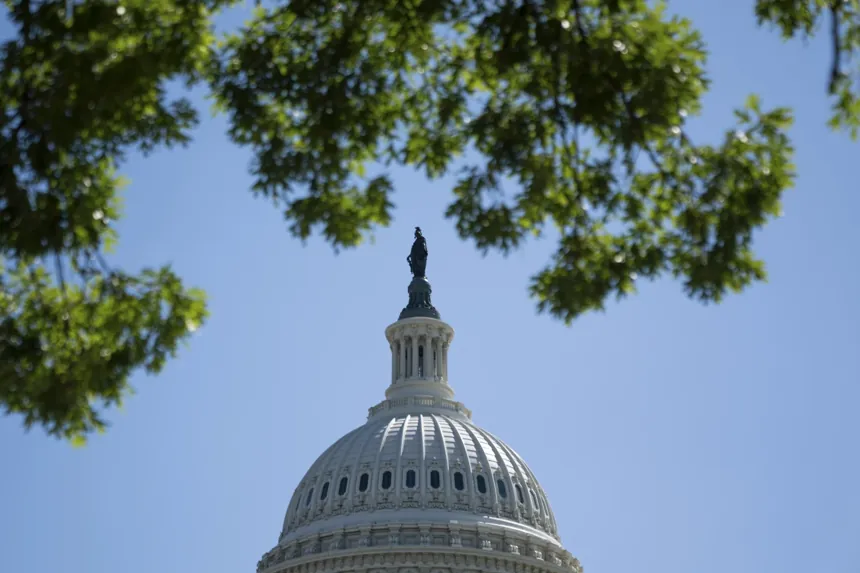
WASHINGTON – The U.S. House of Representatives approved legislation Thursday that would provide additional assistance to Ukraine and impose new sanctions targeting key sectors of Russia’s economy, marking a significant bipartisan rebuke of Republican leadership and highlighting growing congressional frustration over the administration’s approach to the war.
The measure, introduced by Democratic Rep. Gregory Meeks of New York, passed by a vote of 226-195 after supporters successfully used a discharge petition to force the bill onto the House floor. The procedural move allowed lawmakers to bypass leadership opposition and bring the legislation to a vote despite objections from senior Republican officials.
According to details of the bill, the legislation would provide more than $1 billion in security and reconstruction assistance for Ukraine while making an additional $8 billion available through loans intended to support the country’s defense efforts.

The vote represents the second major instance this week in which House lawmakers broke with President Donald Trump on a foreign policy matter. A day earlier, the chamber approved a war powers resolution aimed at restricting U.S. military involvement in Iran.
Rare Procedural Move Forces House Vote
Supporters relied on a discharge petition, a legislative mechanism that allows a majority of House members to circumvent leadership and bring legislation directly to the floor. The petition gathered the required 218 signatures, reflecting support from Democrats as well as a group of Republicans willing to challenge party leadership.
The use of discharge petitions has become increasingly prominent during the current Congress. Lawmakers previously employed the procedure to advance legislation concerning the release of government files related to Jeffrey Epstein and to extend Affordable Care Act health care subsidies, although the subsidy measure ultimately failed to advance in the Senate.
During debate, Meeks argued that continued support for Ukraine would strengthen Kyiv’s position in any future negotiations aimed at ending the conflict. He framed the decision as one that would influence whether Ukraine could negotiate from a position of strength or whether Russia could outlast Western support.
Republican Leaders Raise Concerns
Most Republicans opposed the legislation, arguing that ongoing negotiations between Congress and the White House could produce a more comprehensive package.
■ Related News




Rep. French Hill of Arkansas, chairman of the House Financial Services Committee, said he supports Ukraine but described the legislation as outdated and argued that it would provide less security assistance than levels previously approved in congressional defense policy.
Hill also expressed concern that provisions within the bill could inadvertently reduce defense spending commitments among some members of the North Atlantic Treaty Organization.
Rep. Brian Mast of Florida, chairman of the House Foreign Affairs Committee, criticized the legislation and suggested it was primarily intended to challenge the president’s foreign policy approach.
House Majority Leader Steve Scalise of Louisiana urged lawmakers to reject the measure, citing ongoing discussions between congressional leaders and the White House over potential Ukraine-related legislation. Scalise said negotiations were progressing and warned that passage of the House bill could complicate those efforts.
Bipartisan Support Emerges
Despite leadership opposition, a group of Republicans joined Democrats in supporting the measure.
Among them was Rep. Don Bacon of Nebraska, who publicly backed the legislation during floor debate. In total, 18 Republicans voted in favor of the bill alongside 207 Democrats and one independent member.
Democratic Rep. Ilhan Omar voted against the measure, joining most Republicans in opposition.
Supporters acknowledged the legislation faces uncertain prospects in the Senate but argued that House approval sends an important signal regarding congressional support for Ukraine.
Rep. Brian Fitzpatrick of Pennsylvania, one of the Republicans who signed the discharge petition, said the vote was intended to demonstrate continued congressional engagement with the conflict and support for Ukraine’s military forces.
Senate Outlook Remains Uncertain
Although the bill cleared the House, its future remains unclear in the Senate, where support may depend heavily on whether the White House ultimately endorses the legislation.
Senate discussions on Ukraine policy have recently focused on a separate proposal that would impose broad tariffs and secondary sanctions on countries purchasing Russian oil, natural gas, uranium and other exports that help finance Moscow’s military operations.
That legislation has yet to advance, leaving uncertainty over the next phase of congressional action related to the war.
Ukraine Conflict Continues to Shape Debate
The House vote comes as Russia’s war against Ukraine continues more than four years after Moscow launched its full-scale invasion.
Recent weeks have seen renewed long-range attacks by both sides, while diplomatic efforts aimed at securing a ceasefire have failed to produce a breakthrough. U.S.-led negotiations have struggled to narrow major differences between the parties, and international attention has increasingly shifted toward developments involving Iran.
According to the latest quarterly inspector general report for Operation Atlantic Resolve, the United States has approved approximately $195 billion in response to the conflict. A significant portion of that funding has been used to replenish American military stockpiles after weapons transfers to Ukraine.
The last major Ukraine assistance package approved by Congress was enacted in April 2024, although smaller amounts of funding have since been included in annual government spending legislation.
With Senate action uncertain and White House support unresolved, the House vote underscores continued divisions in Washington over how the United States should approach the ongoing conflict and future assistance for Ukraine.