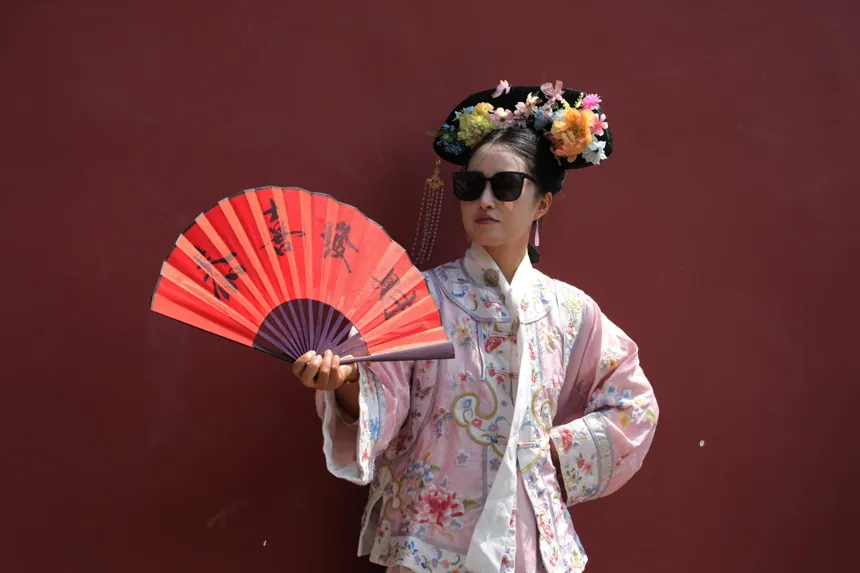
A growing number of visitors to Beijing are embracing immersive historical experiences by dressing in elaborate imperial-era costumes near the Forbidden City, reflecting a broader revival of interest in traditional Chinese culture among younger generations. The trend has created a booming business for costume studios and makeup artists while reshaping tourism around some of China’s most recognizable heritage sites.
Near the former imperial palace, which served as the seat of power during China’s Ming and Qing dynasties, hundreds of styling studios now offer visitors the opportunity to transform themselves into emperors, empresses, princesses and court officials. Customers are outfitted in embroidered robes, decorative jewelry and ornate hairstyles before posing for photographs around the historic complex.
Traditional Culture Meets Social Media
The popularity of the experience has been driven in part by social media, where visitors share photos and videos blending historical aesthetics with modern life. Many participants pair traditional clothing with contemporary accessories such as sneakers, sunglasses or popular beverages, creating a visual contrast between China’s imperial past and present-day urban culture.

Makeup artist Chen Jiao, who works at one of the studios near the Forbidden City, told The Associated Press that demand remains high throughout much of the year. She said peak periods, including public holidays and weekends, often bring large numbers of customers seeking historical makeovers and professional photography sessions.
The cost of participating typically ranges from around 300 yuan ($45) to more than 1,000 yuan ($150), depending on the complexity of costumes, styling and photography packages offered by individual businesses.
Industry Expands Around Historic Landmarks
Local media reports cited by The Associated Press indicate the industry has expanded rapidly in recent years. A building housing one costume studio reportedly contained only a handful of such businesses around 2020, but now hosts more than 100. The growth reflects rising interest in traditional Chinese clothing and historical-themed experiences among domestic tourists.
Many visitors travel from other provinces specifically to participate. College students interviewed by AP said they viewed the experience as a way to connect with the historical setting of Beijing’s landmarks while expressing appreciation for traditional Chinese aesthetics.
Some visitors choose Qing dynasty-inspired attire associated with imperial princesses, while others prefer styles linked to the Ming dynasty. Participants often select outfits based on personal interests in Chinese history, costume dramas or cultural heritage.
■ Related News

Historical Dramas Help Fuel Interest
The enduring popularity of Chinese historical television dramas has contributed significantly to the trend, according to people involved in promoting traditional clothing culture. Enthusiasts say younger generations are increasingly discovering historical fashion through entertainment before exploring its cultural and historical roots.
Cai Zehong, founder of Hanfu Beijing, told AP that many young people are drawn to the visual appeal of traditional garments while also developing a greater interest in China’s cultural heritage. Organizations promoting traditional clothing have played a role in encouraging public engagement with historical customs and attire.
The phenomenon is part of a wider cultural movement that has gained visibility across China in recent years. Similar scenes have appeared at historic sites nationwide, where visitors dress in period-inspired clothing for photographs, events and cultural activities. Earlier Associated Press reporting documented comparable trends at heritage attractions throughout Beijing and other cities.
Tourism and Heritage Intersect
The resurgence of historical costume experiences highlights how cultural tourism in China is evolving beyond traditional sightseeing. Visitors increasingly seek interactive experiences that allow them to engage directly with historical settings and share those experiences online.
As demand continues to grow, businesses surrounding the Forbidden City are benefiting from a trend that combines tourism, fashion, entertainment and cultural heritage. The movement has transformed parts of central Beijing into a thriving marketplace where China’s imperial history is reimagined for a new generation of visitors.