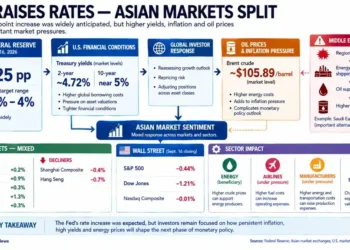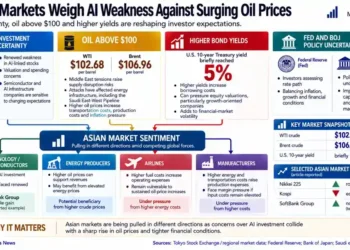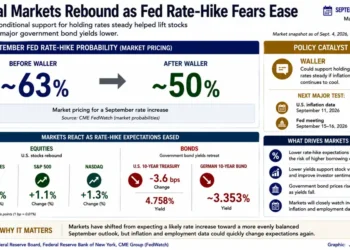
Asian equities advanced Wednesday after fresh records on Wall Street reinforced investor appetite for technology shares, while lower oil prices eased some concerns over inflation and geopolitical risks tied to tensions involving Iran.
Market data showed gains across several major Asian indexes, with technology-related stocks helping drive momentum after strong performances in the United States semiconductor sector. The rally followed record closes for the S&P 500 and Nasdaq indexes, supported by continued investor interest in artificial intelligence-linked companies.
In Japan, the Nikkei 225 rose more than 1%, while Taiwan and South Korea posted stronger gains led by chipmakers and electronics manufacturers. Corporate trading data showed notable advances for companies tied to semiconductor equipment and memory-chip production.

Oil prices moved lower during trading, reducing pressure on global markets that had been closely monitoring supply risks connected to the Strait of Hormuz and ongoing uncertainty surrounding U.S.-Iran relations. Brent crude and U.S. benchmark crude both declined modestly, according to market pricing data cited in reports Wednesday.
Technology Stocks Extend Global Rally
Investor attention remained centered on artificial intelligence and semiconductor demand after strong gains in U.S. chipmakers. Market reports indicated that optimism surrounding memory-chip demand and AI infrastructure spending continued to support broader equity sentiment.
Trading in Asian markets mirrored recent Wall Street strength, where technology companies have continued to drive benchmark indexes higher despite ongoing concerns over inflation, interest rates and geopolitical instability.
The latest gains also reflected easing pressure in bond markets. Lower oil prices contributed to declines in U.S. Treasury yields, which investors have been watching closely for signals about inflation expectations and future monetary policy conditions.
Geopolitical Risks Still in Focus
Although markets reacted positively to lower crude prices, uncertainty surrounding negotiations involving Iran remained a significant factor for investors.



Recent statements from U.S. President Donald Trump regarding possible diplomatic progress contributed to shifts in oil prices earlier in the week, according to Associated Press reporting. Energy markets have remained sensitive to any developments affecting shipping through the Strait of Hormuz, a critical route for global crude exports.
Market participants also continued monitoring inflation data and central bank policy signals globally, particularly as energy costs remain a major influence on consumer prices and economic growth expectations.
Details regarding any broader resolution to regional tensions remain unclear.