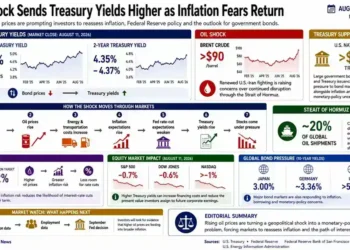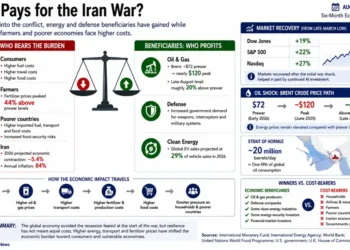
A majority of Americans are reducing discretionary spending even as U.S. stock markets reach record highs, reflecting a widening disconnect between Wall Street optimism and consumer financial confidence, according to new survey data and Associated Press reporting.
The survey, conducted by The Associated Press-NORC Center for Public Affairs Research, found that roughly two-thirds of U.S. adults said they have cut back spending over the past year because of concerns about rising costs and economic uncertainty. The findings come as the S&P 500 and Nasdaq indexes continue posting record highs fueled largely by technology and artificial intelligence-related stocks.
Government inflation data showed consumer prices have moderated from the peaks reached in 2022, but many households continue facing elevated costs for essentials including food, housing, insurance and utilities. The report indicated that many Americans do not feel broader economic improvements reflected in their daily finances.

Household Spending Pullbacks Continue
Survey responses showed consumers are increasingly delaying or reducing purchases ranging from restaurant meals and entertainment to travel and large household items.
Many respondents cited persistent inflation and concerns about future economic conditions as key reasons for tightening budgets, even though unemployment remains relatively low and wage growth has improved in some sectors.
The AP-NORC survey found that confidence in personal financial stability varied sharply across income groups, with lower-income households reporting greater difficulty managing monthly expenses and emergency costs.
Market Gains Driven by Technology Stocks
Wall Street’s recent strength has been concentrated heavily in large technology companies tied to artificial intelligence investment and semiconductor demand.
Market data showed gains in companies including Nvidia, Microsoft and other major technology firms have played a significant role in lifting benchmark indexes to all-time highs this year. Investors have continued directing capital toward AI-related sectors despite broader concerns surrounding inflation, interest rates and geopolitical instability.
■ Related News



The divergence between stock market performance and consumer sentiment reflects how financial market gains are often concentrated among wealthier households with greater exposure to equities and retirement investments.
Inflation Remains a Political and Economic Issue
Although inflation has eased compared with previous years, many consumers surveyed said prices remain significantly higher than before the pandemic, particularly for groceries, insurance and housing-related expenses.
Federal Reserve officials have continued monitoring inflation trends closely as policymakers weigh the timing of potential interest-rate adjustments. Government economic reports have shown slower inflation growth in recent months, but consumer surveys continue indicating frustration over the cumulative rise in living costs.
Associated Press reporting noted that economic sentiment has remained politically significant ahead of the U.S. presidential election cycle, with many voters expressing dissatisfaction over affordability despite steady job growth and resilient corporate earnings.
Consumer Confidence Remains Uneven
The survey results highlighted persistent uncertainty about the direction of the U.S. economy, particularly among households without substantial savings or investment assets.
While financial markets have benefited from optimism surrounding artificial intelligence and corporate profitability, many consumers remain focused on everyday expenses and borrowing costs.
Details regarding whether consumer spending pullbacks could significantly affect broader economic growth remain unclear.