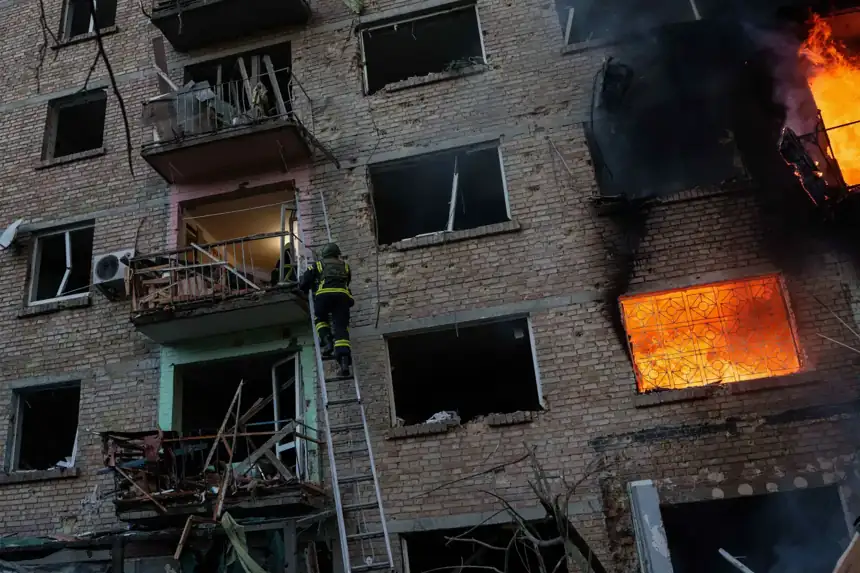
European leaders are closely monitoring Belarus for signs it could deepen its involvement in Russia’s war against Ukraine, as renewed missile attacks and joint military exercises heighten fears of a broader regional escalation.
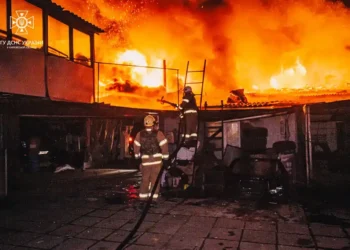
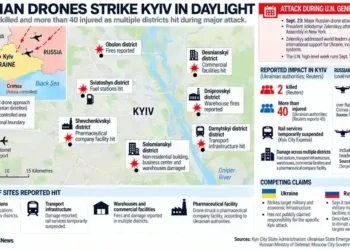
The growing concern follows Russia’s largest missile assault on Kyiv this year and recent Russian-Belarusian nuclear drills that intensified security anxieties across Eastern Europe. Ukrainian officials warned that Belarusian territory could again be used as a launch point for military operations against northern Ukraine, echoing the early stages of Russia’s 2022 invasion.
Belarusian opposition leader Sviatlana Tsikhanouskaya visited Kyiv this week in a symbolic show of support for Ukraine while cautioning that President Alexander Lukashenko continues to align closely with Moscow. According to international reports, she argued that Belarus risks further isolation if it becomes more deeply involved in the conflict.

Diplomatic Pressure Intensifies
French President Emmanuel Macron reportedly held a rare direct phone conversation with Lukashenko, urging Belarus not to become more deeply entangled in Russia’s military campaign. Officials familiar with the discussion said Macron warned of the geopolitical risks facing Belarus if it allows itself to be drawn further into the war.
The call marked one of the first significant diplomatic contacts between Paris and Minsk since Russia launched its full-scale invasion of Ukraine in 2022. Analysts said the outreach reflected broader European concern that Belarus could become a more active military partner for the Kremlin as fighting intensifies.
Security Concerns Spread Across the Region
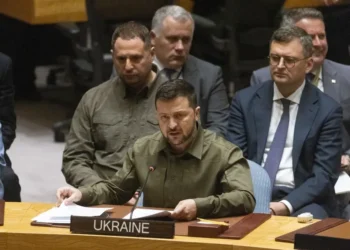
Ukraine has reinforced defensive positions along its northern frontier after President Volodymyr Zelenskyy warned of “unusual activity” near the Belarusian border. Ukrainian military officials said they are preparing for multiple scenarios, including renewed offensives launched from Belarusian territory.
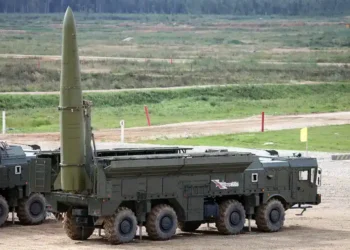
Belarus remains Russia’s closest regional ally and previously allowed Russian forces to use its territory during the initial assault on Kyiv in 2022. Moscow has also stationed tactical nuclear weapons in Belarus and expanded joint military coordination with Minsk through recent exercises involving missile systems and strategic forces.
Regional security concerns have also spread to NATO’s eastern flank, where officials in Poland and the Baltic states have warned about growing military pressure and cross-border provocations linked to Russia and Belarus. European Union leaders described recent threats and military movements near NATO territory as a risk to broader continental stability.


Western Strategy Faces New Pressure
Western governments are attempting to prevent Belarus from taking a more direct role in the conflict while maintaining pressure on Lukashenko’s government through sanctions and diplomatic isolation. At the same time, European officials remain cautious about pushing Minsk entirely into Moscow’s strategic orbit.
Analysts noted that Belarus has so far avoided deploying its own troops directly into Ukraine, despite providing logistical and military support to Russia. However, continued joint drills, nuclear coordination and increasingly aggressive rhetoric from Minsk have fueled uncertainty about Belarus’ long-term intentions.
The developments come as Ukraine continues to face intensified Russian strikes and mounting pressure along multiple fronts, raising fears that any broader Belarusian involvement could further destabilize Eastern Europe and complicate diplomatic efforts to end the war.