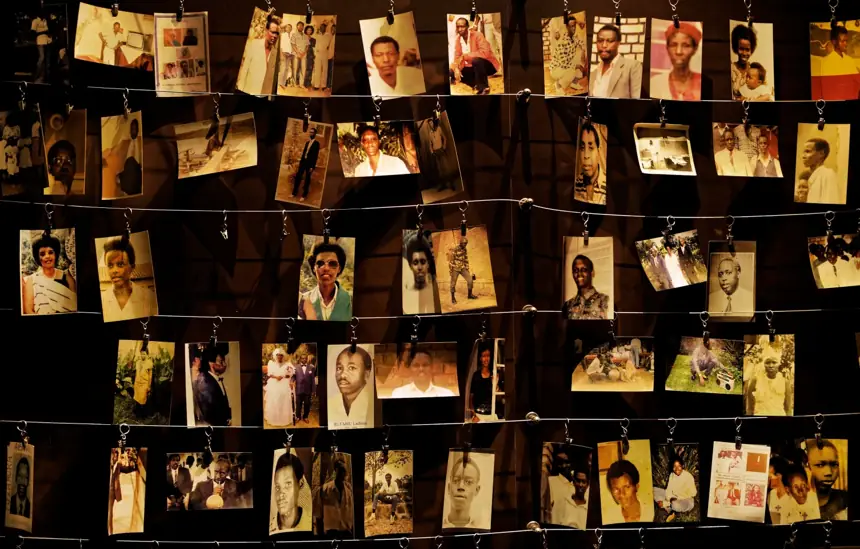
The United Nations tribunals established to prosecute crimes committed during the Yugoslav wars and the 1994 Rwandan genocide formally concluded their final proceedings, ending more than three decades of international judicial efforts aimed at addressing some of the world’s worst atrocities.
The final session took place in The Hague and centered on the case of Félicien Kabuga, the alleged financier of the Rwandan genocide, whose death earlier this month brought the last active case before the U.N. residual tribunal to a close. Presiding Judge Iain Bonomy described the hearing as “a truly historic milestone,” according to Associated Press reporting.
Kabuga, believed to have been in his 90s, had been accused of helping finance the 1994 genocide in Rwanda, during which approximately 800,000 Tutsis and moderate Hutus were killed over roughly 100 days. He died in custody in The Hague after being declared medically unfit to stand trial because of severe dementia.

Legacy of International Justice
The closure of Kabuga’s proceedings also marked the end of the International Residual Mechanism for Criminal Tribunals, the institution created to complete remaining work from the International Criminal Tribunal for Rwanda and the International Criminal Tribunal for the former Yugoslavia.
According to international reports, the two tribunals convicted 155 individuals over crimes linked to genocide, ethnic cleansing, war crimes, and crimes against humanity committed during conflicts in Rwanda and the Balkans during the 1990s. Legal experts widely regard the tribunals as foundational to the modern system of international criminal accountability.
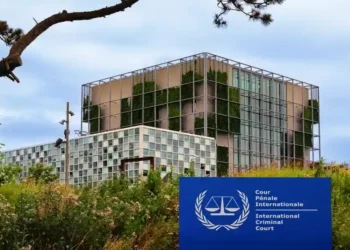
The tribunals also helped establish legal precedents later adopted by the International Criminal Court, which was created in 2002 as a permanent body for prosecuting genocide and crimes against humanity.
Questions Over Global Accountability Persist
Despite the tribunals’ legacy, legal scholars and human rights organizations say international justice mechanisms continue to face growing political resistance and enforcement challenges.
Analysts noted that several countries have recently declined to cooperate fully with international arrest warrants issued by the ICC, including cases involving high-profile leaders accused of war crimes or crimes against humanity. The court itself has faced criticism and political pressure from major powers, including sanctions previously imposed by the United States over investigations involving U.S. and Israeli officials.



Lucy Gaynor, a historian at the University of Amsterdam quoted in international coverage, said the conclusion of the Kabuga case reflected broader difficulties facing global justice institutions. She described the moment as symbolic of “the state of international justice” during a period of geopolitical fragmentation and weakening international consensus.
Rwanda Survivors Reflect on Unfinished Justice
Kabuga had long been viewed as one of the most wanted genocide suspects in the world before his arrest near Paris in 2020 after more than two decades on the run. Prosecutors accused him of funding extremist Hutu militias and supporting Radio Télévision Libre des Mille Collines, a broadcaster alleged to have incited anti-Tutsi violence during the genocide.
Survivors’ groups and rights advocates expressed disappointment that Kabuga never faced a full trial. Some observers argued that his death without conviction highlighted both the achievements and limitations of international legal systems attempting to prosecute mass atrocities decades after they occur.
The closure of the tribunals leaves the ICC as the world’s primary permanent institution for prosecuting genocide, war crimes, and crimes against humanity, though experts say its effectiveness increasingly depends on political cooperation from member states and major global powers.