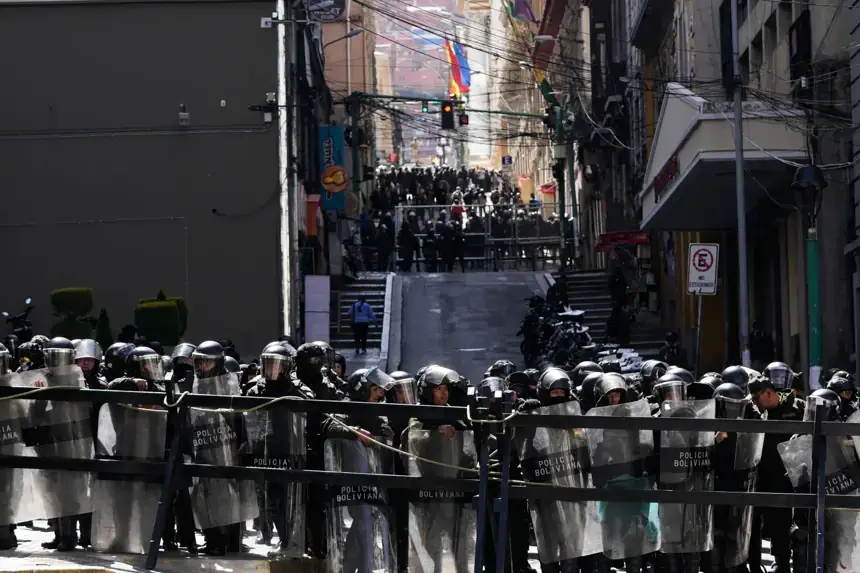
Bolivia’s political crisis intensified Monday after supporters of former President Evo Morales clashed with security forces in the capital, La Paz, as widening anti-government protests exposed mounting instability in the economically troubled South American nation.
Thousands of demonstrators marched toward government buildings demanding the resignation of President Rodrigo Paz, while police used tear gas to prevent protesters from breaching security barriers near Congress and the presidential palace. Authorities reported dozens of arrests after confrontations erupted in central La Paz amid escalating unrest linked to road blockades, fuel shortages, and rising living costs.
The protests represent the most serious challenge yet to Paz’s six-month-old administration, which came to power following a wave of conservative electoral victories across Latin America. Analysts say Bolivia is now facing a volatile combination of economic deterioration, political polarization, and growing distrust toward the country’s leadership.

Economic Crisis Fuels National Anger
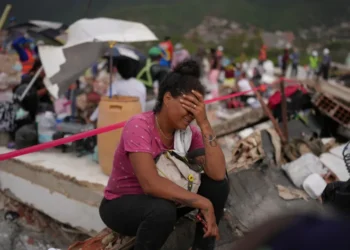
The demonstrations initially began earlier this month over labor demands and opposition to economic reforms, but they have since evolved into a broader anti-government movement involving miners, transport workers, rural farmers, and Indigenous groups. Protesters accuse the government of failing to address inflation, fuel shortages, and deteriorating living conditions.
Road blockades across Bolivia have disrupted transportation networks for more than two weeks, stranding thousands of cargo trucks and creating shortages of food, fuel, and medical supplies in major cities. Business organizations estimate the disruptions are costing the economy more than $50 million per day.
President Paz has defended his austerity-oriented reforms as necessary to stabilize Bolivia’s finances after years of economic strain. His administration recently removed fuel subsidies in an effort to reduce a widening budget deficit while attempting to preserve social welfare programs introduced under previous governments.
Morales Remains Central Political Figure
Government officials have accused Morales of encouraging unrest to weaken the current administration. The former president, who remains highly influential among rural and Indigenous political movements, has publicly backed demonstrators while rejecting accusations of orchestrating the protests.
Morales has spent months avoiding arrest after prosecutors issued warrants linked to allegations involving a relationship with a minor, accusations he says are politically motivated. The legal disputes surrounding the former leader have deepened divisions inside Bolivia’s political landscape.
Political observers noted that Morales still commands strong loyalty among sectors tied to the Movement Toward Socialism (MAS), the leftist party that dominated Bolivian politics for nearly two decades.
Regional Concern Grows
The unrest has drawn increasing attention across Latin America as neighboring governments monitor fears of broader instability in the Andean region. Several regional governments released a joint statement expressing support for Bolivia’s democratic institutions and warning against attempts to destabilize constitutional order.
Argentina has reportedly launched humanitarian assistance operations to help address shortages caused by the prolonged blockades, while the United States urged calm and voiced support for efforts to restore stability.
Security experts warn that Bolivia’s crisis could worsen if negotiations between the government and protest groups fail to produce a compromise. The country has a long history of politically charged demonstrations and social unrest tied to economic inequality and regional divisions.
Authorities maintained a heavy police and military presence in La Paz on Monday night as protests continued in several parts of the country.