Peru’s electoral authorities have officially confirmed that conservative candidate Keiko Fujimori and leftist politician Roberto Sánchez will compete in a presidential runoff on June 7, setting the stage for a highly polarized contest in one of South America’s most politically unstable nations.
The confirmation by Peru’s National Elections Board follows weeks of delayed vote counting and disputes over the April general election, where none of the 35 candidates secured the majority needed to avoid a second round. International observers and analysts say the runoff could significantly influence Peru’s economic direction, investor confidence and regional political alignment.
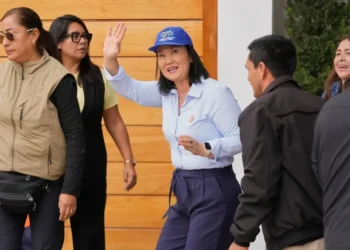
Keiko Fujimori, leader of the Fuerza Popular party and daughter of former President Alberto Fujimori, finished first with roughly 17% of the vote. Sánchez, a former foreign trade minister representing the leftist Juntos por el Perú coalition, secured second place with just over 12%, narrowly defeating ultraconservative candidate Rafael López Aliaga.

Political Polarization Shapes Runoff Campaign
The upcoming vote is expected to deepen ideological divisions across Peru, where political instability has resulted in eight presidents in less than a decade.
Fujimori has campaigned on restoring public security and strengthening support for Peru’s mining-driven economy, while Sánchez has promoted greater state involvement in key industries, tax reforms and constitutional changes. Analysts noted that the runoff presents voters with sharply different visions for the country’s future.
Both candidates face the challenge of expanding support beyond their core voter bases. More than 70% of Peruvians voted for other candidates in the first round, highlighting widespread political fragmentation and public dissatisfaction with the country’s leadership.
The election campaign has also revived tensions linked to Peru’s recent political crises, including the 2022–2023 protests that left dozens dead following the removal of former President Pedro Castillo. Sánchez has aligned himself with some of Castillo’s political positions, while Fujimori continues to draw support from conservative sectors emphasizing law-and-order policies.
Electoral Disputes Raise Institutional Concerns
The runoff confirmation comes after weeks of controversy surrounding logistical failures and allegations of irregularities during the first round.
■ Related News



Election officials acknowledged delays at polling stations and administrative problems that extended voting in some areas. Peru’s electoral board has since pledged reforms ahead of the runoff, including the creation of an expert oversight committee focused on transparency and cybersecurity protections.
Fraud allegations promoted by López Aliaga and some supporters were rejected by electoral authorities and international observers, who said there was no evidence of systematic manipulation. Political analysts warned that continued attacks on the electoral process could further weaken public trust in democratic institutions.
Regional and Economic Stakes Increase
International markets and regional governments are closely watching the runoff because Peru remains one of the world’s largest producers of copper and other strategic minerals.
Despite years of political turmoil, Peru’s mining sector has remained relatively resilient, making the election outcome particularly important for foreign investors and international commodity markets. Analysts said uncertainty surrounding taxation, resource management and regulatory policy could affect investment decisions across Latin America.
Recent polling suggests the runoff may be highly competitive, with surveys indicating a near tie between Fujimori and Sánchez ahead of the June vote.