American consumers and investors continued to show resilience despite a renewed acceleration in inflation driven largely by rising energy prices, reinforcing concerns that the Federal Reserve may need to maintain tighter monetary policy for longer.
Fresh U.S. economic data released this week showed consumer prices climbed 3.8% year-over-year in April, the fastest pace in roughly three years, as gasoline costs surged amid ongoing geopolitical tensions linked to the conflict involving Iran. According to Labor Department figures, gasoline prices rose more than 28% compared with a year earlier, pushing broader household costs higher.
The inflation rebound has intensified scrutiny over the durability of consumer demand and the outlook for interest rates. Despite higher living costs, retail activity remained positive, labor market conditions stayed relatively firm, and equity markets, while volatile, continued to absorb expectations of prolonged inflationary pressure.

Inflation Pressures Intensify Across the Economy
The latest consumer price data highlighted how energy markets are feeding broader inflation trends. On a monthly basis, consumer prices increased 0.6% in April after a 0.9% rise in March, according to Labor Department data. Energy prices remained a primary driver, with gasoline prices rising 5.4% during the month.
Wholesale inflation also accelerated sharply. The producer price index increased 6% from a year earlier in April, marking the largest annual gain since late 2022. Core producer prices, which exclude food and energy, rose 5.2% annually, indicating that inflationary pressures are spreading beyond commodities.
Analysts noted that rising producer costs could eventually translate into additional price increases for consumers, particularly in transportation, manufacturing, and retail sectors.
Consumer Activity Remains Relatively Stable
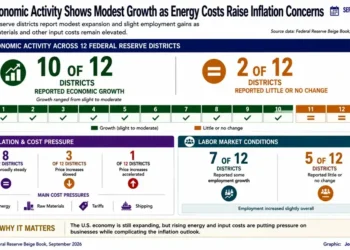
Despite persistent inflation, U.S. consumer spending has not weakened dramatically. Commerce Department data showed retail sales increased 0.5% in April, though growth slowed from the 1.6% increase recorded in March. Excluding gasoline purchases, retail sales rose 0.3%, suggesting households are becoming more selective with discretionary spending.
Higher fuel costs appear to be reducing spending flexibility for many households, particularly on categories such as apparel and furniture. However, economists said continued wage growth and relatively stable employment conditions are helping support overall consumption levels.
■ Related News


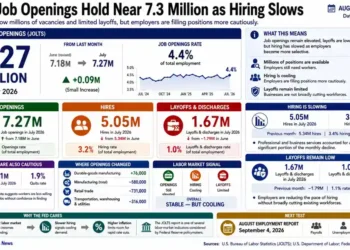
The labor market has also remained resilient. Initial jobless claims rose modestly to 211,000 for the week ending May 9, according to Labor Department data, while the unemployment rate held at 4.3%. Economists have increasingly described the labor market as operating in a “low-hire, low-fire” environment, with companies slowing recruitment but avoiding significant layoffs.
Markets Reassess Federal Reserve Outlook
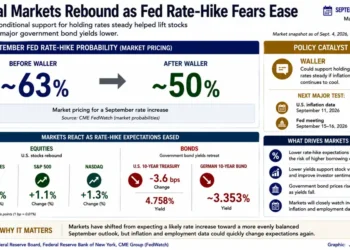
The inflation data has prompted investors to reassess expectations for Federal Reserve policy through the remainder of 2026. Financial markets increasingly expect the central bank to delay potential rate cuts, while some investors are beginning to price in the possibility of additional tightening later this year.
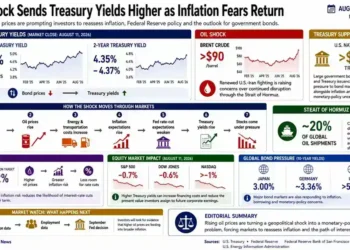
Treasury yields have moved higher as inflation concerns intensified. Reuters reported that the benchmark 10-year Treasury yield recently reached its highest level in nearly a year as investors adjusted to expectations of elevated borrowing costs and persistent inflation risks.
Global equity markets also retreated from recent highs during the week, with technology and artificial intelligence-related stocks among the sectors experiencing increased volatility. Investors have become more cautious as higher oil prices and inflation complicate the outlook for corporate earnings and monetary policy.
Housing Market Remains Under Pressure
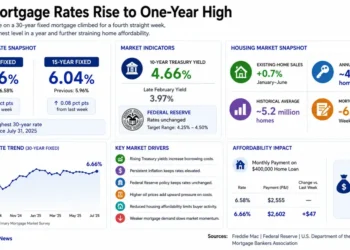
The U.S. housing market continued to show signs of weakness despite slightly lower mortgage rates. Existing home sales edged up just 0.2% in April to a seasonally adjusted annual rate of 4.02 million units, according to data from the National Association of Realtors. Sales remained well below historical norms and below economists’ expectations.
Freddie Mac data showed the average 30-year fixed mortgage rate eased marginally to 6.36%, down from 6.37% the previous week. Analysts said borrowing costs remain elevated enough to limit affordability and suppress housing demand.
The combination of elevated inflation, higher energy costs, and uncertain monetary policy continues to shape the broader economic outlook. While consumer spending and employment have remained relatively resilient, economists and investors are increasingly focused on whether inflation pressures will broaden further and force policymakers to maintain restrictive interest rates for longer than previously anticipated.