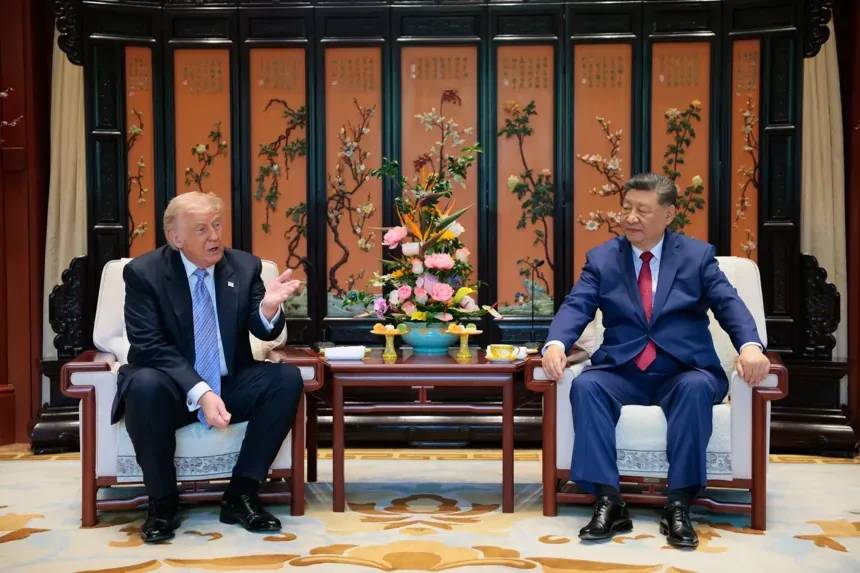
US President Donald Trump is weighing whether to advance a major arms package for Taiwan following summit talks with Chinese President Xi Jinping, highlighting persistent strategic tensions between Washington and Beijing despite efforts to stabilize bilateral relations.
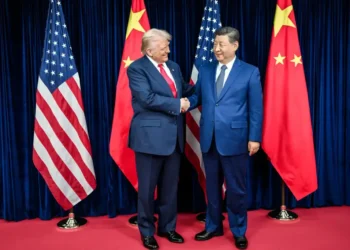
Speaking after a multi-day summit in Beijing, Trump said he had not yet decided whether to move forward with the proposed military package for Taiwan, a self-governed island claimed by China. The issue emerged as one of the most sensitive topics during the talks, according to international reports.
The potential arms sale, reportedly valued at around $14 billion, has become a critical test of the administration’s approach toward China as both governments attempt to balance economic cooperation with growing geopolitical rivalry in the Indo-Pacific.

Taiwan Remains Central to Strategic Rivalry
Chinese officials reiterated during the summit that Taiwan remains a “core interest” for Beijing and warned that mishandling the issue could destabilize relations between the world’s two largest economies. According to Chinese government accounts cited by international media, Xi warned that tensions surrounding Taiwan could lead to broader confrontation if not carefully managed.
Trump acknowledged that Taiwan featured prominently in discussions but stopped short of committing to the arms package. He said the United States wanted to avoid a broader conflict in the region while continuing diplomatic engagement with Beijing.
The administration had previously approved an $11 billion weapons package for Taipei in late 2025, while lawmakers later backed an additional package requiring presidential approval before proceeding to Congress.
Regional Allies Watch Closely
Analysts say uncertainty surrounding the arms deal is being closely monitored across Asia, where regional governments view Taiwan as central to broader Indo-Pacific security.
According to Reuters and Financial Times reporting, Trump’s willingness to discuss Taiwan-related military sales directly with Xi has raised concerns among some US allies and policy experts who fear it could weaken longstanding American commitments to Taiwan’s defense posture.

The issue also intersects with longstanding US policy frameworks, including the “Six Assurances” established during the Reagan administration, which state that Washington would not formally consult Beijing regarding arms sales to Taiwan.
Taiwanese officials have continued to publicly emphasize strong ties with Washington. Taiwanese President Lai Ching-te recently described relations with the United States as “rock solid” amid renewed Chinese pressure and military activity near the island.
Broader Diplomatic Agenda Emerges
Despite disagreements over Taiwan, the summit produced signs of limited diplomatic progress on other strategic issues, including trade and nuclear arms discussions.
Trump said Xi responded positively to proposals involving future nuclear arms negotiations among the United States, China, and Russia, though analysts cautioned that significant differences remain between the countries’ military capabilities and strategic priorities.
The leaders also discussed tensions involving Iran and global energy security, including concerns over stability in the Strait of Hormuz, according to multiple reports.
Observers say the summit reflected a broader effort by both governments to prevent further deterioration in relations while preserving leverage on key geopolitical disputes, particularly Taiwan.