A U.S. passenger evacuated from the Dutch-operated cruise ship MV Hondius after a hantavirus outbreak has tested mildly positive for the Andes strain of the virus, intensifying an already complex multinational public health response centered in Spain’s Canary Islands. The passenger, who remains asymptomatic, is being transported in a specialized biocontainment unit to the United States for further medical assessment, according to Reuters and Associated Press reporting.
The development comes as governments across Europe, North America, and Asia coordinate quarantine, testing, and repatriation operations for passengers and crew who had been aboard the expedition cruise vessel following confirmed infections and multiple deaths linked to the outbreak. International health authorities continue to describe the broader public health risk as low, though surveillance measures have been expanded because the Andes strain is one of the few hantaviruses known to allow rare human-to-human transmission.
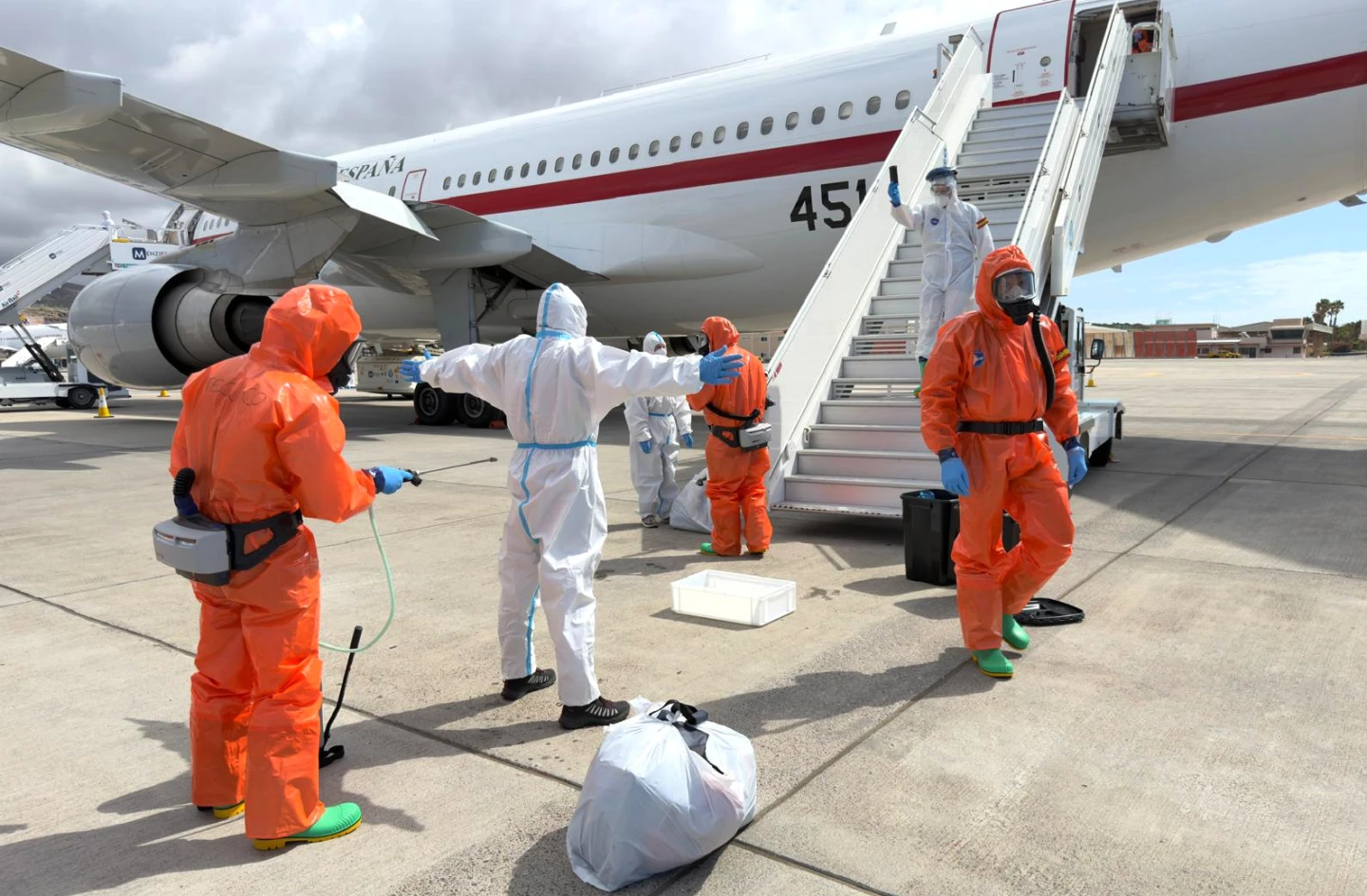
The MV Hondius arrived near Tenerife in Spain’s Canary Islands after several days of restricted movement at sea, with passengers largely isolated in their cabins while international authorities negotiated evacuation procedures. Spanish officials began disembarkation operations under strict containment measures, including protective medical screening and controlled transfers to military and medical facilities.

Reuters reported that another American passenger displayed mild symptoms and was also transferred using enhanced biosecurity precautions. U.S. health authorities stated that the individuals would undergo evaluation at specialized treatment facilities in Nebraska, home to federally supported quarantine and biocontainment programs.
International Containment Measures Expand
The outbreak has triggered one of the broadest multinational coordination efforts involving a cruise vessel in recent years, with passengers from more than 20 countries subject to differing quarantine protocols upon return home. Spain, France, Ireland, the Netherlands, and the United States have all deployed government-supported evacuation or medical transport operations.
Spanish authorities transferred the first group of evacuees from Tenerife to Madrid aboard government aircraft, where they entered monitored quarantine at a military hospital. French nationals were similarly repatriated under emergency medical supervision, while Irish officials confirmed that returning passengers would undergo extended observation periods.
The World Health Organization has advised active monitoring for exposed individuals because hantavirus infections may develop after prolonged incubation periods. International aviation and maritime authorities are also reviewing passenger movement records after some travelers reportedly disembarked earlier during the voyage before the outbreak was fully identified.
Health agencies have emphasized that the current situation differs significantly from airborne viral outbreaks such as COVID-19, with transmission requiring far closer exposure conditions. Still, the rare possibility of limited person-to-person spread associated with the Andes strain has prompted unusually strict precautions.
■ Related News



Regional Health Systems Face Coordinated Pressure
The outbreak has also exposed the operational challenges involved in managing infectious disease incidents aboard international expedition cruises operating far from major medical infrastructure. The MV Hondius had been traveling from southern Argentina toward Europe when suspected infections emerged among passengers.
According to Reuters and WHO-linked reporting, at least six confirmed infections and three deaths have been associated with the outbreak so far, including a Dutch couple and a German national. Additional suspected cases continue to be assessed across multiple jurisdictions.
Governments have sought to balance public reassurance with visible containment measures, including the use of protective equipment, medical isolation transport, and extended monitoring requirements. Analysts note that the coordinated response reflects heightened international sensitivity to cross-border disease management following recent global health crises.
The incident is also likely to renew scrutiny of expedition cruise protocols in remote regions, particularly concerning onboard medical preparedness, infectious disease detection, and emergency evacuation coordination between governments and private operators.
Strategic Focus Turns to Long-Term Monitoring
While the immediate evacuation phase is nearing completion, public health agencies are now shifting attention toward long-term surveillance and contact tracing across multiple countries. The WHO has warned that additional cases may emerge because of the virus’s incubation period, even as officials continue to stress that widespread transmission remains unlikely.
Cruise operator Oceanwide Expeditions has indicated the vessel will eventually continue to the Netherlands for decontamination procedures after passengers and most crew are removed. Several nations are expected to maintain monitoring programs for weeks as precautionary measures continue.
The multinational response surrounding the MV Hondius outbreak is increasingly being viewed by health and maritime authorities as a test case for coordinated management of rare but high-concern infectious diseases in globally connected travel networks.