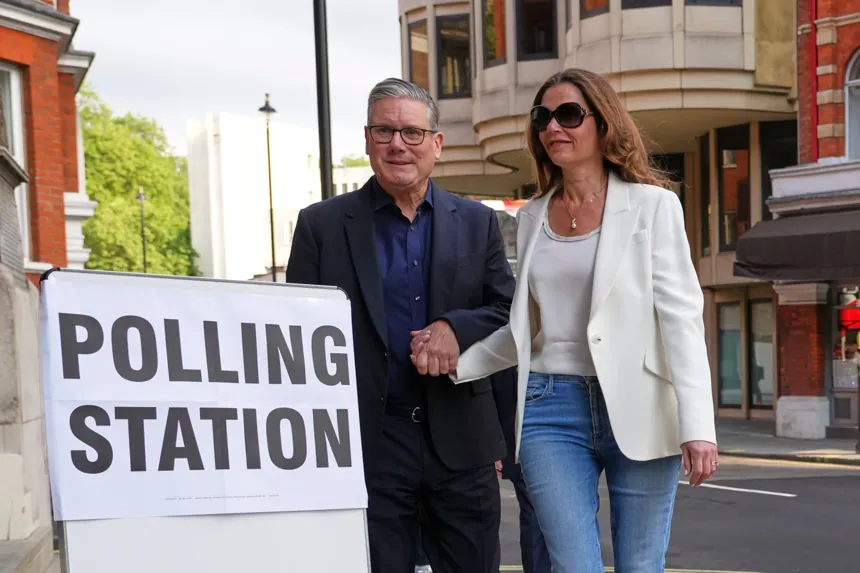
British local and regional election results have intensified pressure on Prime Minister Keir Starmer after voters delivered a series of setbacks to the governing Labour Party in contests widely viewed as a midterm judgment on his leadership and economic agenda.
The elections across England, Scotland and Wales tested Labour’s political standing less than two years after the party’s landslide national victory. Early counting showed gains for smaller parties including Nigel Farage’s Reform UK, the Greens and the Liberal Democrats, reflecting growing voter dissatisfaction with Britain’s traditional two-party system.
According to reporting from The Associated Press and other British media outlets, Labour was bracing for major council losses after months of declining approval ratings tied to economic pressures, public service strains and internal disputes over government direction.

The local elections involved more than 5,000 council seats alongside mayoral races and devolved parliamentary contests in Scotland and Wales, making the vote one of the largest electoral tests since Labour returned to power in 2024.
Fragmented Political Landscape Challenges Labour Dominance
The results highlighted a rapidly shifting British political environment in which smaller parties are increasingly capitalizing on dissatisfaction with both Labour and the Conservatives.
Reform UK appeared positioned for significant gains in several traditionally working-class areas that once formed part of Labour’s electoral base. Analysts cited by AP and British media organizations said the party’s anti-establishment message and focus on immigration and economic frustration resonated with voters seeking alternatives to mainstream parties.
Meanwhile, the Green Party continued expanding support in urban centers and university constituencies, reflecting growing concern among progressive voters over climate policy, public spending and Labour’s centrist positioning under Starmer.
The weakening of both Labour and the Conservatives has prompted some political analysts to describe Britain’s evolving system as increasingly multipolar, with regional and smaller national parties exerting greater influence over future coalition-building and parliamentary dynamics.




Leadership Questions Intensify Inside Labour
The disappointing electoral performance has also reignited speculation over Starmer’s authority within Labour, with British media reporting growing unease among senior party figures.
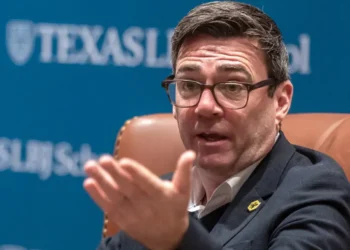
Potential successors discussed in political circles include Health Secretary Wes Streeting, Deputy Prime Minister Angela Rayner and Greater Manchester Mayor Andy Burnham, although senior Labour officials publicly dismissed immediate leadership challenge speculation.
Several reports linked voter frustration to concerns over economic stagnation, rising living costs and internal divisions over immigration policy. Some Labour lawmakers have reportedly urged the government to soften its position on migration after smaller progressive parties gained support in urban constituencies.
Political analysts interviewed by British outlets said the results reflected broader uncertainty about Labour’s long-term identity after the party shifted toward a more centrist platform under Starmer to regain power nationally.
Regional and Economic Implications Expand Beyond Westminster
The elections also carried broader implications for regional governance and Britain’s economic outlook at a time of continued financial pressure and international uncertainty.
In Wales, nationalist party Plaid Cymru sought to capitalize on Labour’s weakening position, while Scotland’s devolved political contest again underscored persistent constitutional tensions inside the United Kingdom.
Financial analysts cited by Barron’s warned that prolonged political instability or leadership uncertainty inside the governing party could unsettle financial markets already reacting to elevated government borrowing costs and weak economic growth forecasts.
The results may also complicate Labour’s efforts to project political stability internationally as the government navigates trade, defense and diplomatic challenges across Europe and beyond.
While Starmer remains firmly in office, the scale of Labour’s losses is expected to intensify scrutiny over the government’s economic strategy and political direction ahead of future national elections and regional contests across the United Kingdom.