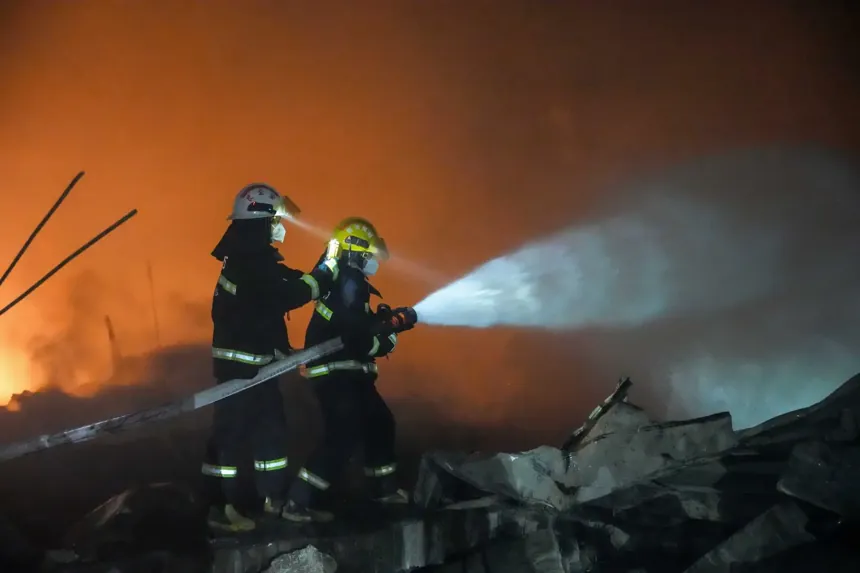
A deadly China fireworks explosion has killed at least 26 people and injured more than 60 others in central China, prompting authorities to suspend production in a major industrial hub and launch a nationwide safety review. The blast, which occurred in Liuyang city in Hunan province, underscores ongoing risks in hazardous manufacturing sectors with global supply chain implications.
The explosion took place Monday afternoon at a facility operated by Huasheng Fireworks Manufacturing and Display Co., according to state media cited by The Associated Press. The incident triggered multiple secondary blasts as stored gunpowder and semi-finished products ignited, complicating rescue operations and heightening concerns about industrial safety enforcement.
China’s fireworks industry, a significant contributor to both domestic celebrations and international exports, has long faced scrutiny over safety practices. The latest disaster is likely to intensify oversight efforts in a sector critical to regional economies yet prone to high-risk incidents.

Industrial Safety Risks Exposed
The scale of the explosion highlights persistent vulnerabilities in factories handling combustible materials. Officials said large quantities of fireworks components and gunpowder fueled continuous blasts, while structural collapses trapped workers and obstructed rescue teams.
Authorities deployed hundreds of emergency responders, along with drones and robotic systems, to search for survivors and stabilize the site. Nearby residents were evacuated due to fears of further explosions linked to storage facilities containing black powder.
Analysts note that such incidents often reveal gaps in compliance and enforcement, particularly in industries where rapid production and export demand can strain safety oversight mechanisms.
Economic Disruption Spreads Across Key Sector
In response to the blast, local authorities ordered an immediate halt to all fireworks manufacturing in Liuyang, one of China’s most prominent production centers. The move is expected to disrupt supply chains, especially ahead of peak demand periods tied to festivals and international orders.
Liuyang has historically been a global hub for fireworks production, and disruptions there can ripple across export markets. Reporting from Reuters indicates that similar incidents in the past have already prompted calls for tighter regulation and industry restructuring.




The temporary shutdown could affect both small-scale producers and larger exporters, raising questions about the balance between economic output and safety compliance in high-risk industries.
Government Response Intensifies
Chinese President Xi Jinping has called for a full investigation into the cause of the explosion and urged stronger safety measures across key industrial sectors. Senior officials have also been dispatched to oversee rescue efforts and ensure accountability.
Authorities have detained the individual in charge of the factory as part of the investigation, signaling a focus on responsibility and regulatory enforcement.
The central government is expected to expand safety inspections nationwide, reflecting broader concerns about industrial accidents and their social and economic consequences.
Strategic Implications for Industrial Oversight
The China fireworks explosion highlights ongoing challenges in managing industrial risk within rapidly scaling manufacturing sectors. While the country remains a global leader in production, incidents like this underscore the importance of regulatory consistency and enforcement transparency.
For international markets, the event raises concerns about supply reliability and safety standards in export-driven industries. For domestic policymakers, it reinforces the need to strengthen oversight mechanisms while maintaining economic stability.
The outcome of the investigation—and any subsequent regulatory changes—may shape how China balances industrial growth with safety in sectors critical to both domestic employment and global trade.