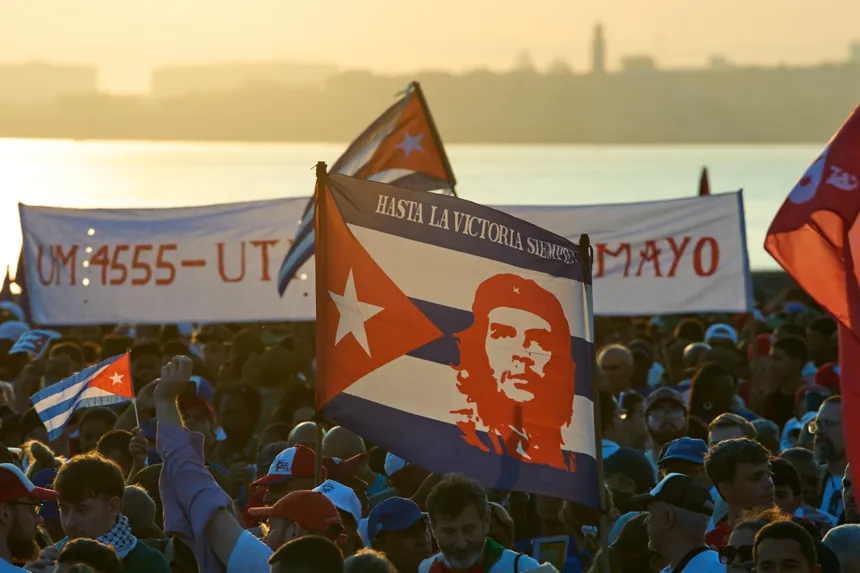
Tens of thousands of Cubans gathered in Havana for International Workers’ Day celebrations that placed the country’s embattled energy sector at the center of national attention, underscoring a deepening humanitarian and infrastructure crisis with broader regional implications.
The rally, held along the capital’s seafront, prominently honored workers from Cuba’s electric and petroleum sectors, whose efforts have become critical as the island struggles with prolonged blackouts and fuel shortages. Reporting from The Associated Press indicates the event blended traditional May Day displays of unity with recognition of workers sustaining essential services under mounting strain.
Energy Shortages Drive National Mobilization
Cuba’s electrical grid has faced repeated breakdowns in recent months, with outages affecting large parts of the population and disrupting economic activity. Workers in the state-run electric utility have been operating around the clock to maintain minimal service, highlighting the severity of the crisis.

Officials say the shortages stem from a combination of aging infrastructure and a sharp decline in fuel imports, leaving the country reliant on limited domestic generation capacity and intermittent external supplies. The arrival of a Russian oil shipment in late March provided temporary relief, but supply remains inconsistent.
External Pressures Intensify Economic Strain
The energy crisis has been compounded by geopolitical developments, including tighter US restrictions affecting oil flows to the island. These measures have disrupted shipments from key partners, particularly Venezuela, which historically supplied much of Cuba’s fuel.
Analysts note that the resulting shortages have had cascading effects across the economy, from agriculture to transportation, amplifying concerns about long-term stability. Broader reporting highlights how fuel scarcity has forced the government to prioritize essential sectors such as food production and healthcare.
Workers at Center of National Resilience Narrative
At the rally, energy workers were portrayed as central to Cuba’s ability to navigate the crisis, with officials emphasizing their role in sustaining daily life despite limited resources. Employees in refineries and power plants have worked extended shifts to restore operations after months of disruption.
The event also carried symbolic weight, reinforcing government messaging around resilience and collective effort during a period of economic hardship. Public displays of support for workers contrasted with the ongoing challenges faced by households dealing with frequent outages.
■ Related News




Regional Implications and Uncertain Outlook
Cuba’s energy instability is being closely watched across the region, where supply disruptions and economic pressures could have spillover effects, including migration and trade impacts. Repeated blackouts in recent months have underscored the fragility of the island’s infrastructure and its dependence on external fuel sources.
While recent fuel deliveries have allowed partial restoration of power, officials caution that improvements may be temporary. The trajectory of the crisis will likely depend on external supply conditions and broader geopolitical developments affecting energy flows.
The May Day rally, while celebratory in tone, ultimately reflected a country grappling with structural challenges that continue to test both its economy and its international relationships.