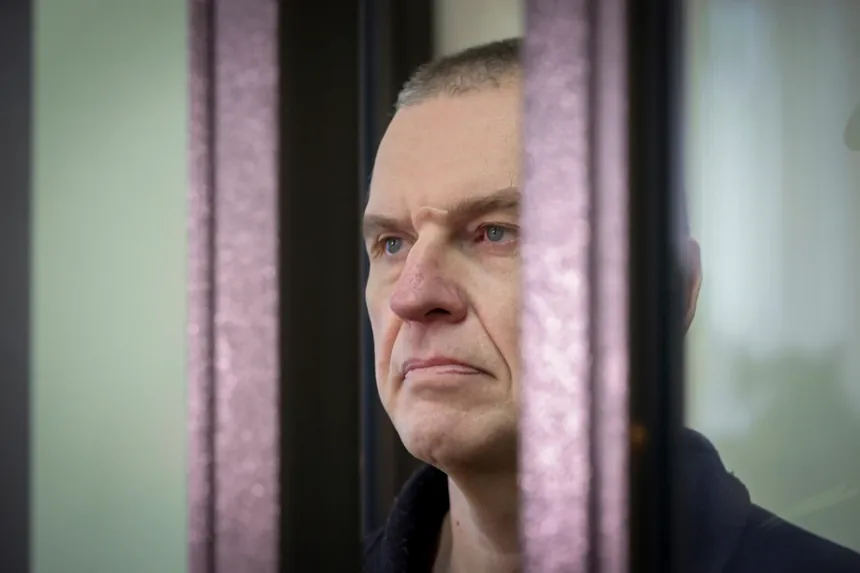
Belarus has released prominent journalist Andrzej Poczobut as part of a 10-person prisoner exchange with Poland, a move seen as a potential step toward easing tensions with Western countries and recalibrating its diplomatic posture.
The swap, confirmed by officials in both countries, involved the release of five detainees from each side and forms part of broader efforts by Minsk to improve strained relations with Europe and the United States, according to reporting by Associated Press.
Poczobut, a journalist and activist representing Belarus’s Polish minority, had been imprisoned since 2021 on charges widely condemned by international observers as politically motivated. His case became emblematic of the country’s crackdown on dissent and media freedom.

Diplomatic Engagement Gains Momentum
The prisoner exchange reflects a broader pattern of cautious engagement between Belarus and Western governments, with mediation efforts reportedly involving the United States and regional actors.
According to Reuters reporting, the deal included participants from multiple countries and followed extended negotiations, with officials describing it as part of a wider diplomatic effort to secure releases and potentially reduce international isolation.
Belarusian President Alexander Lukashenko has in recent months signaled interest in improving ties with Western nations, particularly as sanctions continue to weigh on the country’s economy. Analysts say such exchanges may serve as leverage in negotiations over sanctions relief and political engagement.
Symbol of Press Freedom and Political Repression
Poczobut’s detention had drawn widespread criticism from European institutions and human rights groups, who argued that the charges were tied to his reporting on pro-democracy protests and his advocacy for minority rights.
He was sentenced to eight years in prison and later awarded the European Union’s Sakharov Prize while still in detention, underscoring his symbolic role in the broader struggle over press freedom in Belarus.

His release has been welcomed by Polish officials, with leaders describing him as a symbol of resilience and a test case for international efforts to secure the freedom of political prisoners.
Regional Implications and Ongoing Concerns
The exchange also involved individuals from countries including Russia, Moldova, and Kazakhstan, highlighting the increasingly complex, multi-state nature of prisoner negotiations in the region.
Despite the breakthrough, human rights organizations note that hundreds of political prisoners remain in Belarus, raising questions about whether the release signals a broader shift or a limited diplomatic gesture.
Analysts caution that while the move may open channels for dialogue, Belarus’s alignment with Russia and its domestic political environment continue to pose challenges for sustained rapprochement with the West.
Strategic Stakes for East-West Relations
The release of Poczobut underscores how prisoner diplomacy is increasingly being used as a tool in wider geopolitical negotiations, particularly in Eastern Europe where tensions remain shaped by the war in Ukraine and competing spheres of influence.
Western governments are likely to view the development as a tentative opportunity for engagement, but any meaningful shift will depend on further actions by Minsk, including additional releases and policy changes.
For now, the prisoner swap marks a notable, if limited, step toward de-escalation, offering both symbolic and strategic implications for Belarus’s position in the international system.