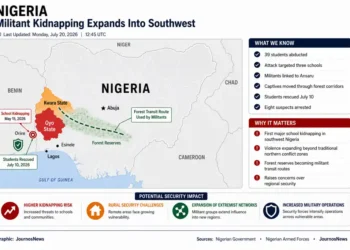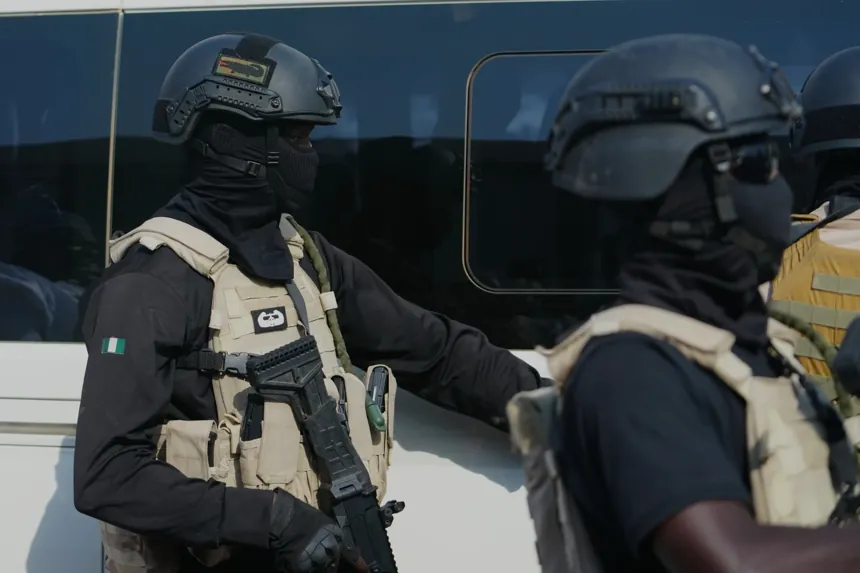
At least 29 people have been killed in a militant assault in northeastern Nigeria, highlighting a renewed surge in extremist violence that is raising alarm over regional stability and global counterterrorism efforts. The attack, attributed to fighters linked to the Islamic State, underscores the persistent threat posed by insurgent groups operating across West Africa.
The assault took place overnight in the village of Guyaku in Adamawa state, where gunmen targeted residents in what authorities described as one of the latest deadly incidents in a long-running conflict. Officials confirmed the death toll and said the attackers struck with little warning, exploiting vulnerabilities in rural security infrastructure.
Insurgency Pressure Mounts Across Northeastern Nigeria
The latest violence reflects a broader pattern of instability in Nigeria’s northeast, where militant groups have sustained a campaign of attacks for more than a decade. According to reporting from The Associated Press, the Islamic State claimed responsibility for the assault through its communication channels, though it remains unclear which affiliate carried it out.

Security analysts say the region remains vulnerable due to a combination of porous borders, limited state presence, and competition among armed factions. The persistence of such attacks highlights the difficulty of containing insurgent networks that have adapted their tactics over time.
Regional Security and International Stakes Rise
The attack adds to mounting concerns among international partners about the spread of extremist violence across the Sahel and Lake Chad Basin. Governments in the region, alongside global allies, have sought to coordinate responses, but progress has been uneven amid shifting political and security dynamics.
Reporting from Reuters indicates that the Islamic State publicly claimed responsibility for the killings, reinforcing fears that its regional affiliates remain operationally capable despite ongoing military pressure.
The continued activity of such groups has implications beyond Nigeria, as instability in one country often spills across borders, affecting trade, migration, and humanitarian conditions throughout West Africa.
Civilian Vulnerability Highlights Governance Challenges
The targeting of a rural village underscores the ongoing vulnerability of civilian populations, particularly in remote areas where security forces have limited reach. Local authorities condemned the attack, describing it as a tragic reminder of the human cost of the insurgency.



Separate incidents, including kidnappings and assaults on vulnerable institutions, further illustrate the multifaceted nature of Nigeria’s security crisis. These developments complicate efforts by the government to stabilize affected regions and restore public confidence.
Strategic Outlook for Counterinsurgency Efforts
The latest attack is likely to intensify pressure on Nigerian authorities to strengthen military operations while addressing underlying drivers of conflict, including poverty and weak governance. International partners are also expected to reassess their support strategies as the threat environment evolves.
As violence persists, the trajectory of Nigeria’s security response will carry broader implications for regional stability and global counterterrorism efforts. The incident signals that, despite years of military campaigns, insurgent groups retain the capacity to launch deadly attacks, posing an ongoing challenge to both national and international security frameworks.