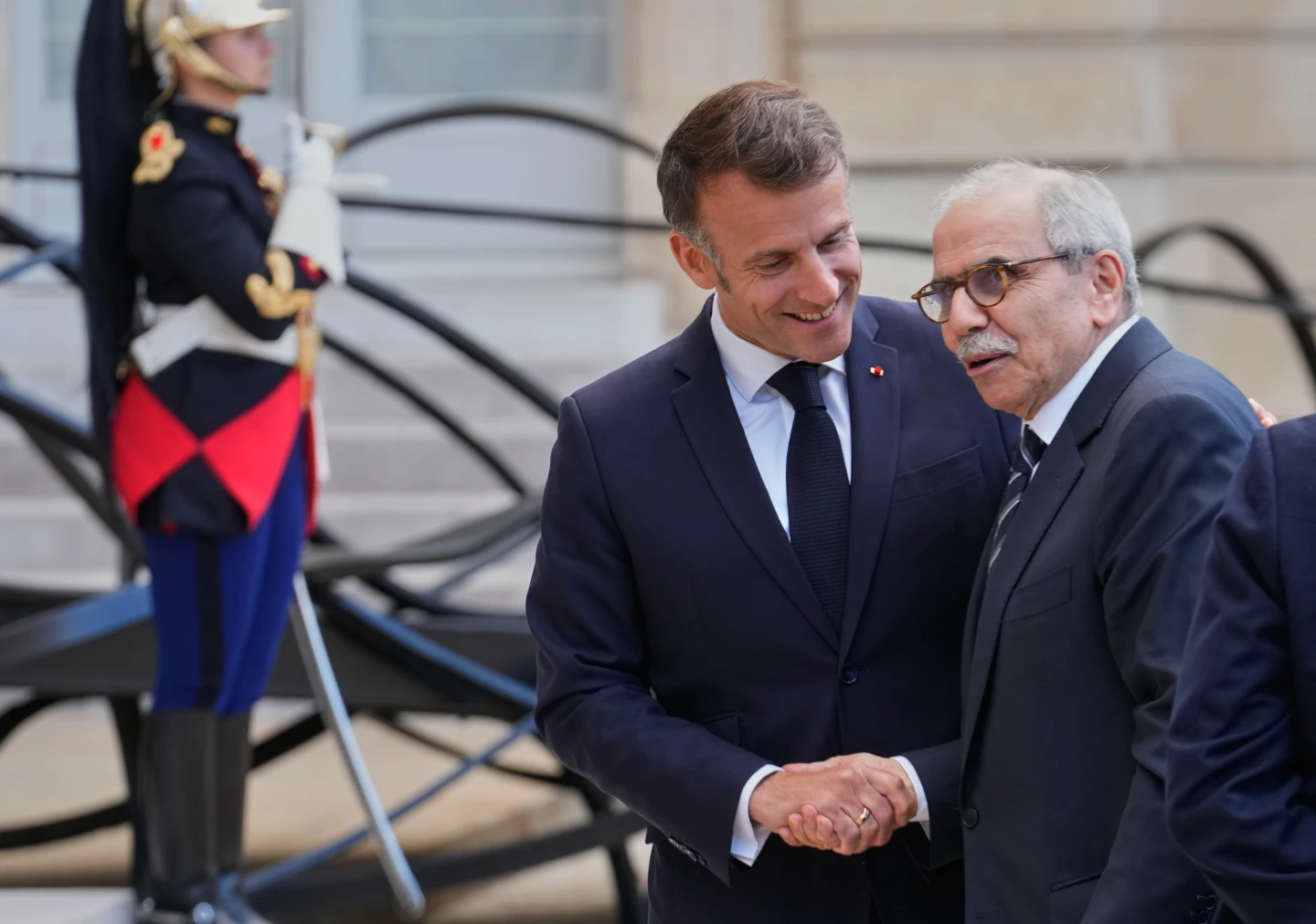
A renewed diplomatic push to stabilize the Lebanon ceasefire is underway after Emmanuel Macron and Nawaf Salam jointly called for negotiations to reinforce a fragile truce between Lebanon and Israel. The appeal, made during talks in Paris, comes as regional tensions persist and broader Middle East diplomacy remains uncertain.
The Lebanon ceasefire, brokered amid a wider conflict involving Iran, Israel and the United States, is increasingly viewed by international actors as a critical test of regional stability. With sporadic violence and unresolved military positions on the ground, officials warn that without structured negotiations, the agreement risks collapsing.
According to reporting from The Associated Press, both leaders stressed the urgency of diplomatic engagement and called on Israel to respect Lebanon’s territorial integrity following their meeting at the Élysée Palace.

Diplomatic Pressure Builds Around Lebanon Ceasefire
Macron signaled that securing the Lebanon ceasefire remains a priority for France, urging a political solution that includes Israeli withdrawal and long-term stabilization measures. Salam, meanwhile, reaffirmed Beirut’s commitment to diplomacy but emphasized that lasting peace depends on the full restoration of Lebanese sovereignty.
The discussions come as preparations continue for further talks involving regional and global stakeholders, including expected meetings in Washington between Lebanese and Israeli representatives. Analysts note that these engagements could mark a rare opening for direct dialogue after decades of limited formal contact.
French officials have also indicated readiness to assist Lebanon in negotiations, even if Paris does not take a central role in mediation. Reporting from Reuters suggests France views its support as essential to strengthening Lebanon’s negotiating position rather than shaping outcomes directly.
Regional Stability Tested Amid Ongoing Security Risks
Despite the ceasefire, conditions on the ground remain volatile. Recent incidents, including attacks on peacekeepers and continued military activity in southern Lebanon, have underscored the fragility of the truce and heightened concerns among international observers.
A French UN peacekeeper was killed in a recent attack, an घटना that Paris and the UN attributed to Hezbollah, though the group has denied responsibility. The episode has intensified scrutiny on enforcement mechanisms and the safety of international forces deployed in the region.
■ Related News

Security analysts warn that even isolated violations could escalate quickly, particularly given the broader confrontation involving Iran and Israel. The Lebanon ceasefire is therefore seen not as an isolated arrangement but as part of a wider network of overlapping regional tensions.
Strategic Stakes Rise for International Mediation
The ceasefire negotiations are unfolding alongside parallel diplomatic efforts involving the United States and Iran, adding complexity to an already crowded geopolitical landscape. Planned talks in Pakistan aimed at addressing the broader conflict could influence developments in Lebanon, though participation remains uncertain.
European governments, including France, are positioning themselves as supportive actors seeking to preserve stability and prevent further escalation. Macron has reiterated France’s long-standing commitment to Lebanon’s sovereignty and reconstruction, including potential support for future peacekeeping arrangements.
At the same time, divisions persist among key players. Hezbollah’s stance against direct negotiations with Israel and Israel’s security demands—particularly regarding border zones and disarmament—continue to complicate prospects for a comprehensive settlement.
International Outlook Hinges on Sustained Diplomacy
The future of the Lebanon ceasefire will depend heavily on whether diplomatic momentum can be sustained in the coming days. With multiple negotiation tracks underway and tensions still simmering, the risk of renewed conflict remains significant.
For international stakeholders, the situation represents both a challenge and an opportunity: a fragile pause in hostilities that could evolve into a broader political settlement—or unravel into renewed instability. The outcome will likely shape not only Lebanon’s immediate future but also the trajectory of wider Middle East diplomacy.