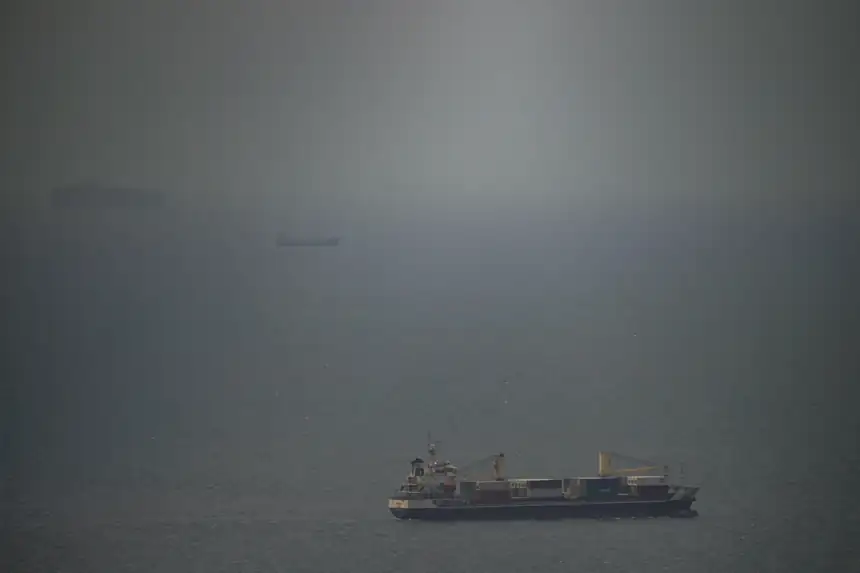
Iran has fired on three commercial vessels transiting the Strait of Hormuz, intensifying a volatile standoff with the United States as diplomatic efforts to de-escalate tensions appear to have stalled. The incident, reported Wednesday, underscores rising risks to global shipping routes and energy markets in one of the world’s most strategically vital waterways.
The confrontation comes as the United States continues to enforce a naval blockade in the region, part of broader efforts to counter Iranian military activity. The Strait of Hormuz, through which a significant share of the world’s oil supply passes, has again become a focal point of geopolitical friction with implications far beyond the Gulf.
According to reporting from The Associated Press, the vessels targeted did not sustain catastrophic damage, but the attacks mark a sharp escalation in direct maritime confrontation. US officials, speaking on condition of anonymity, indicated that American naval assets in the area were monitoring the situation closely but had not engaged directly.

Regional Stability Tested as Maritime Risks Increase
The incident highlights growing instability across the Gulf, where commercial shipping has become increasingly vulnerable amid deteriorating US-Iran relations. Analysts warn that even limited attacks can disrupt shipping insurance markets and raise freight costs, with ripple effects on global energy prices.
Security experts interviewed by international outlets note that Iran’s actions may be calibrated to exert pressure without triggering full-scale conflict. However, the risk of miscalculation remains high, particularly in congested maritime corridors where military and civilian vessels operate in close proximity.
The escalation follows weeks of heightened rhetoric and military posturing, with both sides signaling limited appetite for compromise. Regional actors, including Gulf states, have urged restraint, fearing that further incidents could destabilize already fragile security dynamics.
Diplomatic Channels Strain Under Mounting Pressure
Efforts to revive diplomatic engagement between Washington and Tehran have faltered, with no significant breakthroughs reported in recent talks. Officials familiar with the negotiations told Reuters that key sticking points remain unresolved, particularly around sanctions and military de-escalation commitments.
The absence of a clear diplomatic pathway has raised concerns among international stakeholders, including European governments that have historically played mediating roles. Without renewed dialogue, analysts suggest the risk of sustained low-intensity confrontation could increase.



Broadcast remarks carried by BBC News indicate that Western officials are exploring backchannel communications, though expectations for immediate progress remain low. The current trajectory suggests a prolonged period of strategic tension rather than rapid resolution.
Strategic Stakes Rise for Global Energy Markets
The Strait of Hormuz handles roughly a fifth of global oil shipments, making any disruption a matter of international economic concern. Market analysts have already flagged potential volatility, with traders closely monitoring developments for signs of sustained supply risks.
Financial Times reporting indicates that insurers and shipping firms are reassessing risk exposure in the region, potentially leading to higher operational costs. These adjustments could, in turn, influence global fuel prices, particularly if incidents persist or escalate.
Energy-importing nations in Asia and Europe are especially exposed, given their reliance on Gulf oil exports. Governments are likely to weigh contingency measures, including strategic reserves and alternative supply routes, should tensions worsen.
International Response and Future Outlook
The international response has so far emphasized de-escalation, with calls for restraint from multiple governments and multilateral organizations. However, the absence of coordinated action highlights the complexity of managing crises involving major powers and regional actors.
Looking ahead, the trajectory of the crisis will depend largely on whether diplomatic channels can be revived. Continued maritime incidents could entrench a cycle of provocation and response, raising the likelihood of broader confrontation.
For now, the situation remains fluid, with global attention fixed on the Strait of Hormuz as a barometer of wider geopolitical tensions. The coming days may prove critical in determining whether the current escalation stabilizes or evolves into a more sustained security challenge.