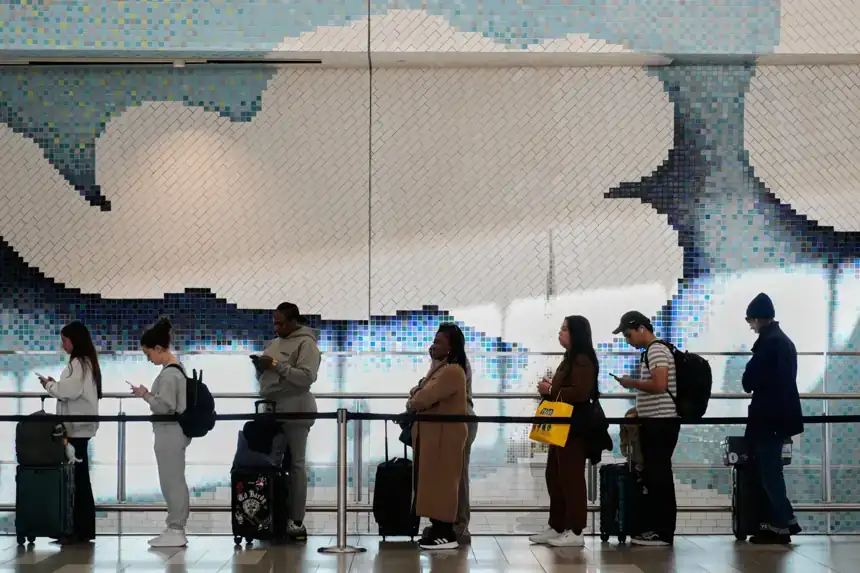
Global airlines are entering a new cost cycle as sharp swings in oil and jet fuel prices push carriers to raise fares, expand ancillary fees, and reduce less profitable flight capacity, altering the economics of both leisure and corporate travel.
The dominant business angle is macro cost pressure on airline margins, with fuel once again emerging as the sector’s most immediate earnings risk. Recent volatility linked to instability around the Strait of Hormuz has lifted global jet fuel prices sharply, forcing major carriers to embed higher costs into pricing models and schedule decisions that directly affect consumers and business travelers.
Fuel Inflation Hits Airline Earnings Outlook
Fuel price volatility has become the defining variable for second-quarter airline earnings guidance.

Delta Air Lines said elevated fuel costs could add roughly $2 billion in operating expenses during the quarter, according to company executives. Meanwhile, United Airlines warned internally that persistently high fuel prices could raise annual expenses by as much as $11 billion, a figure that would materially outweigh the carrier’s historical peak annual profit performance.
According to International Air Transport Association data cited in the source material, average global jet fuel prices climbed to $209 per barrel, up from about $99 per barrel before the Middle East conflict escalated.
That near-doubling in fuel costs is materially changing sector cost assumptions, particularly for long-haul international networks where fuel remains one of the largest variable expense lines.
Pricing Power Shifts Toward Fees and Fare Segmentation
Carriers are increasingly using ancillary revenue strategies to protect margins rather than relying solely on base fare increases.
Alongside Delta and United, American Airlines, Southwest Airlines, and JetBlue have all adjusted baggage fees upward, expanding the role of non-ticket revenue in offsetting cost inflation.
■ Related News


United is also extending unbundled pricing into premium cabins, monetizing services such as advanced seat selection and flexible refund terms that were previously embedded in higher-fare products. American is similarly deepening segmentation within basic economy by charging more aggressively for seat selection and modifying boarding privileges.
The strategic shift reflects a broader airline industry trend: preserve demand-sensitive headline fares while increasing yield through optional services and differentiated cabin benefits.
International Carriers Mirror the Same Cost Response
The pricing response is global rather than U.S.-specific.
Cathay Pacific has raised fuel surcharges significantly across routes, while Air India introduced additional route-based fees reaching as high as $280 on some itineraries. Other major network airlines, including Emirates, Lufthansa, and KLM, are also adjusting fare structures to keep pace with volatile fuel procurement costs.
For international routes connecting Asia, Europe, and North America, these surcharges can materially affect final ticket yield and may suppress discretionary travel demand.
Capacity Discipline Returns as Margins Tighten
Beyond pricing, airlines are responding with capacity discipline, a classic profitability lever during cost shocks.
BNP Paribas estimates indicate global April schedules were reduced by roughly 5% from earlier plans, with the sharpest pullbacks concentrated in the Middle East and smaller reductions spreading into Europe, Asia, and North America.
United is cutting about 5% of planned near-term flights, focusing on weaker redeye services and historically slower travel days. Delta has also scaled back expansion plans, leaving available June seat supply roughly 3.5% below original projections.
This marks a strategic pivot toward route-level margin protection, where airlines prioritize network profitability over market share expansion.
Budget Airlines and Leisure Demand Face the Greatest Risk
The macroeconomic impact is likely to be felt most severely by low-cost and budget-sensitive travel segments.
Legacy carriers can partially absorb shocks through loyalty programs, premium upselling, and larger aircraft utilization. Budget airlines, by contrast, operate on thinner margins and have fewer ancillary levers, making them more exposed to abrupt fuel inflation.
For consumers, the practical effect is straightforward: higher all-in travel costs, fewer schedule choices, and increased price sensitivity around discretionary trips.
This creates a wider sector implication for the global economy, as reduced affordability may soften tourism flows, suppress small-business travel, and force corporations to reassess nonessential in-person meetings.