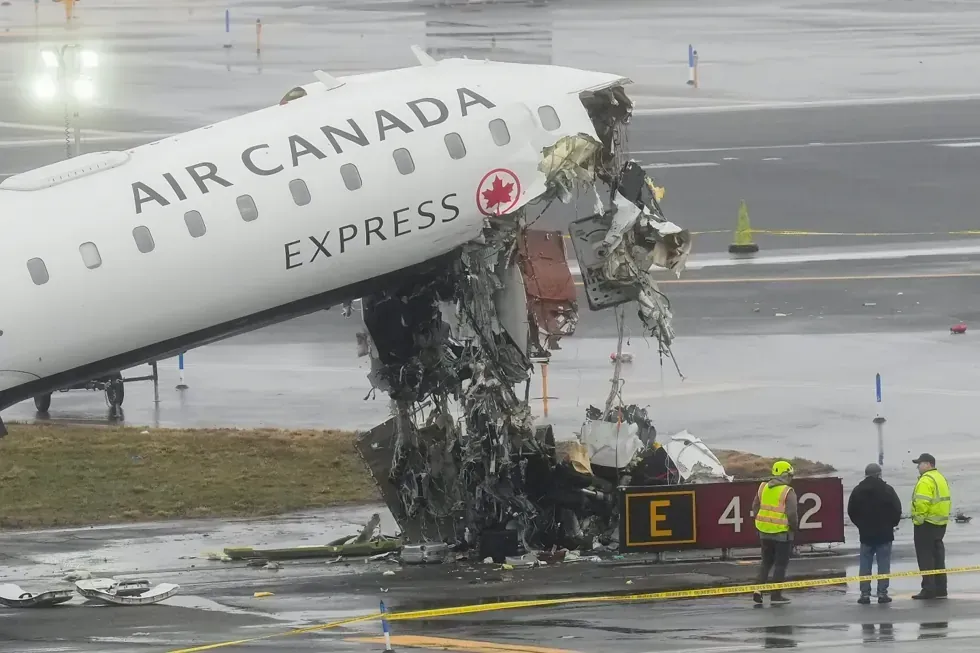
A fatal runway collision at New York’s LaGuardia Airport has intensified scrutiny on air traffic and ground vehicle coordination, after an Air Canada regional jet struck an airport fire truck during landing operations. The incident resulted in the deaths of two pilots and injuries to dozens, while prompting operational disruptions at one of the United States’ busiest aviation hubs.
The aircraft, carrying 72 passengers and four crew members from Montreal, collided with the vehicle shortly before midnight, according to official statements. Authorities said approximately 40 passengers and crew, along with two fire truck personnel, required medical treatment, with most discharged within hours.
Safety and Operational Breakdown
Preliminary information indicates the fire truck had been cleared to cross the runway to respond to another aircraft incident, while the incoming flight was on final approach. Air traffic control audio suggests last-minute attempts were made to halt the vehicle, pointing to a breakdown in coordination between ground and air operations.

Aviation safety experts note that such incidents—classified as runway incursions—remain a persistent risk despite surveillance systems designed to track aircraft and vehicles. U.S. aviation data recorded 1,636 runway incursions in the previous year, underscoring ongoing operational challenges in high-traffic environments.
The National Transportation Safety Board (NTSB) has recovered flight data and cockpit voice recorders for analysis, with investigators focusing on communication protocols and sequencing of clearances. Canadian authorities have also deployed a team, reflecting the cross-border nature of the flight.
Infrastructure and Capacity Constraints
LaGuardia Airport, operated by the Port Authority of New York and New Jersey, temporarily halted operations following the crash, with at least one runway expected to remain closed for several days. Flight operations resumed on a limited basis, resulting in delays and knock-on effects across U.S. domestic networks.
Officials stated that the airport currently employs 33 certified air traffic controllers against a target of 37, highlighting a broader staffing gap affecting the Federal Aviation Administration (FAA). While not directly attributed as a cause, workforce levels remain a structural issue across U.S. aviation infrastructure.
Industry analysts note that overnight operations, when staffing is typically reduced, can increase reliance on coordination precision, particularly when emergency vehicle movements intersect with active runways.



Regulatory and Technology Context
LaGuardia is equipped with an advanced surface movement surveillance system, designed to alert controllers to potential conflicts between aircraft and ground vehicles. However, experts emphasize that such systems function as advisory tools and do not override human clearance decisions.
Former FAA officials have noted that while the system can detect potential conflicts, it cannot determine whether a vehicle has been properly authorized to enter a runway. This limitation places continued emphasis on procedural discipline and communication clarity.
The FAA has faced long-term challenges in maintaining controller staffing levels, with recruitment and training pipelines struggling to keep pace with demand. These constraints have been cited in multiple safety reviews and congressional oversight discussions.
Market and Network Impact
The disruption at LaGuardia—New York’s third-busiest airport—had immediate implications for airline operations, particularly for carriers with significant hub presence. Delta Air Lines, a major operator at the airport, experienced schedule disruptions alongside broader network delays.
Short-haul regional routes, such as the Montreal–New York corridor, are critical for cross-border connectivity and business travel, making operational reliability a key industry metric. Analysts suggest that even short-term runway closures can have cascading effects on airline scheduling, aircraft utilization, and passenger flows.
The incident also marks the first fatal crash at LaGuardia in more than three decades, according to airport officials, potentially prompting renewed regulatory focus on runway safety protocols and incident prevention measures.
Investigation and Next Steps
Authorities have not yet determined the exact cause of the collision, with investigators expected to release preliminary findings in the coming days. The focus will include air traffic control procedures, vehicle clearance protocols, and adherence to safety systems.
Transportation officials emphasized that conclusions will be based on verified data from recorders and communication logs, with any regulatory or operational changes likely to follow formal recommendations.
The outcome of the investigation could influence future FAA safety directives, particularly around runway incursion mitigation and coordination between emergency response vehicles and active flight operations.