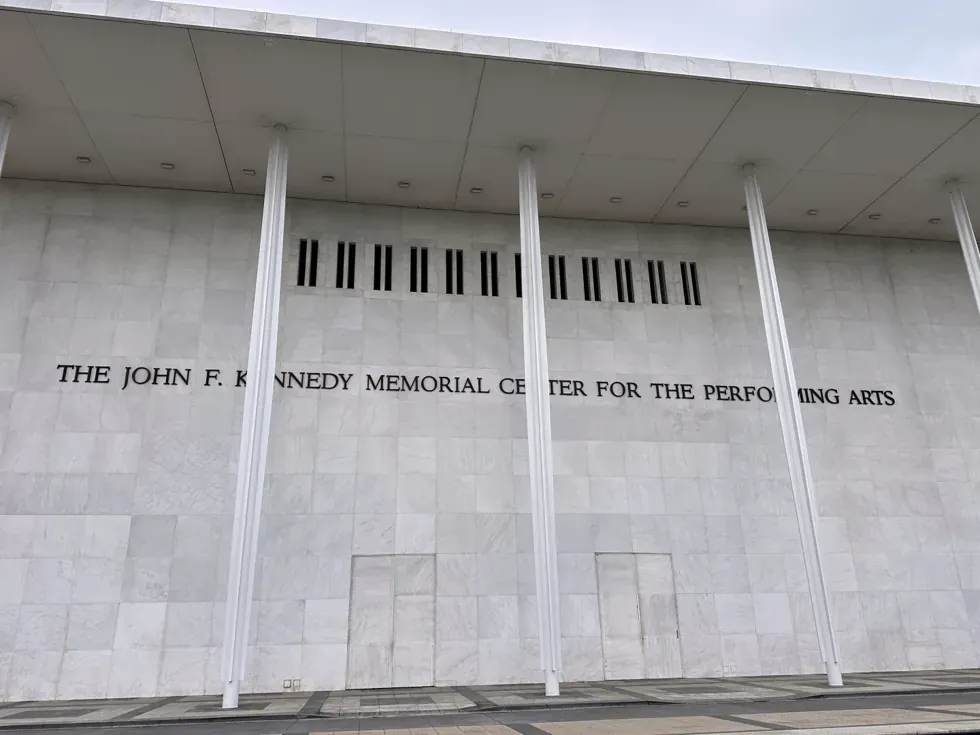
WASHINGTON (Journos News) – A decision by the board of the John F. Kennedy Center for the Performing Arts to rename the institution after President Donald Trump has ignited a fierce political and legal confrontation over the limits of presidential influence on a national cultural landmark.
The board — reshaped in recent months by Trump-appointed members — voted unanimously to adopt the new title: the Donald J. Trump and the John F. Kennedy Memorial Center for the Performing Arts. The announcement was confirmed by the White House shortly after the decision was made.
The move immediately drew criticism from Democratic lawmakers and members of the John F. Kennedy family, who argue that the board lacks the authority to alter a name established by federal law.

As first reported by The Associated Press, the center’s official website was updated soon after the vote, reflecting the new branding even as questions about its legal standing intensified.
Legal Authority Under Immediate Scrutiny
Critics say the board may have acted beyond its statutory powers.
According to former Senate historian Donald A. Ritchie, Congress formally designated the performing arts complex in 1964 following Kennedy’s assassination. Because the name was codified through legislation, he noted, any permanent change would likely require congressional action.
“Congress named the center, and it would be up to Congress to amend the law,” Ritchie explained, suggesting the board could adopt an informal title but not one that carries legal force.
House Democratic Leader Hakeem Jeffries echoed that position, arguing the board’s action bypasses Congress.
■ Related News


“Only Congress can rename the Kennedy Center,” Jeffries said during remarks to reporters.
The dispute now raises the possibility of a legal challenge that could determine whether the board’s vote represents symbolic branding or an enforceable institutional change.
Partisan Divide Deepens Around Cultural Policy
The renaming vote has widened partisan divisions over Trump’s expanding role in the institution.
Supporters say the change recognizes the president’s renewed investment in the center since returning to office earlier this year. Republican Senator Lindsey Graham described the move as justified recognition of Trump’s efforts to revitalize the venue.
Democratic board members, however, say they were sidelined during the process.
Representative Joyce Beatty said she attempted to raise objections during the board meeting but was muted while participating remotely. She characterized the vote as an attempt to sidestep public input and legal procedure.
A spokesperson for the center disputed that claim, saying all members were invited to attend the meeting in person and were given access to listen remotely, even if they did not have voting authority.
The clash underscores how cultural institutions in Washington are increasingly becoming arenas for broader ideological conflict.
Kennedy Family Condemns the Move
Members of the Kennedy family reacted sharply to the board’s decision.
Journalist and author Maria Shriver called the idea of attaching Trump’s name to the memorial “beyond comprehension,” arguing it undermines the legacy of the late president whose administration championed federal support for the arts.
Her brother, Tim Shriver, described the change as “an insult to a great president” in comments posted on social media.
The disagreement highlights a rare moment of open tension between the Kennedy political legacy and the current administration — a dynamic complicated by the fact that Robert F. Kennedy Jr., a Kennedy family member, now serves in Trump’s Cabinet.
Cultural Programming and Institutional Stability Tested
The renaming controversy comes amid a broader transformation of the performing arts center under Trump’s leadership as board chairman.
Since returning to office in January, the president has replaced several board members originally appointed by Democratic administrations with political allies. Those changes have helped consolidate influence over the institution’s direction and programming.
Trump has repeatedly criticized previous artistic programming as overly political and has pledged to reshape the center’s cultural identity. His administration also secured more than $250 million in federal funding for renovations, including theater upgrades and structural improvements.
Yet the shift has also produced turbulence within the performing arts community.
Several performers and consultants have stepped away from planned appearances or advisory roles, while touring productions — including the Broadway musical Hamilton — have canceled scheduled runs at the venue. Subscription sales have reportedly declined, and some performances have played to visibly sparse audiences.
Congressional Action May Decide the Outcome
The long-term fate of the renaming may ultimately rest on Capitol Hill.
Representative Bob Onder introduced legislation earlier this year that would formally rename the arts complex the Donald J. Trump Center for the Performing Arts. The proposal has not yet advanced in committee.
Until Congress acts, the board’s vote leaves the institution operating in a legal gray zone — caught between symbolic branding and statutory designation.
For Washington’s premier cultural venue, the dispute reflects a broader question now shaping the capital’s cultural landscape: whether national arts institutions can remain politically neutral as presidential administrations assert greater influence over their leadership and identity.